BookFeed Ελληνικά

Books like Tess of the d'Urbervilles

If Tess of the d'Urbervilles stayed with you, these share its feel: grief, morality and melancholy. Each comes with a real page, so you can tell in a minute.

About Tess of the d'Urbervilles · Thomas Hardy

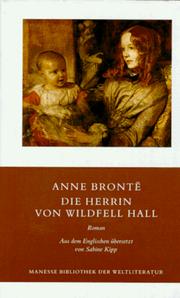
  1. 1.The Tenant of Wildfell Hall

    Anne Brontë, 1847

    Also society and melancholy. In a world governed by rigid social expectations, one woman fights to protect herself and her son from a marriage that is destroying them.

    At length our walk was ended. The increasing height and boldness of the hills had for some time intercepted the prospect; but, on gaining the summit of a steep acclivity, and looking downward, an opening lay before us—and the blue sea burst upon our sight!—deep violet blue—not deadly calm, but covered with glinting breakers—diminutive white specks twinkling on its bosom, and scarcely to be distinguished, by the keenest vision, from the little seamews that sported above, their white wings glittering in the sunshine: only one or two vessels were visible, and those were far away.
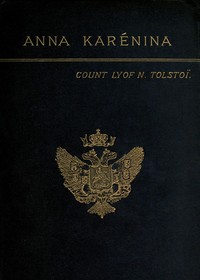
  2. 2.Anna Karenina

    Leo Tolstoy, 1878

    Also society and melancholy. A society novel about a marriage coming apart and a landowner trying to build a meaningful life, full of dinner tables, fields, jealousy and philosophy.

    Anna said what came to her lips, and marveled, hearing herself, at her own capacity for lying. How simple and natural were her words, and how likely that she was simply sleepy! She felt herself clad in an impenetrable armor of falsehood. She felt that some unseen force had come to her aid and was supporting her.
  3. 3.Lady Chatterley's lover

    D. H. Lawrence, 1920

    Also longing and melancholy. A searing, atmospheric exploration of desire, isolation, and the spiritual decay of modern industrial society.

    She clung to him unconscious in passion, and he never quite slipped from her, and she felt the soft bud of him within her stirring, and strange rhythms flushing up into her with a strange rhythmic growing motion, swelling and swelling till it filled her all cleaving consciousness, and then began again the unspeakable motion that was not really motion, but pure deepening whirlpools of sensation swirling deeper and deeper through all her tissue and consciousness, till she was one perfect concentric fluid of feeling, and she lay there crying in unconscious inarticulate cries. The voice out of the uttermost night, the life! The man heard it beneath him with a kind of awe, as his life sprang out into her. And as it subsided, he subsided too and lay utterly still, unknowing, while her grip on him slowly relaxed, and she lay inert.
  4. 4.Middlemarch

    George Eliot, 1872

    Also morality and society. A provincial town, a clever woman married to the wrong scholar, an ambitious doctor, and the slow, comic, devastating work of learning that other people are real.

    We are all of us born in moral stupidity, taking the world as an udder to feed our supreme selves: Dorothea had early begun to emerge from that stupidity, but yet it had been easier to her to imagine how she would devote herself to Mr. Casaubon, and become wise and strong in his strength and wisdom, than to conceive with that distinctness which is no longer reflection but feeling—an idea wrought back to the directness of sense, like the solidity of objects—that he had an equivalent centre of self, whence the lights and shadows must always fall with a certain difference.
  5. 5.Madame Bovary

    Gustave Flaubert, 1856

    Also longing and melancholy. A provincial doctor's wife reads too many novels and then marries one; the most exact book ever written about wanting a life bigger than the one you've got.

    The shades of night were falling; the horizontal sun passing between the branches dazzled the eyes. Here and there around her, in the leaves or on the ground, trembled luminous patches, as if hummingbirds flying about had scattered their feathers. Silence was everywhere; something sweet seemed to come forth from the trees; she felt her heart, whose beating had begun again, and the blood coursing through her flesh like a stream of milk. Then far away, beyond the wood, on the other hills, she heard a vague prolonged cry, a voice which lingered, and in silence she heard it mingling like music with the last pulsations of her throbbing nerves. Rodolphe, a cigar between his lips, was mending with his penknife one of the two broken bridles.
  6. 6.Persuasion

    Jane Austen, 1817

    Also longing and nature. A woman of twenty-seven meets again the man she was talked out of marrying, and begins to wonder whether prudence was ever a virtue.

    They had no conversation together, no intercourse but what the commonest civility required. Once so much to each other! Now nothing! There had been a time, when of all the large party now filling the drawing-room at Uppercross, they would have found it most difficult to cease to speak to one another. With the exception, perhaps, of Admiral and Mrs. Croft, who seemed particularly attached and happy (Anne could allow no other exception even among the married couples), there could have been no two hearts so open, no tastes so similar, no feelings so in unison, no countenances so beloved. Now they were as strangers; nay, worse than strangers, for they could never become acquainted. It was a perpetual estrangement.
  7. 8.Mrs. Dalloway

    Virginia Woolf, 1925

    Also melancholy. One June day in London, a society wife prepares a party while a shell-shocked veteran sits in the park. A novel written the way a mind actually moves.

  8. 10.Jane Eyre

    Charlotte Brontë, 1847

    Also longing. An orphan with no money, no beauty and a ferocious sense of her own worth takes a job at a strange house. A first-person voice that still feels startlingly direct.

Read pages from books like this, one at a time

BookFeed is a feed of real passages from real books. It learns what moves you and finds your next book.

Open BookFeed

Free, no sign-up.