
The Tenant of Wildfell Hall
Anne Brontë (1820–1849), 1847
★ 4.04 from 139.9k ratings on Goodreads
In a world governed by rigid social expectations, one woman fights to protect herself and her son from a marriage that is destroying them. The mood is watchful and melancholy, with a plain, steady voice and a slow build of social unease around family and reputation.
Feels like unease, melancholy and defiance. About society, family and morality.
Who it’s for
You may like it if you enjoy Victorian novels about marriage, reputation, and a woman's struggle for independence. The prose is period-heavy and the social setup can feel slow before the story's unease sharpens.
Why read it
It gives you a clear-eyed look at how social rules can trap people, and at the courage needed to resist them.
Pages from the book
The horizon finally breaks, unveiling a vast and unblemished landscape of freedom.
At length our walk was ended. The increasing height and boldness of the hills had for some time intercepted the prospect; but, on gaining the summit of a steep acclivity, and looking downward, an opening lay before us—and the blue sea burst upon our sight!—deep violet blue—not deadly calm, but covered with glinting breakers—diminutive white specks twinkling on its bosom, and scarcely to be distinguished, by the keenest vision, from the little seamews that sported above, their white wings glittering in the sunshine: only one or two vessels were visible, and those were far away. The profound realization of change is framed by a metaphor of natural, inevitable decay and rebirth.
“I own I cannot; but we know not that it will be so;—and I do know that to regret the exchange of earthly pleasures for the joys of heaven, is as if the grovelling caterpillar should lament that it must one day quit the nibbled leaf to soar aloft and flutter through the air, roving at will from flower to flower, sipping sweet honey from their cups, or basking in their sunny petals. If these little creatures knew how great a change awaited them, no doubt they would regret it; but would not all such sorrow be misplaced? A simple reaction holds the power to generate profound and cutting disdain.
I smiled.—There was something either in that smile or the recollections it awakened that was particularly displeasing to her, for she suddenly assumed again that proud, chilly look that had so unspeakably roused my aversion at church—a look of repellent scorn, so easily assumed, and so entirely without the least distortion of a single feature, that, while there, it seemed like the natural expression of the face, and was the more provoking to me, because I could not think it affected. Anne Brontë.Brontë's first novel is widely regarded as a powerful critique of Victorian gender roles, especially regarding the subjugation of married women.
Books that feel like this


More by Anne Brontë
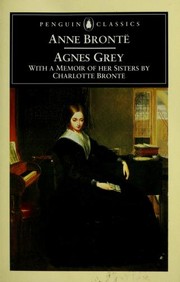
Agnes Grey
Anne Brontë, 1847
A clergyman's daughter with no money takes a post as a governess and learns how little the world allows a woman who must earn her own bread.
Where to get it
Some of these links earn us a small commission, at no cost to you. It keeps BookFeed free.
Questions readers ask
- Is The Tenant of Wildfell Hall for me?
- You may like it if you enjoy Victorian novels about marriage, reputation, and a woman's struggle for independence. The prose is period-heavy and the social setup can feel slow before the story's unease sharpens.
- What is The Tenant of Wildfell Hall like?
- The mood is watchful and melancholy, with a plain, steady voice and a slow build of social unease around family and reputation. Feels like unease, melancholy and defiance. About society, family and morality.
- What should I read after The Tenant of Wildfell Hall?
- If you liked The Tenant of Wildfell Hall, try Tess of the d'Urbervilles (Thomas Hardy), Emma (Jane Austen) and A Doll's House (Henrik Ibsen).
A taste of the feed
The moment when the boundaries between sight, sound, and emotion collapse.
Tess was conscious of neither time nor space. The exaltation which she had described as being producible at will by gazing at a star came now without any determination of hers; she undulated upon the thin notes of the second-hand harp, and their harmonies passed like breezes through her, bringing tears into her eyes. The floating pollen seemed to be his notes made visible, and the dampness of the garden the weeping of the garden’s sensibility. Though near nightfall, the rank-smelling weed-flowers glowed as if they would not close for intentness, and the waves of colour mixed with the waves of sound.
Tess of the d'Urbervilles · Thomas Hardy
Every honest confession leaves something out, and it rarely matters.
Seldom, very seldom, does complete truth belong to any human disclosure; seldom can it happen that something is not a little disguised, or a little mistaken; but where, as in this case, though the conduct is mistaken, the feelings are not, it may not be very material.—Mr. Knightley could not impute to Emma a more relenting heart than she possessed, or a heart more disposed to accept of his.
Emma · Jane Austen
A marriage described as a playroom, by the person who was the favourite doll.
NORA. No, only merry. And you have always been so kind to me. But our home has been nothing but a playroom. I have been your doll-wife, just as at home I was papa’s doll-child; and here the children have been my dolls. I thought it great fun when you played with me, just as they thought it great fun when I played with them. That is what our marriage has been, Torvald.
A Doll's House · Henrik Ibsen
Read pages from books like this, one at a time
Keep reading in the feed