
Short Fiction
Thomas Hardy (1840–1928), 1888
Hardy's short stories: farmers, milkmaids, hussars and ghosts, where a fog-bound night or a small decision quietly decides a whole life. Hardy's stories move at a walking pace through fog, dairy yards and barracks, lyrical and melancholy, with quiet wonder at how small choices settle a life.
Feels like melancholy and wonder. About time, love and freedom.
Who it’s for
You may like these if you enjoy rural settings, chance encounters and stories that turn on a single night of fog. Be ready for slow, densely written Victorian prose, with dialect in the dialogue and endings that leave a chill rather than comfort.
Why read it
A good way into Hardy if the novels feel long: the same Wessex, the same weather and stubborn people, in compact pieces you can finish in one sitting.
Pages from the book
A lifetime of milking, written into a woman's forehead.
Her monotonous milking at the dairy was resumed, and followed for many long years, till her form became bent, and her once abundant dark hair white and worn away at the forehead—perhaps by long pressure against the cows. Here, sometimes, those who knew her experiences would stand and observe her, and wonder what sombre thoughts were beating inside that impassive, wrinkled brow, to the rhythm of the alternating milk-streams. A dance lesson with no music, and the moon keeping time.
Withdrawing with her to a nook where two high hedges met, and where the grass was elastic and dry, he lightly rested his arm on her waist, and practised with her the new step of fascination. Instead of music he whispered numbers, and she, as may be supposed, showed no slight aptness in following his instructions. Thus they moved round together, the moon-shadows from the twigs racing over their forms as they turned. The most solid thing in the landscape is also the most changeable.
At one’s every step forward it rises higher against the south sky, with an obtrusive personality that compels the senses to regard it and consider. The eyes may bend in another direction, but never without the consciousness of its heavy, high-shouldered presence at its point of vantage. Across the intervening levels the gale races in a straight line from the fort, as if breathed out of it hitherward. With the shifting of the clouds the faces of the steeps vary in colour and in shade, broad lights appearing where mist and vagueness had prevailed, dissolving in their turn into melancholy gray, which spreads over and eclipses the luminous bluffs. In this so-thought immutable spectacle all is change. Thomas Hardy.Trained as an architect before he turned to fiction, Hardy designed his own house, Max Gate, outside Dorchester, and lived in it while inventing Wessex.
Books that feel like this
More by Thomas Hardy

Tess of the d'Urbervilles
Thomas Hardy, 1892
A powerful examination of integrity and societal judgment, set against the rugged landscape of Wessex, where personal morality collides with cruel fate.
Far from the Madding Crowd
Thomas Hardy, 1874
A woman inherits a farm and runs it herself — hiring, harvesting, weathering storms — while the men around her mistake her independence for an invitation.
Where to get it
Some of these links earn us a small commission, at no cost to you. It keeps BookFeed free.
Questions readers ask
- Is Short Fiction for me?
- You may like these if you enjoy rural settings, chance encounters and stories that turn on a single night of fog. Be ready for slow, densely written Victorian prose, with dialect in the dialogue and endings that leave a chill rather than comfort.
- What is Short Fiction like?
- Hardy's stories move at a walking pace through fog, dairy yards and barracks, lyrical and melancholy, with quiet wonder at how small choices settle a life. Feels like melancholy and wonder. About time, love and freedom.
- What should I read after Short Fiction?
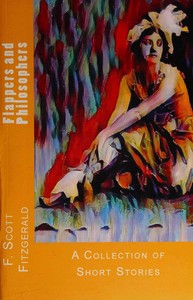
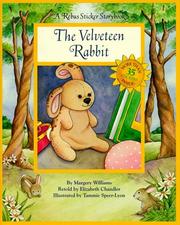
- If you liked Short Fiction, try Short Fiction (F. Scott Fitzgerald), The Velveteen Rabbit (Margery Williams Bianco) and The Darling and Other Stories (Anton Chekhov).
A taste of the feed
The thing first love promises that it cannot deliver.
Whether he kissed her once or several times he could not afterward remember, though it must have been an hour that they sat there close together and he held her hand. What surprised him most about making love was that it seemed to have no element of wild passion—regret, desire, despair—but a delirious promise of such happiness in the world, in living, as he had never known. First love—this was only first love! What must love itself in its fullness, its perfection be. He did not know that what he was experiencing then, that unreal, undesirous medley of ecstasy and peace, would be unrecapturable forever.
Short Fiction · F. Scott Fitzgerald
What it costs to become real, told by someone who has already paid.
“It doesn’t happen all at once,” said the Skin Horse. “You become. It takes a long time. That’s why it doesn’t happen often to people who break easily, or have sharp edges, or who have to be carefully kept. Generally, by the time you are Real, most of your hair has been loved off, and your eyes drop out and you get loose in the joints and very shabby. But these things don’t matter at all, because once you are Real you can’t be ugly, except to people who don’t understand.”
The Velveteen Rabbit · Margery Williams Bianco
Three hundred years old, and still checking for grey hairs.
Am I, then, immortal? This is a question which I have asked myself, by day and night, for now three hundred and three years, and yet cannot answer it. I detected a grey hair amidst my brown locks this very day—that surely signifies decay. Yet it may have remained concealed there for three hundred years—for some persons have become entirely white-headed before twenty years of age.
Short Fiction · Mary Shelley
Read pages from books like this, one at a time
Keep reading in the feed