
Far from the Madding Crowd
Thomas Hardy (1840–1928), 1874
A woman inherits a farm and runs it herself — hiring, harvesting, weathering storms — while the men around her mistake her independence for an invitation. Hardy's lyrical rural voice moves at a measured pace, full of weather, farmland, longing, and the friction between a woman's independence and the society watching her.
Feels like longing and wonder. About nature, love and society.
Who it’s for
You may like it if you enjoy Victorian novels with strong rural settings, slow-building feeling, and a heroine whose work and choices drive the story. The period prose and long descriptive stretches can feel demanding if you want a quicker read.
Why read it
It gives you a vivid picture of farm life and a woman testing her own authority, with Hardy's attention to land, weather, and stubborn feeling.
Pages from the book
What happens to a woman who has never needed anyone, the first time she does.
Bathsheba loved Troy in the way that only self-reliant women love when they abandon their self-reliance. When a strong woman recklessly throws away her strength she is worse than a weak woman who has never had any strength to throw away. One source of her inadequacy is the novelty of the occasion. She has never had practice in making the best of such a condition. Weakness is doubly weak by being new. The quiet betrayal at the centre of a shepherd's working life.
Oak was an intensely humane man: indeed, his humanity often tore in pieces any politic intentions of his which bordered on strategy, and carried him on as by gravitation. A shadow in his life had always been that his flock ended in mutton—that a day came and found every shepherd an arrant traitor to his defenseless sheep. His first feeling now was one of pity for the untimely fate of these gentle ewes and their unborn lambs. The minute before a storm, when the whole wood holds its breath.
The air was as an eye suddenly struck blind. The wagon and its load rolled no longer on the horizontal division between clearness and opacity, but were imbedded in an elastic body of a monotonous pallor throughout. There was no perceptible motion in the air, not a visible drop of water fell upon a leaf of the beeches, birches, and firs composing the wood on either side. The trees stood in an attitude of intentness, as if they waited longingly for a wind to come and rock them. A startling quiet overhung all surrounding things—so completely, that the crunching of the wagon-wheels was as a great noise, and small rustles, which had never obtained a hearing except by night, were distinctly individualized. Thomas Hardy.Hardy trained as an architect and mapped his native Dorset onto the invented 'Wessex'; the success of this novel let him stop designing buildings and live by writing.
Books that feel like this





More by Thomas Hardy

Tess of the d'Urbervilles
Thomas Hardy, 1892
A powerful examination of integrity and societal judgment, set against the rugged landscape of Wessex, where personal morality collides with cruel fate.
Short Fiction
Thomas Hardy, 1888
Hardy's short stories: farmers, milkmaids, hussars and ghosts, where a fog-bound night or a small decision quietly decides a whole life.
Where to get it
Some of these links earn us a small commission, at no cost to you. It keeps BookFeed free.
Questions readers ask
- Is Far from the Madding Crowd for me?
- You may like it if you enjoy Victorian novels with strong rural settings, slow-building feeling, and a heroine whose work and choices drive the story. The period prose and long descriptive stretches can feel demanding if you want a quicker read.
- What is Far from the Madding Crowd like?
- Hardy's lyrical rural voice moves at a measured pace, full of weather, farmland, longing, and the friction between a woman's independence and the society watching her. Feels like longing and wonder. About nature, love and society.
- What should I read after Far from the Madding Crowd?
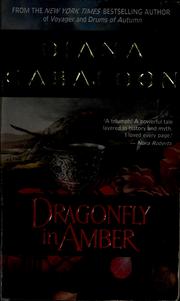
- If you liked Far from the Madding Crowd, try Persuasion (Jane Austen), Dragonfly in Amber (Diana Gabaldon) and A Midsummer Night's Dream (William Shakespeare).
A taste of the feed
The particular loneliness of a room shared with someone you once loved.
They had no conversation together, no intercourse but what the commonest civility required. Once so much to each other! Now nothing! There had been a time, when of all the large party now filling the drawing-room at Uppercross, they would have found it most difficult to cease to speak to one another. With the exception, perhaps, of Admiral and Mrs. Croft, who seemed particularly attached and happy (Anne could allow no other exception even among the married couples), there could have been no two hearts so open, no tastes so similar, no feelings so in unison, no countenances so beloved. Now they were as strangers; nay, worse than strangers, for they could never become acquainted. It was a perpetual estrangement.
Persuasion · Jane Austen
The one thing he will ask to be weighed against the rest.
I will find you," he whispered in my ear. "I promise. If I must endure two hundred years of purgatory, two hundred years without you - then that is my punishment, which I have earned for my crimes. For I have lied, and killed, and stolen; betrayed and broken trust. But there is the one thing that shall lie in the balance. When I shall stand before God, I shall have one thing to say, to weigh against the rest." His voice dropped, nearly to a whisper, and his arms tightened around me. Lord, ye gave me a rare woman, and God! I loved her well.
Dragonfly in Amber · Diana Gabaldon
A description of a place so lush it can put a queen to sleep.
I know a banke where the wilde time blowes, Where Oxslips and the nodding Violet growes, Quite ouer-cannoped with luscious woodbine, With sweet muske roses, and with Eglantine; There sleepes Tytania, sometime of the night, Lul’d in these flowers, with dances and delight: And there the snake throwes her enammel’d skinne, Weed wide enough to rap a Fairy in.
A Midsummer Night's Dream · William Shakespeare
Read pages from books like this, one at a time
Keep reading in the feed