BookFeed Ελληνικά

Books like Jacob’s Room

If Jacob’s Room stayed with you, these share its feel: melancholy, identity and curiosity. Each comes with a real page, so you can tell in a minute.

About Jacob’s Room · Virginia Woolf

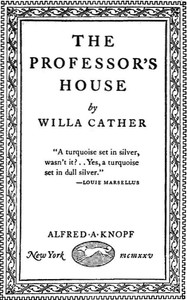
  1. 1.The Professor’s House

    Willa Cather, 1925

    Also identity and melancholy. A Midwestern professor looks back on two romances—one of the heart, one of the mind—and wonders which life was really his.

    But the fact is, the human mind, the individual mind, has always been made more interesting by dwelling on the old riddles, even if it makes nothing of them. Science hasn’t given us any new amazements, except of the superficial kind we get from witnessing dexterity and sleight-of-hand. It hasn’t given us any richer pleasures, as the Renaissance did, nor any new sins—not one! Indeed, it takes our old ones away. It’s the laboratory, not the Lamb of God, that taketh away the sins of the world. You’ll agree there is not much thrill about a physiological sin. We were better off when even the prosaic matter of taking nourishment could have the magnificence of a sin.
  2. 2.Lady Chatterley's lover

    D. H. Lawrence, 1920

    Also melancholy and society. A searing, atmospheric exploration of desire, isolation, and the spiritual decay of modern industrial society.

    She clung to him unconscious in passion, and he never quite slipped from her, and she felt the soft bud of him within her stirring, and strange rhythms flushing up into her with a strange rhythmic growing motion, swelling and swelling till it filled her all cleaving consciousness, and then began again the unspeakable motion that was not really motion, but pure deepening whirlpools of sensation swirling deeper and deeper through all her tissue and consciousness, till she was one perfect concentric fluid of feeling, and she lay there crying in unconscious inarticulate cries. The voice out of the uttermost night, the life! The man heard it beneath him with a kind of awe, as his life sprang out into her. And as it subsided, he subsided too and lay utterly still, unknowing, while her grip on him slowly relaxed, and she lay inert.
  3. 3.Ulysses

    James Joyce, 1922

    Also identity and society. One Dublin day in 1904, followed through two men's minds — an ad-canvasser and a young writer — with every joke, smell and stray thought left in.

    Their dog ambled about a bank of dwindling sand, trotting, sniffing on all sides. Looking for something lost in a past life. Suddenly he made off like a bounding hare, ears flung back, chasing the shadow of a lowskimming gull. The man’s shrieked whistle struck his limp ears. He turned, bounded back, came nearer, trotted on twinkling shanks. On a field tenney a buck, trippant, proper, unattired. At the lacefringe of the tide he halted with stiff forehoofs, seawardpointed ears. His snout lifted barked at the wavenoise, herds of seamorse. They serpented towards his feet, curling, unfurling many crests, every ninth, breaking, plashing, from far, from farther out, waves and waves.
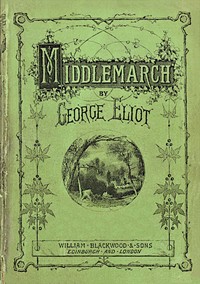
  4. 4.Middlemarch

    George Eliot, 1872

    Also identity and society. A provincial town, a clever woman married to the wrong scholar, an ambitious doctor, and the slow, comic, devastating work of learning that other people are real.

    We are all of us born in moral stupidity, taking the world as an udder to feed our supreme selves: Dorothea had early begun to emerge from that stupidity, but yet it had been easier to her to imagine how she would devote herself to Mr. Casaubon, and become wise and strong in his strength and wisdom, than to conceive with that distinctness which is no longer reflection but feeling—an idea wrought back to the directness of sense, like the solidity of objects—that he had an equivalent centre of self, whence the lights and shadows must always fall with a certain difference.
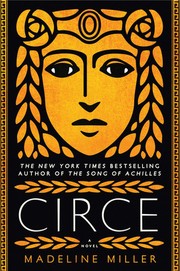
  5. 5.Circe

    Madeline Miller, 2018

    Also identity and melancholy. The witch of the Odyssey tells her own story: exile, transformation, and the dangerous bargain of loving mortals.

    It is a common saying that women are delicate creatures, flowers, eggs, anything that may be crushed in a moment’s carelessness. If I had ever believed it, I no longer did.
    Excerpt from Circe, Madeline Miller 2018. Quoted for discovery. Source Rights & removals
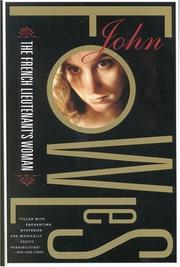
  6. 6.The French Lieutenant's Woman

    John Fowles, 1969

    Also curiosity and society. A Victorian gentleman, a mysterious woman on the Cobb, and a novelist who keeps interrupting to ask whether any of us are free.

    A tiny wren perched on top of a bramble not ten feet from him and trilled its violent song. He saw its glittering black eyes, the red and yellow of its song-gaped throat — a midget ball of feathers that yet managed to make itself the Announcing Angel of evolution: I am that I am, thou shalt not pass my being now. He stood as Pisanello’s saint stood, astonished perhaps more at his own astonishment at this world’s existing so close, so within reach of all that suffocating banality of ordinary day. In those few moments of defiant song, any ordinary hour or place — and therefore the vast infinity of all Charles’s previous hours and places — seemed vulgarized, coarsened, made garish.
    Excerpt from The French Lieutenant's Woman, John Fowles, Random House 1969. Quoted for discovery. Source Rights & removals
  7. 11.Dialogues

    Plato, -347

    Also curiosity and identity. A deep dive into the questions that define civilization: what is justice, what is wisdom, and what happens to the soul after death.

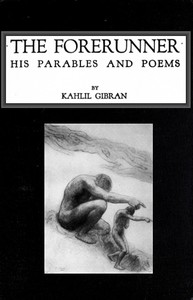
  8. 12.The Forerunner

    Kahlil Gibran, 1892

    Also melancholy and identity. An allegorical journey into the deepest chambers of the human heart, where wisdom is found not in answers, but in the language of nature and solitude.

Read pages from books like this, one at a time

BookFeed is a feed of real passages from real books. It learns what moves you and finds your next book.

Open BookFeed

Free, no sign-up.