BookFeed Ελληνικά

Books like Songs of Innocence and of Experience

If Songs of Innocence and of Experience stayed with you, these share its feel: tenderness, society and faith. Each comes with a real page, so you can tell in a minute.

About Songs of Innocence and of Experience · William Blake

  1. 1.Gitanjali

    Rabindranath Tagore, 1910

    Also faith and tenderness. Short devotional songs that read like love letters to something unnamed. A way to spend an hour with longing, humility and joy, in English prose the poet shaped himself.

    Let all the strains of joy mingle in my last song—the joy that makes the earth flow over in the riotous excess of the grass, the joy that sets the twin brothers, life and death, dancing over the wide world, the joy that sweeps in with the tempest, shaking and waking all life with laughter, the joy that sits still with its tears on the open red lotus of pain, and the joy that throws everything it has upon the dust, and knows not a word.
  2. 2.Short Fiction

    Saki, 1904

    Also society and unease. Edwardian England seen from the side: a talking cat, a private childhood god, and a socialist who enjoys her money. Saki’s wit is a scalpel with a smile.

    “In a few cases only. Nothing will make me believe that an acre or so of concrete enclosure will make up to a wolf or a tiger-cat for the range of night prowling that would belong to it in a wild state. Think of the dictionary of sound and scent and recollection that unfolds before a real wild beast as it comes out from its lair every evening, with the knowledge that in a few minutes it will be hieing along to some distant hunting ground where all the joy and fury of the chase awaits it; think of the crowded sensations of the brain when every rustle, every cry, every bent twig, and every whiff across the nostrils means something, something to do with life and death and dinner.
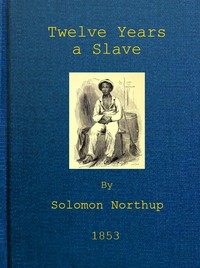
  3. 3.Twelve Years a Slave

    Solomon Northup, 1853

    Also society and freedom. A free Black man is kidnapped into slavery and spends twelve years using memory, music and stubborn hope to survive and testify.

    The building to which the yard was attached, was two stories high, fronting on one of the public streets of Washington. Its outside presented only the appearance of a quiet private residence. A stranger looking at it, would never have dreamed of its execrable uses. Strange as it may seem, within plain sight of this same house, looking down from its commanding height upon it, was the Capitol. The voices of patriotic representatives boasting of freedom and equality, and the rattling of the poor slave’s chains, almost commingled. A slave pen within the very shadow of the Capitol!
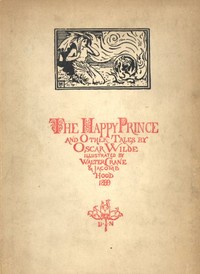
  4. 4.The Happy Prince, and Other Tales

    Oscar Wilde, 1888

    Also tenderness and society. Five short fairy tales where a statue, a nightingale, a giant and a boastful firework teach tenderness and vanity with a sharp wit, in less time than a commute.

    “When I was alive and had a human heart,” answered the statue, “I did not know what tears were, for I lived in the Palace of Sans-Souci, where sorrow is not allowed to enter. In the daytime I played with my companions in the garden, and in the evening I led the dance in the Great Hall. Round the garden ran a very lofty wall, but I never cared to ask what lay beyond it, everything about me was so beautiful. My courtiers called me the Happy Prince, and happy indeed I was, if pleasure be happiness. So I lived, and so I died. And now that I am dead they have set me up here so high that I can see all the ugliness and all the misery of my city, and though my heart is made of lead yet I cannot chose but weep.”
  5. 5.Sonnets from the Portuguese

    Elizabeth Barrett Browning, 1850

    Also tenderness and faith. A Victorian poet, ill and isolated, writes her way through the terror of being loved by a man who will not look away.

    I lift my heavy heart up solemnly,As once Electra her sepulchral urn,And, looking in thine eyes, I overturnThe ashes at thy feet. Behold and seeWhat a great heap of grief lay hid in me,And how the red wild sparkles dimly burnThrough the ashen greyness. If thy foot in scornCould tread them out to darkness utterly,It might be well perhaps. But if insteadThou wait beside me for the wind to blowThe grey dust up—those laurels on thine head,O my Beloved, will not shield thee so,That none of all the fires shall scorch and shredThe hair beneath. Stand further off then! Go.
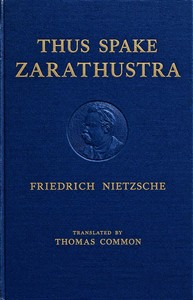
  6. 6.Thus Spake Zarathustra

    Friedrich Nietzsche, 1883

    Also defiance and freedom. A prophet comes down from the mountain to tell you your values were borrowed, your comfort is a cage, and you could become something else.

    O man! Take heed!What saith deep midnight’s voice indeed?“I slept my sleep—,“From deepest dream I’ve woke, and plead:—“The world is deep,“And deeper than the day could read.“Deep is its woe—,“Joy—deeper still than grief can be:“Woe saith: Hence! Go!“But joys all want eternity—,“—Want deep, profound eternity!”
  7. 10.Short Fiction

    Xavier de Maistre, 1794

    Also tenderness and freedom. An officer under house arrest tours his bedroom as if it were a continent, finding the stars, his dog and the whole human comedy inside four walls.

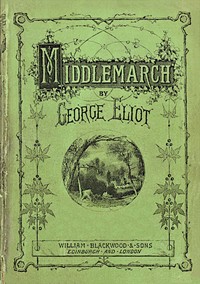
  8. 12.Middlemarch

    George Eliot, 1872

    Also tenderness and society. A provincial town, a clever woman married to the wrong scholar, an ambitious doctor, and the slow, comic, devastating work of learning that other people are real.

Read pages from books like this, one at a time

BookFeed is a feed of real passages from real books. It learns what moves you and finds your next book.

Open BookFeed

Free, no sign-up.