
Thus Spake Zarathustra
Friedrich Nietzsche (1844–1900), 1883
★ 4.07 from 185.6k ratings on Goodreads
A prophet comes down from the mountain to tell you your values were borrowed, your comfort is a cage, and you could become something else. The voice is prophetic and aphoristic, by turns awed, defiant and satirical, moving in bursts rather than a steady argument.
Feels like awe, defiance and unease. About freedom, faith and war.
Who it’s for
You may like it if you enjoy philosophical prose with a biblical cadence, aphorisms, and a satirical streak. The archaic, sermon-like language and loose aphoristic structure can make long stretches demanding if you want a clear step-by-step argument.
Why read it
It offers a jolt to borrowed values and a language for questioning comfort, useful when your assumptions feel too settled.
Pages from the book
The hour when the world admits how deep it is.
O man! Take heed!What saith deep midnight’s voice indeed?“I slept my sleep—,“From deepest dream I’ve woke, and plead:—“The world is deep,“And deeper than the day could read.“Deep is its woe—,“Joy—deeper still than grief can be:“Woe saith: Hence! Go!“But joys all want eternity—,“—Want deep, profound eternity!” When someone tries to poison you and you check whether they can afford it.
One day had Zarathustra fallen asleep under a fig-tree, owing to the heat, with his arms over his face. And there came an adder and bit him in the neck, so that Zarathustra screamed with pain. When he had taken his arm from his face he looked at the serpent; and then did it recognise the eyes of Zarathustra, wriggled awkwardly, and tried to get away. “Not at all,” said Zarathustra, “as yet hast thou not received my thanks! Thou hast awakened me in time; my journey is yet long.” “Thy journey is short,” said the adder sadly; “my poison is fatal.” Zarathustra smiled. “When did ever a dragon die of a serpent’s poison?”—said he. “But take thy poison back! Thou art not rich enough to present it to me.” Then fell the adder again on his neck, and licked his wound. The loneliness of having more to give than anyone to receive it.
After this Zarathustra returned again into the mountains to the solitude of his cave, and withdrew himself from men, waiting like a sower who hath scattered his seed. His soul, however, became impatient and full of longing for those whom he loved: because he had still much to give them. For this is hardest of all: to close the open hand out of love, and keep modest as a giver. Friedrich Nietzsche.Nietzsche self-published the early parts and had them printed in tiny runs; the book barely sold while he was sane, and fame arrived only after his collapse in 1889.
Books that feel like this




More by Friedrich Nietzsche

Beyond Good and Evil
Friedrich Nietzsche, 1886
A sharp-tongued tour of the habits of mind we take for granted: why philosophers lie to themselves, what our morals hide, and what it takes to think without flattering yourself.

The Genealogy of Morals
Friedrich Nietzsche, 1887
Nietzsche's fiercest book asks where our ideas of good, guilt and duty actually came from, and finds debt, blood and self-torture underneath them.
Where to get it
Some of these links earn us a small commission, at no cost to you. It keeps BookFeed free.
Questions readers ask
- Is Thus Spake Zarathustra for me?
- You may like it if you enjoy philosophical prose with a biblical cadence, aphorisms, and a satirical streak. The archaic, sermon-like language and loose aphoristic structure can make long stretches demanding if you want a clear step-by-step argument.
- What is Thus Spake Zarathustra like?
- The voice is prophetic and aphoristic, by turns awed, defiant and satirical, moving in bursts rather than a steady argument. Feels like awe, defiance and unease. About freedom, faith and war.
- What should I read after Thus Spake Zarathustra?
- If you liked Thus Spake Zarathustra, try Notes from Underground (Fyodor Dostoevsky), Kritik der reinen Vernunft (Immanuel Kant) and The Art of War (Sun Tzu).
A taste of the feed
The injury that lasts longer than a blow: being looked through.
I was standing by the billiard-table and in my ignorance blocking up the way, and he wanted to pass; he took me by the shoulders and without a word—without a warning or explanation—moved me from where I was standing to another spot and passed by as though he had not noticed me. I could have forgiven blows, but I could not forgive his having moved me without noticing me.
Notes from Underground · Fyodor Dostoevsky
The most counterintuitive military idea in history: win with the enemy intact, not destroyed.
Sun Tzǔ said: In the practical art of war, the best thing of all is to take the enemy’s country whole and intact; to shatter and destroy it is not so good. So, too, it is better to capture an army entire than to destroy it, to capture a regiment, a detachment or a company entire than to destroy them.
The Art of War · Sun Tzu
Can the maker of the gentlest creature also have made the fiercest?
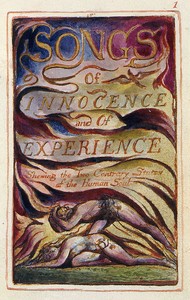
What the hammer? what the chain? In what furnace was thy brain? What the anvil? what dread grasp Dare its deadly terrors clasp? When the stars threw down their spears, And watered heaven with their tears, Did He smile His work to see? Did He who made the lamb make thee? Tiger, tiger, burning bright In the forests of the night, What immortal hand or eye Dare frame thy fearful symmetry?
Songs of Innocence and of Experience · William Blake
Read pages from books like this, one at a time
Keep reading in the feed