
Notes from Underground
Fyodor Dostoevsky (1821–1881), 1864
★ 4.16 from 266.3k ratings on Goodreads
A furious, funny, self-lacerating monologue from a Petersburg clerk who argues that freedom begins where reason and self-interest end. A restless, caustic voice argues, jokes, and contradicts itself, pulling you into a clerk's cramped logic and sudden flares of defiance.
Feels like unease and defiance. About freedom, identity and society.
Who it’s for
You may like it if you enjoy confrontational first-person voices and philosophical argument folded into fiction. Be prepared for a bitter, contradictory narrator and long stretches of argument rather than a conventional plot.
Why read it
It gives you a short, sharp way to think about freedom, resentment, and the stories people tell themselves when they refuse to be reasonable.
Pages from the book
The injury that lasts longer than a blow: being looked through.
I was standing by the billiard-table and in my ignorance blocking up the way, and he wanted to pass; he took me by the shoulders and without a word—without a warning or explanation—moved me from where I was standing to another spot and passed by as though he had not noticed me. I could have forgiven blows, but I could not forgive his having moved me without noticing me. The strange sweetness of doing something you will hate yourself for.
It ended by my almost believing (perhaps actually believing) that this was perhaps my normal condition. But at first, in the beginning, what agonies I endured in that struggle! I did not believe it was the same with other people, and all my life I hid this fact about myself as a secret. I was ashamed (even now, perhaps, I am ashamed): I got to the point of feeling a sort of secret abnormal, despicable enjoyment in returning home to my corner on some disgusting Petersburg night, acutely conscious that that day I had committed a loathsome action again, that what was done could never be undone, and secretly, inwardly gnawing, gnawing at myself for it, tearing and consuming myself till at last the bitterness turned into a sort of shameful accursed sweetness, and at last—into positive real enjoyment! Yes, into enjoyment, into enjoyment! I insist upon that. What do you do when the truth is a wall you cannot argue with?
Merciful Heavens! but what do I care for the laws of nature and arithmetic, when, for some reason I dislike those laws and the fact that twice two makes four? Of course I cannot break through the wall by battering my head against it if I really have not the strength to knock it down, but I am not going to be reconciled to it simply because it is a stone wall and I have not the strength. Fyodor Dostoevsky.Dostoevsky wrote Notes from Underground in 1864, the year his wife Maria and brother Mikhail died. It first appeared in Epoch, the journal his brother had founded.
Books that feel like this


More by Fyodor Dostoevsky
Crime and Punishment
Fyodor Dostoevsky, 1866
A broke student in St. Petersburg tests a theory that some people are above the law, and discovers the cost is not legal but psychological.
The Brothers Karamazov
Fyodor Dostoevsky, 1880
A father is murdered and his sons—sensual, intellectual, spiritual—argue over guilt, God, and whether anyone can love another person.

The Idiot
Fyodor Dostoevsky, 1868
A Christlike innocent lands in a Petersburg of money, vanity and feverish talk, and every room he enters begins to tilt.
Where to get it
Some of these links earn us a small commission, at no cost to you. It keeps BookFeed free.
Questions readers ask
- Is Notes from Underground for me?
- You may like it if you enjoy confrontational first-person voices and philosophical argument folded into fiction. Be prepared for a bitter, contradictory narrator and long stretches of argument rather than a conventional plot.
- What is Notes from Underground like?
- A restless, caustic voice argues, jokes, and contradicts itself, pulling you into a clerk's cramped logic and sudden flares of defiance. Feels like unease and defiance. About freedom, identity and society.
- What should I read after Notes from Underground?
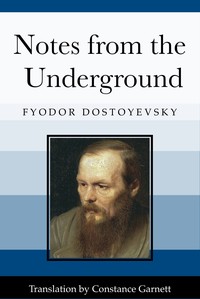
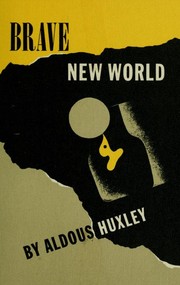
- If you liked Notes from Underground, try Notes from the Underground (Fyodor Dostoyevsky), Brave New World (Aldous Huxley) and Animal Farm (George Orwell).
A taste of the feed
What is lost when nothing is allowed to stand between wanting and having.
Impulse arrested spills over, and the flood is feeling, the flood is passion, the flood is even madness: it depends on the force of the current, the height and strength of the barrier. The unchecked stream flows smoothly down its appointed channels into a calm well-being. (The embryo is hungry; day in, day out, the blood-surrogate pump unceasingly turns its eight hundred revolutions a minute. The decanted infant howls; at once a nurse appears with a bottle of external secretion. Feeling lurks in that interval of time between desire and its consummation. Shorten that interval, break down all those old unnecessary barriers.
Brave New World · Aldous Huxley
What it costs to be the shadow of someone who gets away with everything.
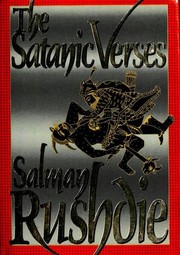
For are they not coinjoined opposites, these two, each man the other’s shadow? – One seeking to be transformed into the foreigness he admires, the other preferring, contemptuously, to transform; one, a hapless fellow who seems to be continually punished for uncommitted crimes, the other called angelic by one and all, the type of man who gets away with everything. – We may describe Chamcha as being somewhat less than life-size; but loud, vulgar Gibreel is, without question, a good deal larger than life, a disparity which might easily inspire neo-Procrustean lusts in Chamcha: to stretch himself by cutting Farishta down to size. What is unforgivable?
The Satanic Verses · Salman Rushdie
The relief of discovering you owe nothing to the people who raised you.
Owing to an accidental discovery I happened to make this afternoon, I have become aware that I must cease to regard you as my father. This is an immense relief to me. Realizing as I do how little affection I feel for you, I have for a long time past been thinking myself an unnatural son; I prefer knowing I am not your son at all.
The Counterfeiters · André Gide
Read pages from books like this, one at a time
Keep reading in the feed