
Short Fiction
Xavier de Maistre (1763–1852), 1794
An officer under house arrest tours his bedroom as if it were a continent, finding the stars, his dog and the whole human comedy inside four walls. A quiet, witty voice wanders through small rooms and large thoughts, mixing tenderness with solitude and a light sense of freedom.
Feels like tenderness and wonder. About solitude, freedom and home.
Who it’s for
You may like it if you enjoy digressive, gently philosophical prose and finding wonder in ordinary objects. The eighteenth-century sentences are long and sometimes ornate, so it asks for a patient reader who doesn't mind a slow, meandering pace.
Why read it
It offers a small, humane pleasure: a confined mind turning its walls into a world, and finding wit and tenderness in the everyday.
Pages from the book
Every attempt to make mankind happy has failed. One dog has not.
Man’s nature is such, that happiness appears to be a thing unattainable; unconsciously and unintentionally friend offends friend, and even lovers inevitably fall out and quarrel at times. And since all legislators, from Lycurgus down to those of today, in their attempts to bestow happiness on mankind have failed miserably, I can at least comfort myself greatly with the thought of having made even one dog happy. What a garden looks like when it is built to keep two people apart.
When my sister was attacked by the contagious disease to which all the members of our family have been victims, and she came to share my retreat, we had never seen one another. The shock was great when she saw me for the first time; and the fear of distressing her, and the still greater fear of increasing her malady through my presence, compelled me to adopt this sad arrangement. The leprosy had attacked her chest only; and I had some hope of her recovery. You see what is left of the trellis which I have allowed to fall into neglect. It was a hedge of hops that I trained with care, and which divided the garden into two parts. I had shaped on each side a narrow path, along which we could walk and talk together, without seeing one another, or approaching one another too nearly. The loneliness that only a crowd can teach you.
In setting out on her pilgrimage, she was prepared to meet, with resignation, all the sufferings and dangers, which, in her ignorance of the world, she could represent to herself; the inclemency of winter, oppressive heat, hunger, nakedness, diseases, death: but since she had become a little more acquainted with larger collections of men, than in her village of Ischim, she feared her courage would be insufficient. In the wilderness, she had no conception of the mournful and chilling solitude, that awaits the poor in populous cities: she did not imagine, that thousands of fellow-beings would walk by her, without seeing her, and without listening to her prayers, as if they had no eyes for misery, nor ears for sighs and lamentations. Xavier de Maistre.He was the younger brother of Joseph de Maistre, the celebrated philosopher of reaction — the family's famous name belonged to someone else.
Books that feel like this


Where to get it
Some of these links earn us a small commission, at no cost to you. It keeps BookFeed free.
Questions readers ask
- Is Short Fiction for me?
- You may like it if you enjoy digressive, gently philosophical prose and finding wonder in ordinary objects. The eighteenth-century sentences are long and sometimes ornate, so it asks for a patient reader who doesn't mind a slow, meandering pace.
- What is Short Fiction like?
- A quiet, witty voice wanders through small rooms and large thoughts, mixing tenderness with solitude and a light sense of freedom. Feels like tenderness and wonder. About solitude, freedom and home.
- What should I read after Short Fiction?
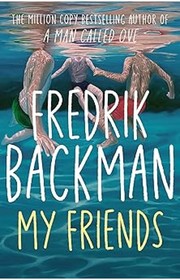
- If you liked Short Fiction, try Short Fiction (Thomas Hardy), My Friends (Fredrik Backman) and The Natural History of Selborne (Gilbert White).
A taste of the feed
A lifetime of milking, written into a woman's forehead.
Her monotonous milking at the dairy was resumed, and followed for many long years, till her form became bent, and her once abundant dark hair white and worn away at the forehead—perhaps by long pressure against the cows. Here, sometimes, those who knew her experiences would stand and observe her, and wonder what sombre thoughts were beating inside that impassive, wrinkled brow, to the rhythm of the alternating milk-streams.
Short Fiction · Thomas Hardy
The moment you realise time isn’t passing but turning in circles.
—Qué quería —murmuró—, el tiempo pasa. —Así es,—dijo Úrsula—, pero no tanto. Al decirlo, tuvo conciencia de estar dando la misma réplica que recibió del coronel Aureliano Buendía en su celda de sentenciado, y una vez más se estremeció con la comprobación de que el tiempo no pasaba, como ella lo acababa de admitir, sino que daba vueltas en redondo.
One Hundred Years of Solitude · Gabriel García Márquez
A mother’s suspicion that love may be a superstition we haven’t outgrown.
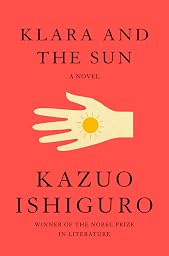
I think I hate Capaldi because deep down I suspect he may be right. That what he claims is true. That science has now proved beyond doubt there’s nothing so unique about my daughter, nothing there our modern tools can’t excavate, copy, transfer. That people have been living with one another all this time, centuries, loving and hating each other, and all on a mistaken premise. A kind of superstition we kept going while we didn’t know better.
Klara and the Sun · Kazuo Ishiguro
Read pages from books like this, one at a time
Keep reading in the feed