
Riders of the Purple Sage
Zane Grey (1872–1939), 1912
★ 3.76 from 15.6k ratings on Goodreads
A Utah rancher, a gunman with a hidden grief, and a valley of purple sage: the Western that taught the genre how to feel like a myth. The novel reads like a slow-burning legend: lyrical desert descriptions, a current of longing, and moments of awe and freedom.
Feels like longing, awe and tenderness. About love, freedom and faith.
Who it’s for
You may like it if you enjoy Westerns with a lyrical, mythic streak and patience for old-fashioned storytelling. The prose dates from 1912, so expect formal, sometimes archaic sentences and attitudes that can feel remote.
Why read it
It gives you the Western as myth: wide country, strong feeling, and a story where faith and freedom press against love and loss.
Pages from the book
A wind that carries every love story ever told.
Always it brought softly to him strange, sweet tidings of far-off things. It blew from a place that was old and whispered of youth. It blew down the grooves of time. It brought a story of the passing hours. It breathed low of fighting men and praying women. It sang clearly the song of love. That ever was the burden of its tidings—youth in the shady woods, waders through the wet meadows, boy and girl at the hedgerow stile, bathers in the booming surf, sweet, idle hours on grassy, windy hills, long strolls down moonlit lanes—everywhere in far-off lands, fingers locked and bursting hearts and longing lips—from all the world tidings of unquenchable love. What a face can carry of a life spent looking for something.
Jane, greeting him, looked up into a face that she trusted instinctively and which riveted her attention. It had all the characteristics of the range rider’s—the leanness, the red burn of the sun, and the set changelessness that came from years of silence and solitude. But it was not these which held her, rather the intensity of his gaze, a strained weariness, a piercing wistfulness of keen, gray sight, as if the man was forever looking for that which he never found. Jane’s subtle woman’s intuition, even in that brief instant, felt a sadness, a hungering, a secret. The hour when a landscape starts to look like your future.
It was the moment when the last ruddy rays of the sunset brightened momentarily before yielding to twilight. And for Venters the outlook before him was in some sense similar to a feeling of his future, and with searching eyes he studied the beautiful purple, barren waste of sage. Here was the unknown and the perilous. The whole scene impressed Venters as a wild, austere, and mighty manifestation of nature. And as it somehow reminded him of his prospect in life, so it suddenly resembled the woman near him, only in her there were greater beauty and peril, a mystery more unsolvable, and something nameless that numbed his heart and dimmed his eye. Zane Grey.Zane Grey was a dentist before he became the best-selling Western novelist in America; his first big success was this 1912 novel.
Books that feel like this

Where to get it
Some of these links earn us a small commission, at no cost to you. It keeps BookFeed free.
Questions readers ask
- Is Riders of the Purple Sage for me?
- You may like it if you enjoy Westerns with a lyrical, mythic streak and patience for old-fashioned storytelling. The prose dates from 1912, so expect formal, sometimes archaic sentences and attitudes that can feel remote.
- What is Riders of the Purple Sage like?
- The novel reads like a slow-burning legend: lyrical desert descriptions, a current of longing, and moments of awe and freedom. Feels like longing, awe and tenderness. About love, freedom and faith.
- What should I read after Riders of the Purple Sage?
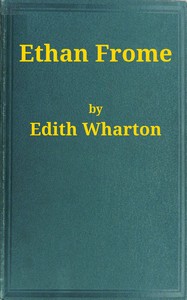
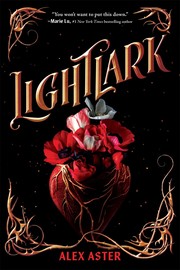
- If you liked Riders of the Purple Sage, try Ethan Frome (Edith Wharton), The Lily of the Valley (Honoré de Balzac) and Lightlark (Alex Aster).
A taste of the feed
The moment a wife becomes a stranger in her own kitchen.
Against the dark background of the kitchen she stood up tall and angular, one hand drawing a quilted counterpane to her flat breast, while the other held a lamp. The light, on a level with her chin, drew out of the darkness her puckered throat and the projecting wrist-bone of the hand that clutched the quilt, and deepened fantastically the hollows and prominences of her high-boned face under its ring of crimping-pins. To Ethan, still in the rosy haze of his hour with Mattie, the sight came with the intense precision of the last dream before waking. He felt as if he had never before known what his wife looked like.
Ethan Frome · Edith Wharton
What it sounds like when someone could ruin you and chooses not to.
I could open a black hole that would swallow the beach. I could turn the sea dark as ink and kill everything inside of it. I could demolish the castle, brick by brick, from where we stand. I could take you back to Nightshade lands with me right now.” His voice was deep as dreams, dark as nightmares. “I could do all of those things.” His lips pressed against the top of her ear, for just a moment. “And I might—if I didn’t think you would hate me for it.
Lightlark · Alex Aster
What it costs to hand someone the ashes of your grief.
I lift my heavy heart up solemnly, As once Electra her sepulchral urn, And, looking in thine eyes, I overturn The ashes at thy feet. Behold and see What a great heap of grief lay hid in me, And how the red wild sparkles dimly burn Through the ashen greyness. If thy foot in scorn Could tread them out to darkness utterly, It might be well perhaps. But if instead Thou wait beside me for the wind to blow The grey dust up—those laurels on thine head, O my Beloved, will not shield thee so, That none of all the fires shall scorch and shred The hair beneath. Stand further off then! Go.
Sonnets from the Portuguese · Elizabeth Barrett Browning
Read pages from books like this, one at a time
Keep reading in the feed