
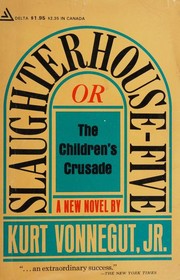
Slaughterhouse-Five
Kurt Vonnegut Jr., 1969
Science fiction Historical fictionLiterary fictionContemporary fiction
A soldier unstuck from time, an invented planet, and a three-word shrug for every death the twentieth century could hand him. The book moves in short, plain jumps through war, memory and invented science fiction, funny and sad at once, with a shrug never far behind.
Feels like melancholy, wonder and humor. About death, war and time.
Who it’s for
You may like it if you have patience for a war story that keeps breaking its own chronology and mixing in science fiction. The Dresden sections are bleak, and the repeated 'So it goes' can feel like a shrug where you might want anger.
Why read it
It gives you a clear-eyed, darkly funny way to think about war, memory and grief without pretending any of it can be neatly explained.
A page from the book
The year the obituaries and the news bulletins became the same page.
Robert Kennedy, whose summer home is eight miles away from the home I live in all year round, was shot two nights ago. He died last night. So it goes.Martin Luther King was shot a month ago. He died, too. So it goes.And everyday my government gives me a count of corpses created by the military service in Vietnam. So it goes.My father died many years ago now — of natural causes. So it goes. He was a sweet man. He was a gun nut, too. He left me his guns. They rust. Kurt Vonnegut Jr..Vonnegut survived the 1945 firebombing of Dresden as a prisoner of war, held in a slaughterhouse cellar — the 'Slaughterhouse-Five' of the title.
Books that feel like this

Where to get it
Some of these links earn us a small commission, at no cost to you. It keeps BookFeed free.
Questions readers ask
- Is Slaughterhouse-Five for me?
- You may like it if you have patience for a war story that keeps breaking its own chronology and mixing in science fiction. The Dresden sections are bleak, and the repeated 'So it goes' can feel like a shrug where you might want anger.
- What is Slaughterhouse-Five like?
- The book moves in short, plain jumps through war, memory and invented science fiction, funny and sad at once, with a shrug never far behind. Feels like melancholy, wonder and humor. About death, war and time.
- What should I read after Slaughterhouse-Five?
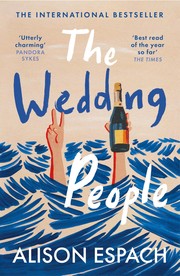
- If you liked Slaughterhouse-Five, try Slaughterhouse-Five (Kurt Vonnegut), The Art of War (Sun Tzu) and The Five People You Meet in Heaven (Mitch Albom).
A taste of the feed
What if war is a glacier, and no book has ever moved one?
“You know what I say to people when I hear they’re writing anti-war books?” “No. What do you say, Harrison Starr?” “I say, ‘Why don’t you write an anti-glacier book instead?’” What he meant, of course, was that there would always be wars, that they were as easy to stop as glaciers. I believe that too. And even if wars didn’t keep coming like glaciers, there would still be plain old death.
Slaughterhouse-Five · Kurt Vonnegut
The most counterintuitive military idea in history: win with the enemy intact, not destroyed.
Sun Tzǔ said: In the practical art of war, the best thing of all is to take the enemy’s country whole and intact; to shatter and destroy it is not so good. So, too, it is better to capture an army entire than to destroy it, to capture a regiment, a detachment or a company entire than to destroy them.
The Art of War · Sun Tzu
Children leave their parents long before they understand what they're leaving.
Parents rarely let go of their children, so children let go of them. They move on. They move away. The moments that used to define them - a mother’s approval, a father’s nod - are covered by moments of their own accomplishments. It is not until much later, as the skin sags and the heart weakens, that children understand; their stories, and all their accomplishments, sit atop the stories of their mothers and fathers, stones upon stones, beneath the waters of their lives.
The Five People You Meet in Heaven · Mitch Albom
Read pages from books like this, one at a time
Keep reading in the feed