
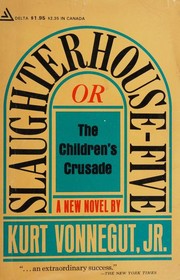
Slaughterhouse-Five
Kurt Vonnegut, 1969
★ 4.10 from 1.5m ratings on Goodreads
Vonnegut survived the Dresden firebombing and spent twenty-three years failing to write it straight — so he wrote it as science fiction, jokes and all. The book moves in jumps through war, memory and jokes, with a flat, wry voice that keeps grief close to wonder.
Feels like grief, wonder and humor. About war, time and memory.
Who it’s for
You may like this if you are drawn to dark humor mixed with grief and don't mind a story that refuses to march straight. Some readers find the repetition and disjointed style frustrating, so the fractured telling may test your patience.
Why read it
Read it for a humane, funny, unsentimental look at war and memory, and for a way to hold grief and absurdity in the same frame.
A page from the book
What if war is a glacier, and no book has ever moved one?
“You know what I say to people when I hear they’re writing anti-war books?”“No. What do you say, Harrison Starr?”“I say, ‘Why don’t you write an anti-glacier book instead?’”What he meant, of course, was that there would always be wars, that they were as easy to stop as glaciers. I believe that too.And even if wars didn’t keep coming like glaciers, there would still be plain old death. What readers say
Readers often call the book strange, fractured, and hard to explain, yet many are moved by its blend of dark humor, grief, and anti-war reflection. Some find the repetition and disjointed style frustrating or off-putting, while others find it profound and consoling.
Kurt Vonnegut.Vonnegut was a twenty-two-year-old POW in Dresden during the February 1945 firebombing and was later put on a work party sent into the cellars to recover bodies.
Books that feel like this


The Catcher in the Rye
J. D. Salinger, 1951
A prep-school dropout drifts through New York for a few days, allergic to phonies and desperate to protect someone younger.

More by Kurt Vonnegut
Breakfast of Champions
Kurt Vonnegut, 1973
A little-read science-fiction hack, a car dealer coming apart, and a narrator who walks into his own book to tell them both the truth.
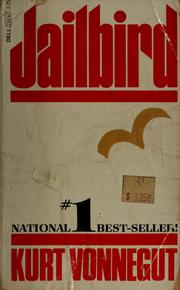
Jailbird
Kurt Vonnegut, 1979
A Watergate-era ex-con drifts through American labor history and family failure, looking for a decent way to live.
Where to get it
Some of these links earn us a small commission, at no cost to you. It keeps BookFeed free.
Questions readers ask
- Is Slaughterhouse-Five for me?
- You may like this if you are drawn to dark humor mixed with grief and don't mind a story that refuses to march straight. Some readers find the repetition and disjointed style frustrating, so the fractured telling may test your patience.
- What is Slaughterhouse-Five like?
- The book moves in jumps through war, memory and jokes, with a flat, wry voice that keeps grief close to wonder. Feels like grief, wonder and humor. About war, time and memory.
- What should I read after Slaughterhouse-Five?
- If you liked Slaughterhouse-Five, try Slaughterhouse-Five (Kurt Vonnegut Jr.), Up the Down Staircase (Bel Kaufman) and A Clockwork Orange (Anthony Burgess).
A taste of the feed
The year the obituaries and the news bulletins became the same page.
Robert Kennedy, whose summer home is eight miles away from the home I live in all year round, was shot two nights ago. He died last night. So it goes. Martin Luther King was shot a month ago. He died, too. So it goes. And everyday my government gives me a count of corpses created by the military service in Vietnam. So it goes. My father died many years ago now — of natural causes. So it goes. He was a sweet man. He was a gun nut, too. He left me his guns. They rust.
Slaughterhouse-Five · Kurt Vonnegut Jr.
The private language of institutions, translated by someone who has learned to hate it.
The clerical work is par for the course. “Keep on file in numerical order” means throw in wastebasket. You’ll soon learn the language. “Let it be a challenge to you” means you’re stuck with it; “interpersonal relationships” is a fight between kids; “ancillary civic agencies for supportive discipline” means call the cops; “Language Arts Dept.” is the English office; “literature based on child’s reading level and experiential background” means that’s all they’ve got in the Book Room; “non-academic-minded” is a delinquent; and “It has come to my attention” means you’re in trouble.
Up the Down Staircase · Bel Kaufman
A river you could swim in, and a man who cannot stop explaining it.
WILLY WONKA: Nothing wrong with it, my boy! Nothing! Nothing at all! It’s all chocolate! Every drop of that river is hot melted chocolate of the finest quality. The very finest quality. There’s enough chocolate in there to fill every bathtub in the entire country! And all the swimming pools as well! Isn’t it terrific? And just look at my pipes! They suck up the chocolate and carry it all away to all the other rooms in the factory where it is needed! Thousands of gallons an hour, my dear children! Thousands and thousands of gallons!
Charlie and the Chocolate Factory · Roald Dahl
Read pages from books like this, one at a time
Keep reading in the feed