BookFeed Ελληνικά

10 Greek poets to read

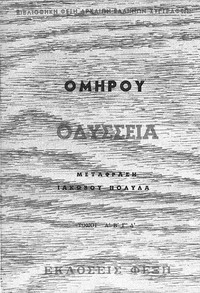
These ten books carry Greek poetry across nearly twenty-five centuries, and what they share is a plainspoken intimacy: the sense of a voice speaking directly to you, whether it is Homer's soldier refusing immortality or Cavafy's civil servant measuring his failures against history. Start with the «Ομήρου Οδύσσεια Τόμος Α» for the rough, sweet immediacy of the Greek, or with «Ποιήματα» by Καβάφης, where the ironic, musical lines about dull offices and failed hopes still sound like nobody else's.

  1. 3.Ἡ Τρίχα

    Διονύσιος Σολωμός, 1830

    Ο εθνικός ποιητής γράφει σάτιρα: ένας ζυγιαστής ζυγίζει ανθρώπους, πουλιά και πολιτικούς, κι ένα ποίημα βγαίνει από ένα όνειρο και μια τρίχα.

  2. 4.Συλλογές

    Κωστής Παλαμάς, 1886

    The great popular poet of modern Greece: ballads, island legends and small elegies, in the language people actually spoke. Look for the human gesture inside the folk song. At his best there is no one warmer and more exact about the things he loved. Still, some verse is more pastiche than lived experience, but the ambition is real. But the book has real ballads and real feeling, and a warm, generous voice, and Palamaς is a key figure in Greek letters. Read him as a poet who came from the folk tradition. Read him for the ballads and the small elegies. In the end, you get a sense of the poet's world and a few lines to underline. That is the honest case for this book,

  3. 5.Ποιητικές συλλογές

    Κώστας Καρυωτάκης, 1928

    The poet of Greek disillusionment: ironic, musical verses about failed hopes, dull offices, and the strange comfort of knowing nothing lasts.

    Εἴμαστε κάτι ξεχαρβαλωμένεςκιθάρες. Ὁ ἄνεμος, ὅταν περνάει,στίχους, ἤχους παράφωνους ξυπνάειστὶς χορδὲς ποὺ κρέμονται σὰν καδένες.Εἴμαστε κάτι ἀπίστευτες ἀντέννες.Ὑψώνονται σὰ δάχτυλα στὰ χάη,στὴν κορυφή τους τἄπειρο ἀντηχάει,μὰ γρήγορα θὰ πέσουνε σπασμένες.Εἴμαστε κάτι διάχυτες αἰσθήσεις,χωρὶς ἐλπίδα νὰ συγκεντρωθοῦμε.Στὰ νεῦρα μας μπερδεύεται ὅλη ἡ φύσις.Στὸ σῶμα, στὴν ἐνθύμηση πονοῦμε.Μᾶς διώχνουνε τὰ πράγματα, κ’ ἡ ποίησιςεἶναι τὸ καταφύγιο ποὺ φθονοῦμε.
  4. 6.Μήτηρ Θεού (1916-1917)

    Άγγελος Σικελιανός, 1916

    A poet walks among the dead as if among family, and finds a language for grief that is closer to feasting than to mourning. One unbroken hymn, in the rhythms of folk song, to a mother larger than any church.

    Μικρούλα πνοή, που τη δροσιά θεϊκά το θρέφει, κοίταπώς κυβερνάει δεξά ζερβά του τάφου του τη σαΐτα!Και νά· μια μέρα, στου σπιτιού το μεσιανό πατάρι,γοργόν, απ’ το πρωτόβραδο λιγνότερο φεγγάρι,αχαμνισμένο απ’ το μακρύ ταξίδι, καθώς σώνειτην όψη ο κρύφιος έρωτας, το πρώτο χελιδόνιδιανεύει ως ίσκιος άπιαστος στο δώμα απάνου κάτου,με συχνοφτερουγιάσματα τριγύρα απ’ τη φωλιά του …
  5. 8.Ανέκδοτα ποιήματα

    Μαρία Πολυδούρη, 1993

    The lyric poems Polydouri never published in her lifetime — love, loss and presentiment, written by a young woman who knew she was dying.

    Τι θλιβερό πράμμα ο Σταθμός,που μόλις νάχη φύγει το τραίνο.Ούτε στιγμή, μολίς που εδώστις ράγιες του βαριά σταματημένοκαι πηγαινοέρχονταν γοργά,ανίδεα γελώντας ταξειδιώτες.Κι’ όσοι που μείνανε κι’ αυτοίδεν έχουνε την όψη τους σαν τότες.Η άδεια θέση κ’ η σιωπήμεσ’ στο Σταθμό που τούφυγε το τραίνο.Κι’ αυτοί που μείνανε σκορπούνκ’ έχουν το βήμα το αποφασισμένοόσων τη μοίρα ακολουθούν.
  6. 9.Σονέτα

    Λορέντζος Μαβίλης, 1915

    A Greek patriot and translator of Heine, Mavilis wrote sonnets that praise the glorious and quarrelled with the chauvinists. Poems of beauty, of the dead, of love that slips away into the terrible falling dusk.

  7. 10.Ο Φασουλής φιλόσοφος

    Γεώργιος Σουρής, 1888

    Athens, 1888: a newspaper poet turns Diogenes, Buddha and his own bad moods into rhyming satire that still lands. Read him for the jokes, stay for the ache underneath.

    Μιὰ μέρα ποὺ δὲν εἴξευρα τί διάβολο νὰ κάνωτὰ δάκρυά μου σὲ βαθὺ ἐστράγγισα ποτῆρικαὶ μιὰ καὶ δυὸ στὸν χημικὸ τὰ πῆγα Χρηστομάνοκαὶ κάνε μου, παρακαλῶ, τοῦ εἶπα, τὸ χατῆρινὰ τἀναλύσῃς καὶ νὰ βρῇς πῶς εἶναι καμωμένα,γιὰ νὰ μὴν κλαίω στὸ ἑξῆς κι’ ἐγὼ εἰς τὰ χαμένα.Κι’ ὁ χημικὸς μ’ ἀπάντησε «αὐτά, ξερὸ κεφάλι,δὲν εἶναι ἄλλο τίποτε παρὰ χλωριούχον κάλι».

Read pages from books like this, one at a time

BookFeed is a feed of real passages from real books. It learns what moves you and finds your next book.

Open BookFeed

Free, no sign-up.