
Kritik der reinen Vernunft
Immanuel Kant, 1781
★ 3.96 from 44.8k ratings on Goodreads
A map of what the mind can know, written in the confident, stormy prose of the Enlightenment, and still a bracing account of reason's limits.
Feels like curiosity, awe and unease. About power, identity and faith.
Pages from the book
Making room for belief sometimes means refusing to know.
We have seen, therefore, that I am not allowed even to *assume*, for the sake of the necessary practical use of my reason *God, freedom, immortality*, unless at the same time *I deprive* speculative reason of its pretensions to transcendent insights. Reason, namely, in order to arrive at these, must employ principles which extend only to objects of possible experience, and which, if in spite of this they are applied also to what cannot be an object of experience, actually always change this into an appearance, thus rendering all practical *expansion* of pure reason impossible. Hence I had to suspend *knowledge* in order to make room for *belief*. For the dogmatism of metaphysics without a preceding critique of pure reason, is the source of all that disbelief which opposes morality and which is always very dogmatic. Some questions are traps disguised as obligations.
To know what questions may reasonably be asked is already a great and necessary proof of sagacity and insight. For if a question is absurd in itself and calls for unnecessary answers, it not only brings disgrace to the person raising it, but may prompt an incautious listener to give absurd answers, thus presenting, as the ancients said, the laughable spectacle of one person milking a he-goat, and another holding the sieve underneath. The mind's homeland is ringed by water it cannot cross.
It is the Land of Truth (enchanted name!), surrounded by a wide and stormy ocean, the true home of illusion, where many a fog bank and ice, that soon melts away, tempt us to believe in new lands, while constantly deceiving the adventurous mariner with vain hopes, and involving him in adventures which he can never leave, yet never bring to an end. What readers say
Readers find it daunting and often confusing, yet many describe intellectual exhilaration, awe, and satisfaction in grappling with its landmark arguments. Some are sharply skeptical or satirical, while others value its focus on self-knowledge, reason’s limits, and questions about God and time.
Immanuel Kant.Kant published the first Critique at fifty-seven, then rewrote large parts of it for a second edition in 1787; scholars still cite the two versions as A and B.
Books that feel like this



Where to get it
Some of these links earn us a small commission, at no cost to you. It keeps BookFeed free.
Questions readers ask
- What is Kritik der reinen Vernunft like?
- Feels like curiosity, awe and unease. About power, identity and faith.
- What should I read after Kritik der reinen Vernunft?
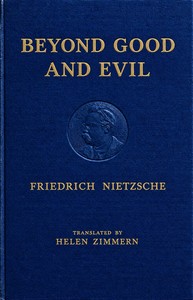
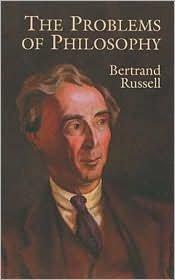
- If you liked Kritik der reinen Vernunft, try Beyond Good and Evil (Friedrich Nietzsche), The Problems of Philosophy (Bertrand Russell) and Dialogues (Plato).
A taste of the feed
What it would be to look at the world without wanting anything.
Everything, in contemplation, that is personal or private, everything that depends upon habit, self-interest, or desire, distorts the object, and hence impairs the union which the intellect seeks. By thus making a barrier between subject and object, such personal and private things become a prison to the intellect. The free intellect will see as God might see, without a here and now, without hopes and fears, without the trammels of customary beliefs and traditional prejudices, calmly, dispassionately, in the sole and exclusive desire of knowledge—knowledge as impersonal, as purely contemplative, as it is possible for man to attain.
The Problems of Philosophy · Bertrand Russell
Read pages from books like this, one at a time
Keep reading in the feed