BookFeed Ελληνικά

Books like Thus Spake Zarathustra

If Thus Spake Zarathustra stayed with you, these share its feel: awe, defiance and freedom. Each comes with a real page, so you can tell in a minute.

About Thus Spake Zarathustra · Friedrich Nietzsche

  1. 1.Notes from Underground

    Fyodor Dostoevsky, 1864

    Also unease and freedom. A furious, funny, self-lacerating monologue from a Petersburg clerk who argues that freedom begins where reason and self-interest end.

    I was standing by the billiard-table and in my ignorance blocking up the way, and he wanted to pass; he took me by the shoulders and without a word—without a warning or explanation—moved me from where I was standing to another spot and passed by as though he had not noticed me. I could have forgiven blows, but I could not forgive his having moved me without noticing me.

  2. 2.Kritik der reinen Vernunft

    Immanuel Kant, 1781

    Also awe and unease. A map of what the mind can know, written in the confident, stormy prose of the Enlightenment, and still a bracing account of reason's limits.

    We have seen, therefore, that I am not allowed even to *assume*, for the sake of the necessary practical use of my reason *God, freedom, immortality*, unless at the same time *I deprive* speculative reason of its pretensions to transcendent insights. Reason, namely, in order to arrive at these, must employ principles which extend only to objects of possible experience, and which, if in spite of this they are applied also to what cannot be an object of experience, actually always change this into an appearance, thus rendering all practical *expansion* of pure reason impossible. Hence I had to suspend *knowledge* in order to make room for *belief*. For the dogmatism of metaphysics without a preceding critique of pure reason, is the source of all that disbelief which opposes morality and which is always very dogmatic.
  3. 3.The Art of War

    Sun Tzu, -500

    Also war. A 2,500-year-old manual for conflict, written for generals and read by anyone who has to hold a position, win an argument, or know when to walk away.

    Sun Tzǔ said: In the practical art of war, the best thing of all is to take the enemy’s country whole and intact; to shatter and destroy it is not so good. So, too, it is better to capture an army entire than to destroy it, to capture a regiment, a detachment or a company entire than to destroy them.
  4. 4.Songs of Innocence and of Experience

    William Blake, 1794

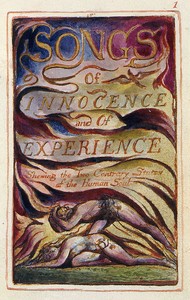
    Also faith and unease. Short poems about lambs, tigers, chimney sweeps and London streets, paired to show one world seen first with trust, then with disillusion. Readable in an evening.

    What the hammer? what the chain?In what furnace was thy brain?What the anvil? what dread graspDare its deadly terrors clasp?When the stars threw down their spears,And watered heaven with their tears,Did He smile His work to see?Did He who made the lamb make thee?Tiger, tiger, burning brightIn the forests of the night,What immortal hand or eyeDare frame thy fearful symmetry?
  5. 5.Paradise Lost

    John Milton, 1667

    Also freedom and awe. A blind poet turns the fall of Adam and Eve into an epic of free will, ambition, and married love, and gives the devil its most persuasive voice.

    What matter where, if I be still the same,And what I should be, all but less than heWhom thunder hath made greater? Here at leastWe shall be free; the Almighty hath not builtHere for his envy, will not drive us hence:Here we may reign secure, and in my choiceTo reign is worth ambition though in Hell:Better to reign in Hell, than serve in Heaven.
  6. 6.Short Works

    Epictetus, 125

    Also freedom and defiance. A freed slave's short, sharp rules for staying free inside your own mind—written for anyone whose peace depends on other people.

    It is just to commend Agrippinus for this reason, that though he was a man of the highest worth, he never praised himself; but even if another person praised him, he would blush. And he was such a man (Epictetus said) that he would write in praise of anything disagreeable that befell him; if it was a fever, he would write of a fever; if he was disgraced, he would write of disgrace; if he were banished, of banishment. And on one occasion (he mentioned) when he was going to dine, a messenger brought him news that Nero commanded him to go into banishment; on which Agrippinus said, Well then we will dine at Aricia.
  7. 7.Essays

    Ralph Waldo Emerson, 1841

    Also defiance and freedom. Twelve essays that argue with your habits of mind: trust your own thinking, distrust conformity, and read the world as a mind would. Every page contains a sentence you'll want to underline.

  8. 8.Jane Eyre

    Charlotte Brontë, 1847

    Also defiance and freedom. An orphan with no money, no beauty and a ferocious sense of her own worth takes a job at a strange house. A first-person voice that still feels startlingly direct.

Read pages from books like this, one at a time

BookFeed is a feed of real passages from real books. It learns what moves you and finds your next book.

Open BookFeed

Free, no sign-up.