
The Adventures of Huckleberry Finn
Mark Twain (1835–1910), 1884
★ 3.83 from 1.4m ratings on Goodreads
A runaway boy and an enslaved man drift a raft down the Mississippi, and a child's plain talk quietly dismantles everything the adults around him believe. The voice is plain and witty, the river drifts with a free, wondering pace, and a current of melancholy runs underneath.
Feels like wonder, melancholy and awe. About freedom, society and morality.
Who it’s for
You may like it if you enjoy a child’s sharp, funny narration and a story that takes moral questions seriously without preaching. Be aware that the book’s racial language is jarring for many readers, and the final stretch with Tom Sawyer can feel long.
Why read it
It gives you a plainspoken view of freedom and conscience from the river, with humor that still lands and a moral seriousness that stays with you.
Pages from the book
What silence feels like when it isn't loneliness.
This second night we run between seven and eight hours, with a current that was making over four mile an hour. We catched fish and talked, and we took a swim now and then to keep off sleepiness. It was kind of solemn, drifting down the big, still river, laying on our backs looking up at the stars, and we didn’t ever feel like talking loud, and it warn’t often that we laughed—only a little kind of a low chuckle. We had mighty good weather as a general thing, and nothing ever happened to us at all—that night, nor the next, nor the next. A working definition of conscience, from a boy who has one.
So we poked along back home, and I warn’t feeling so brash as I was before, but kind of ornery, and humble, and to blame, somehow—though I hadn’t done nothing. But that’s always the way; it don’t make no difference whether you do right or wrong, a person’s conscience ain’t got no sense, and just goes for him anyway. If I had a yaller dog that didn’t know no more than a person’s conscience does I would pison him. It takes up more room than all the rest of a person’s insides, and yet ain’t no good, nohow. Tom Sawyer he says the same. A boy describes his father with an anatomist's calm and no love at all.
He was most fifty, and he looked it. His hair was long and tangled and greasy, and hung down, and you could see his eyes shining through like he was behind vines. It was all black, no gray; so was his long, mixed-up whiskers. There warn’t no color in his face, where his face showed; it was white; not like another man’s white, but a white to make a body sick, a white to make a body’s flesh crawl—a tree-toad white, a fish-belly white. As for his clothes—just rags, that was all. He had one ankle resting on t’other knee; the boot on that foot was busted, and two of his toes stuck through, and he worked them now and then. His hat was laying on the floor—an old black slouch with the top caved in, like a lid. What readers say
Readers often find the novel funny, moving, and morally serious, especially Huck’s loyalty to Jim and its indictment of slavery. Many also report discomfort with racial language and frustration with the drawn-out Tom Sawyer ending.
Mark Twain.Twain grew up in Hannibal, Missouri, the river town he renamed St Petersburg and set Huck's story in; before writing, he was a licensed steamboat pilot on that same river.
Books that feel like this

More by Mark Twain

Roughing It
Mark Twain, 1872
Twain goes west in 1861 to dodge the war and get rich: stagecoaches, con men, silver mines that pay nothing, and a coyote that outruns every dog.
Where to get it
Some of these links earn us a small commission, at no cost to you. It keeps BookFeed free.
Questions readers ask
- Is The Adventures of Huckleberry Finn for me?
- You may like it if you enjoy a child’s sharp, funny narration and a story that takes moral questions seriously without preaching. Be aware that the book’s racial language is jarring for many readers, and the final stretch with Tom Sawyer can feel long.
- What is The Adventures of Huckleberry Finn like?
- The voice is plain and witty, the river drifts with a free, wondering pace, and a current of melancholy runs underneath. Feels like wonder, melancholy and awe. About freedom, society and morality.
- What should I read after The Adventures of Huckleberry Finn?
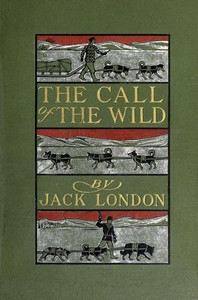
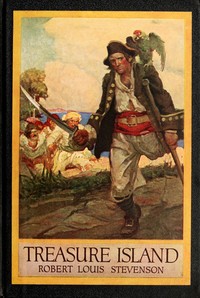
- If you liked The Adventures of Huckleberry Finn, try The Call of the Wild (Jack London), A Tale of Two Cities (Charles Dickens) and Treasure Island (Robert Louis Stevenson).
A taste of the feed
A man keeps one small proof that his old life happened.
Releasing his arm, she laid her hand upon his shoulder. After looking doubtfully at it, two or three times, as if to be sure that it was really there, he laid down his work, put his hand to his neck, and took off a blackened string with a scrap of folded rag attached to it. He opened this, carefully, on his knee, and it contained a very little quantity of hair: not more than one or two long golden hairs, which he had, in some old day, wound off upon his finger.
A Tale of Two Cities · Charles Dickens
What it costs to keep believing in a piece of land you'll never own.
They come, an’ they quit an’ go on; an’ every damn one of ‘em’s got a little piece of land in his head. An’ never a God damn one of ‘em ever gets it. Just like heaven. Ever’body wants a little piece of lan’. I read plenty of books out here. Nobody never gets to heaven, and nobody gets no land. It’s just in their head.
Of Mice and Men · John Steinbeck
What the greatest of the Greek heroes would trade for a day of paid labour.
“I spake; Achilles quickly answered me:— ‘Noble Ulysses, speak not thus of death, As if thou couldst console me. I would be A laborer on earth, and serve for hire Some man of mean estate, who makes scant cheer, Rather than reign o’er all who have gone down To death. Speak rather of my noble son, Whether or not he yet has joined the wars To fight among the foremost of the host.
The Odyssey · Homer
Read pages from books like this, one at a time
Keep reading in the feed