
The Jungle Book
Rudyard Kipling (1865–1936), 1894
★ 3.89 from 136.2k ratings on Goodreads
A boy raised by wolves, a mongoose at war with cobras, a seal hunting for a beach with no men — India's animals, and the laws they keep. The stories move at a storyteller's pace through vivid Indian landscapes, mixing wonder and wit with a quiet melancholy.
Feels like wonder, awe and melancholy. About nature.
Who it’s for
You may like it if you enjoy animal fables with a strong sense of place and a formal, old-fashioned storyteller's voice. The prose is from 1894, so some vocabulary and phrasing may feel archaic.
Why read it
It offers vivid animal characters and a clear-eyed look at law, loyalty, and the wild, in stories that still read aloud well.
Pages from the book
What a palace looks like a hundred years after the queens have gone.
He set his teeth and said nothing, but went with the shouting monkeys to a terrace above the red sandstone reservoirs that were half full of rainwater. There was a ruined summerhouse of white marble in the center of the terrace, built for queens dead a hundred years ago. The domed roof had half fallen in and blocked up the underground passage from the palace by which the queens used to enter; but the walls were made of screens of marble tracery—beautiful, milk-white fretwork, set with agates and cornelians and jasper and lapis lazuli, and as the moon came up behind the hill it shone through the openwork, casting shadows on the ground like black-velvet embroidery. What the forest looks like when the animals think no one is watching.
The moonlight showed it all iron-gray, except where some elephants stood upon it, and their shadows were inky black. Little Toomai looked, holding his breath, with his eyes starting out of his head, and as he looked, more and more and more elephants swung out into the open from between the tree-trunks. Little Toomai could count only up to ten, and he counted again and again on his fingers till he lost count of the tens, and his head began to swim. Outside the clearing he could hear them crashing in the undergrowth as they worked their way up the hillside; but as soon as they were within the circle of the tree-trunks they moved like ghosts. A fight you cannot win, fought on the principle of never letting go.
The head was lying a little clear of the water-jar, under the curve of it; and, as his teeth met, Rikki braced his back against the bulge of the red earthenware to hold down the head. This gave him just one second’s purchase, and he made the most of it. Then he was battered to and fro as a rat is shaken by a dog—to and fro on the floor, up and down, and round in great circles; but his eyes were red, and he held on as the body cartwhipped over the floor, upsetting the tin dipper and the soap-dish and the flesh-brush, and banged against the tin side of the bath. As he held he closed his jaws tighter and tighter, for he made sure he would be banged to death, and, for the honor of his family, he preferred to be found with his teeth locked. Rudyard Kipling.Kipling wrote most of these stories in Vermont, in a house he built above the Connecticut River, a hemisphere away from the Seeonee hills.
Books that feel like this
Where to get it
Some of these links earn us a small commission, at no cost to you. It keeps BookFeed free.
Questions readers ask
- Is The Jungle Book for me?
- You may like it if you enjoy animal fables with a strong sense of place and a formal, old-fashioned storyteller's voice. The prose is from 1894, so some vocabulary and phrasing may feel archaic.
- What is The Jungle Book like?
- The stories move at a storyteller's pace through vivid Indian landscapes, mixing wonder and wit with a quiet melancholy. Feels like wonder, awe and melancholy. About nature.
- What should I read after The Jungle Book?
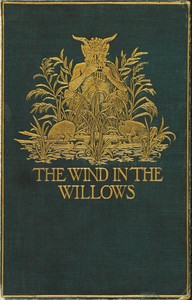
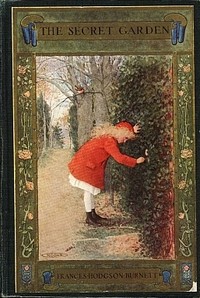
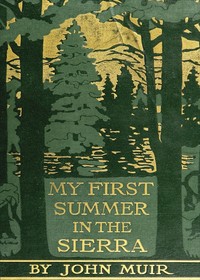
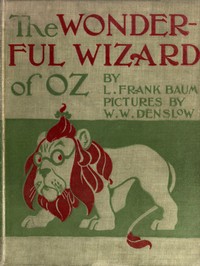
- If you liked The Jungle Book, try The Wind in the Willows (Kenneth Grahame), The Secret Garden (Frances Hodgson Burnett) and My First Summer in the Sierra (John Muir).
A taste of the feed
Pull on any one thing and the whole mountain moves.
No Sierra landscape that I have seen holds anything truly dead or dull, or any trace of what in manufactories is called rubbish or waste; everything is perfectly clean and pure and full of divine lessons. This quick, inevitable interest attaching to everything seems marvelous until the hand of God becomes visible; then it seems reasonable that what interests Him may well interest us. When we try to pick out anything by itself, we find it hitched to everything else in the universe. One fancies a heart like our own must be beating in every crystal and cell, and we feel like stopping to speak to the plants and animals as friendly fellow mountaineers.
My First Summer in the Sierra · John Muir
How does an entire civilization exist through a filter of green glass?
Even with eyes protected by the green spectacles, Dorothy and her friends were at first dazzled by the brilliancy of the wonderful City. The streets were lined with beautiful houses all built of green marble and studded everywhere with sparkling emeralds. They walked over a pavement of the same green marble, and where the blocks were joined together were rows of emeralds, set closely, and glittering in the brightness of the sun. The window panes were of green glass; even the sky above the City had a green tint, and the rays of the sun were green.
The Wonderful Wizard of Oz · L. Frank Baum
Read pages from books like this, one at a time
Keep reading in the feed