
Mosses from an old manse
Nathaniel Hawthorne (1804–1864), 1840
An author of haunting metaphors and elaborate prose who explores the fragile boundary between wild instinct, civilization, and the enduring weight of the human spirit. Hawthorne's brooding, ornate prose moves slowly through forest gloom and moral unease, with moments of gothic dread and quiet philosophical reflection.
Feels like melancholy, dread and curiosity. About nature, morality and identity.
Who it’s for
You may like it if you enjoy nineteenth-century stories that treat nature as a stage for guilt, instinct, and uneasy moral questions. The elaborate, old-fashioned prose can be demanding, so it asks for slow, patient reading.
Why read it
These stories offer a dark, nature-soaked way to think about conscience and civilization, and the prose rewards attention with strange, memorable images.
Pages from the book
When sacred architecture is made of blazing wood, what does it reveal about human conviction?
In the interval of silence he stole forward until the light glared full upon his eyes. At one extremity of an open space, hemmed in by the dark wall of the forest, arose a rock, bearing some rude, natural resemblance either to an altar or a pulpit, and surrounded by four blazing pines, their tops aflame, their stems untouched, like candles at an evening meeting. The mass of foliage that had overgrown the summit of the rock was all on fire, blazing high into the night and fitfully illuminating the whole field. Each pendent twig and leafy festoon was in a blaze. As the red light arose and fell, a numerous congregation alternately shone forth, then disappeared in shadow, and again grew, as it were, out of the darkness, peopling the heart of the solitary woods at once. Does genius require moral rot, or is the greatest artistry always fueled by inner conflict?
The tree lay along the ground, and was wholly converted into a mass of diseased splendor, which threw a ghastliness around. Being full of conceits that night, I called it a frigid fire, a funeral light, illumining decay and death, an emblem of fame that gleams around the dead man without warming him, or of genius when it owes its brilliancy to moral rottenness, and was thinking that such ghostlike torches were just fit to light up this dead forest or to blaze coldly in tombs, when, starting from my abstraction, I looked up the canal. I recollected myself, and discovered the lanterns glimmering far away. A poignant acknowledgement of the beauty that comes with the knowledge of ending.
Did I say that there was no feeling like it? Ah, but there is a half-acknowledged melancholy like to this when we stand in the perfected vigor of our life and feel that Time has now given us all his flowers, and that the next work of his never-idle fingers must be to steal them one by one away. Nathaniel Hawthorne.Hawthorne's style is heavily influenced by American Romanticism, which often blends high philosophical concepts with deep, brooding natural imagery.
Books that feel like this


More by Nathaniel Hawthorne
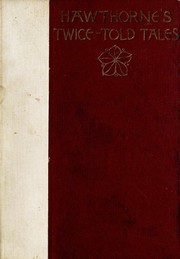
Twice-told tales
Nathaniel Hawthorne, 1837
Short fables from Puritan New England: veiled ministers, men who step out of their own lives, and the strange, small hours before dawn.
Where to get it
Some of these links earn us a small commission, at no cost to you. It keeps BookFeed free.
Questions readers ask
- Is Mosses from an old manse for me?
- You may like it if you enjoy nineteenth-century stories that treat nature as a stage for guilt, instinct, and uneasy moral questions. The elaborate, old-fashioned prose can be demanding, so it asks for slow, patient reading.
- What is Mosses from an old manse like?
- Hawthorne's brooding, ornate prose moves slowly through forest gloom and moral unease, with moments of gothic dread and quiet philosophical reflection. Feels like melancholy, dread and curiosity. About nature, morality and identity.
- What should I read after Mosses from an old manse?
- If you liked Mosses from an old manse, try The strange case of Dr. Jekyll and Mr. Hyde (Robert Louis Stevenson), Lady Chatterley's lover (D. H. Lawrence) and The Works of Edgar Allan Poe (Edgar Allan Poe).
A taste of the feed
The logic of revenge, laid out with terrifying patience.
The thousand injuries of Fortunato I had borne as I best could; but when he ventured upon insult, I vowed revenge. You, who so well know the nature of my soul, will not suppose, however, that I gave utterance to a threat. At length I would be avenged; this was a point definitively settled—but the very definitiveness with which it was resolved, precluded the idea of risk. I must not only punish, but punish with impunity. A wrong is unredressed when retribution overtakes its redresser. It is equally unredressed when the avenger fails to make himself felt as such to him who has done the wrong.
The Works of Edgar Allan Poe · Edgar Allan Poe
The moment when the boundaries between sight, sound, and emotion collapse.
Tess was conscious of neither time nor space. The exaltation which she had described as being producible at will by gazing at a star came now without any determination of hers; she undulated upon the thin notes of the second-hand harp, and their harmonies passed like breezes through her, bringing tears into her eyes. The floating pollen seemed to be his notes made visible, and the dampness of the garden the weeping of the garden’s sensibility. Though near nightfall, the rank-smelling weed-flowers glowed as if they would not close for intentness, and the waves of colour mixed with the waves of sound.
Tess of the d'Urbervilles · Thomas Hardy
The moment a familiar path becomes somewhere you have never been.
Clarke tried to conceive the thing again, as he sat by the fire, and again his mind shuddered and shrank back, appalled before the sight of such awful, unspeakable elements enthroned as it were, and triumphant in human flesh. Before him stretched the long dim vista of the green causeway in the forest, as his friend had described it; he saw the swaying leaves and the quivering shadows on the grass, he saw the sunlight and the flowers, and far away, far in the long distance, the two figures moved toward him. One was Rachel, but the other?
The Great God Pan · Arthur Machen
Read pages from books like this, one at a time
Keep reading in the feed