
The Great God Pan
Arthur Machen (1863–1947), 1890
★ 3.66 from 18.2k ratings on Goodreads
A laboratory experiment, a beautiful stranger and a London street where the ordinary world begins to thin. Machen’s Victorian prose moves with a slow, lyrical gait while dread gathers in ordinary London rooms and green forest paths.
Feels like dread, unease and awe. About freedom.
Who it’s for
You may like it if you enjoy gothic fiction that works by suggestion, philosophical unease and a sense of the ordinary world thinning. Be prepared for Victorian prose and an oblique, slow-building horror that some readers find demanding.
Why read it
It offers a compact, unsettling look at how curiosity and experiment can open onto something older and stranger, with images that linger after the last page.
Pages from the book
The moment a familiar path becomes somewhere you have never been.
Clarke tried to conceive the thing again, as he sat by the fire, and again his mind shuddered and shrank back, appalled before the sight of such awful, unspeakable elements enthroned as it were, and triumphant in human flesh. Before him stretched the long dim vista of the green causeway in the forest, as his friend had described it; he saw the swaying leaves and the quivering shadows on the grass, he saw the sunlight and the flowers, and far away, far in the long distance, the two figures moved toward him. One was Rachel, but the other? The cost of insisting that everything must have an explanation.
The ill-assorted pair moved slowly up Rupert Street; the one in dirty, evil-looking rags, and the other attired in the regulation uniform of a man about town, trim, glossy, and eminently well-to-do. Villiers had emerged from his restaurant after an excellent dinner of many courses, assisted by an ingratiating little flask of Chianti, and, in that frame of mind which was with him almost chronic, had delayed a moment by the door, peering round in the dimly-lighted street in search of those mysterious incidents and persons with which the streets of London teem in every quarter and every hour. Villiers prided himself as a practised explorer of such obscure mazes and byways of London life, and in this unprofitable pursuit he displayed an assiduity which was worthy of more serious employment. A forest so beautiful it smells like a closed room.
For many an hour I strayed through the maze of the forest, turning now to right and now to left, pacing slowly down long alleys of undergrowth, shadowy and chill, even under the midday sun, and halting beneath great oaks; lying on the short turf of a clearing where the faint sweet scent of wild roses came to me on the wind and mixed with the heavy perfume of the elder, whose mingled odour is like the odour of the room of the dead, a vapour of incense and corruption. I stood at the edges of the wood, gazing at all the pomp and procession of the foxgloves towering amidst the bracken and shining red in the broad sunshine, and beyond them into deep thickets of close undergrowth where springs boil up from the rock and nourish the water-weeds, dank and evil. Arthur Machen.Machen’s novella was attacked as decadent on publication, yet H. P. Lovecraft later named him among the masters of weird fiction.
Books that feel like this


Where to get it
Some of these links earn us a small commission, at no cost to you. It keeps BookFeed free.
Questions readers ask
- Is The Great God Pan for me?
- You may like it if you enjoy gothic fiction that works by suggestion, philosophical unease and a sense of the ordinary world thinning. Be prepared for Victorian prose and an oblique, slow-building horror that some readers find demanding.
- What is The Great God Pan like?
- Machen’s Victorian prose moves with a slow, lyrical gait while dread gathers in ordinary London rooms and green forest paths. Feels like dread, unease and awe. About freedom.
- What should I read after The Great God Pan?
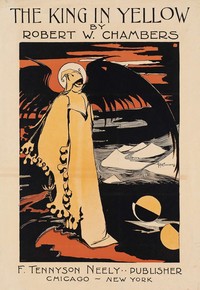
- If you liked The Great God Pan, try The King in Yellow (Robert W. Chambers), Ghost Stories (E. F. Benson) and The Works of Edgar Allan Poe (Edgar Allan Poe).
A taste of the feed
Some people hold a wounded bird the way a hungry person holds a plate.
It was clear that the kindest thing to do would be to put the bird out of its pain, but when I suggested that, she took a step back from me, and covered it with her other hand. Her eyes gleamed, her mouth smiled, and I saw the tip of her tongue swiftly pass over her lips as if licking them.
Ghost Stories · E. F. Benson
The logic of revenge, laid out with terrifying patience.
The thousand injuries of Fortunato I had borne as I best could; but when he ventured upon insult, I vowed revenge. You, who so well know the nature of my soul, will not suppose, however, that I gave utterance to a threat. At length I would be avenged; this was a point definitively settled—but the very definitiveness with which it was resolved, precluded the idea of risk. I must not only punish, but punish with impunity. A wrong is unredressed when retribution overtakes its redresser. It is equally unredressed when the avenger fails to make himself felt as such to him who has done the wrong.
The Works of Edgar Allan Poe · Edgar Allan Poe
What fear does to the body before the mind can decide.
Why did I remain silent and motionless while such an outrage was being committed? If, instead of being a very nervous girl, preoccupied with an undefinable terror of that wicked woman, I had possessed courage and presence of mind, I dare say I might have given an alarm, and escaped from the room without the slightest risk. But so it was; I could no more stir than the bird who, cowering under its ivy, sees the white owl sailing back and forward under its predatory cruise.
Uncle Silas · Sheridan Le Fanu
Read pages from books like this, one at a time
Keep reading in the feed