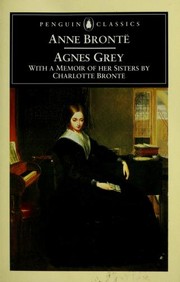
Agnes Grey
Anne Brontë, 1847
A clergyman's daughter with no money takes a post as a governess and learns how little the world allows a woman who must earn her own bread.
 BookFeed Ελληνικά
1820–1849
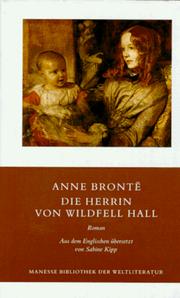
Anne Brontë wrote plainly about work, money and marriage at a time when few novels did. Her two books share a quiet, watchful honesty: governesses, wives and children are observed closely, and the small daily compromises of genteel poverty are taken seriously. Start with «Agnes Grey» if you want the shorter, gentler book, or «The Tenant of Wildfell Hall» if you'd rather read a story about a woman defending her own life and her son's.
Feels like melancholy, society and defiance.
Start with Agnes Grey.
Anne, the youngest Brontë, died at 29 in Scarborough — the only sister buried away from Haworth. Agnes Grey appeared the year before, in 1847.
When the thought that hurts is the one you keep returning to.
But, if those thoughts brought delight, it was a painful, troubled pleasure, too near akin to anguish; and one that did me more injury than I was aware of. It was an indulgence that a person of more wisdom or more experience would doubtless have denied herself. And yet, how dreary to turn my eyes from the contemplation of that bright object and force them to dwell on the dull, grey, desolate prospect around: the joyless, hopeless, solitary path that lay before me. It was wrong to be so joyless, so desponding; I should have made God my friend, and to do His will the pleasure and the business of my life; but faith was weak, and passion was too strong. Anne Brontë, 1847
A clergyman's daughter with no money takes a post as a governess and learns how little the world allows a woman who must earn her own bread.
Anne Brontë, 1847
In a world governed by rigid social expectations, one woman fights to protect herself and her son from a marriage that is destroying them.
Read pages from books like this, one at a time
BookFeed is a feed of real passages from real books. It learns what moves you and finds your next book.
Open BookFeedFree, no sign-up.