
The Age of Innocence
Edith Wharton (1862–1937), 1920
A newly engaged lawyer in 1870s New York finds his tidy future unsettled when his fiancée’s cousin returns from Europe with a freedom he cannot name. Wharton's voice is witty and exact, carrying a slow ache of longing through drawing-room scenes that feel polished, nostalgic and quietly uneasy.
Feels like longing, nostalgia and unease. About memory.
Who it’s for
You may like it if you enjoy closely observed manners, old New York society and a love story told through restraint rather than declaration. The novel lingers in drawing rooms and social codes, so its tension builds through memory and implication rather than open drama.
Why read it
It gives you a sharp, tender look at how a society shapes private desire, and why people mistake a settled future for a safe one.
Pages from the book
The secret room you build for someone who is not there.
Since then there had been no farther communication between them, and he had built up within himself a kind of sanctuary in which she throned among his secret thoughts and longings. Little by little it became the scene of his real life, of his only rational activities; thither he brought the books he read, the ideas and feelings which nourished him, his judgments and his visions. Outside it, in the scene of his actual life, he moved with a growing sense of unreality and insufficiency, blundering against familiar prejudices and traditional points of view as an absentminded man goes on bumping into the furniture of his own room. Absent—that was what he was: so absent from everything most densely real and near to those about him that it sometimes startled him to find they still imagined he was there. What if perfect pleasantness is only a well-drawn curtain?
Archer felt irrationally angry. His host’s contemptuous tribute to May’s “niceness” was just what a husband should have wished to hear said of his wife. The fact that a coarseminded man found her lacking in attraction was simply another proof of her quality; yet the words sent a faint shiver through his heart. What if “niceness” carried to that supreme degree were only a negation, the curtain dropped before an emptiness? As he looked at May, returning flushed and calm from her final bull’s-eye, he had the feeling that he had never yet lifted that curtain. The worst part of duty is what it leaves you unable to do.
Now, as he reviewed his past, he saw into what a deep rut he had sunk. The worst of doing one’s duty was that it apparently unfitted one for doing anything else. At least that was the view that the men of his generation had taken. The trenchant divisions between right and wrong, honest and dishonest, respectable and the reverse, had left so little scope for the unforeseen. There are moments when a man’s imagination, so easily subdued to what it lives in, suddenly rises above its daily level, and surveys the long windings of destiny. Archer hung there and wondered. … Edith Wharton.Wharton was born Edith Newbold Jones into the old New York society she satirized; she wrote the novel in France after World War I.
Books that feel like this

More by Edith Wharton

The House of Mirth
Edith Wharton, 1905
A beautiful woman with no money navigates New York drawing rooms where charm is capital and every kindness arrives with an invoice. Wharton's sharpest, saddest social novel.
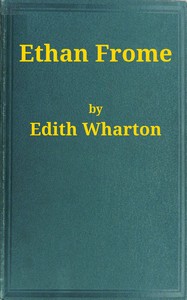
Ethan Frome
Edith Wharton, 1911
A stranded engineer in a snowbound New England village pieces together the story of a poor farmer, his invalid wife, and the young cousin who comes to keep house.
Where to get it
Some of these links earn us a small commission, at no cost to you. It keeps BookFeed free.
Questions readers ask
- Is The Age of Innocence for me?
- You may like it if you enjoy closely observed manners, old New York society and a love story told through restraint rather than declaration. The novel lingers in drawing rooms and social codes, so its tension builds through memory and implication rather than open drama.
- What is The Age of Innocence like?
- Wharton's voice is witty and exact, carrying a slow ache of longing through drawing-room scenes that feel polished, nostalgic and quietly uneasy. Feels like longing, nostalgia and unease. About memory.
- What should I read after The Age of Innocence?
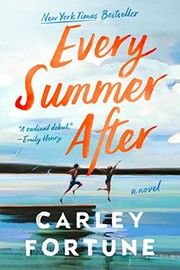
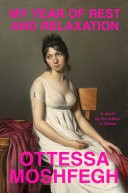
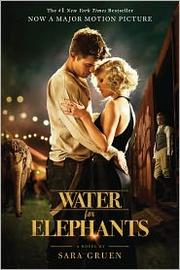
- If you liked The Age of Innocence, try Every Summer After (Carley Fortune), My Year of Rest and Relaxation (Ottessa Moshfegh) and Water for Elephants (Sara Gruen).
A taste of the feed
How a wine list can expose a person's entire character.
It’s not that I’m still in love with my ex; I’m not. I never was. Sebastian is kind of a snob. An up-and-coming corporate lawyer, he wouldn’t have lasted one hour at Chantal’s party without scoffing at her choice of signature drink and referencing some pretentious article he read in the New York Times that declared Aperol spritzes “over.” Instead, he would pretend to study the wine list, ask the bartender annoying questions about terroir and acidity and, regardless of the answers, go with a glass of the most expensive red. It’s not that he has exceptional taste or knows a lot about wine; he doesn’t. He just buys expensive stuff to give the impression of being discerning.
Every Summer After · Carley Fortune
What it costs to sleep through a year you don’t want to live.
I had started “hibernating” as best I could in mid-June of 2000. I was twenty-four years old. I watched summer die and autumn turn cold and gray through a broken slat in the blinds. My muscles withered. The sheets on my bed yellowed, although I usually fell asleep in front of the television on the sofa, which was from Pottery Barn and striped blue and white and sagging and covered in coffee and sweat stains.
My Year of Rest and Relaxation · Ottessa Moshfegh
The moment you stop knowing your own age without counting.
When you are five, you know your age down to the month. Even in your twenties, you know how old you are. I’m twenty-three you say, or maybe twenty-seven. But then in your thirties, something strange starts to happen. It is a mere hiccup at first, an instant of hesitation. How old are you? Oh, I’m—you start confidently, but then you stop. You were going to say thirty-three, but you are not. You’re thirty-five. And then you’re bothered, because you wonder if this is the beginning of the end. It is, of course, but it’s decades before you admit it.
Water for Elephants · Sara Gruen
Read pages from books like this, one at a time
Keep reading in the feed