BookFeed Ελληνικά

Books like Kusamakura

If Kusamakura stayed with you, these share its feel: wonder, art and nature. Each comes with a real page, so you can tell in a minute.

About Kusamakura · Natsume Sōseki

  1. 1.The Book of Tea

    Kakuzo Okakura, 1906

    Also wonder and art. A Japanese art critic explains why tea—its room, its flowers, its humility—is a philosophy for living, written to correct the West's picture of Asia.

    Rikiu was watching his son Shoan as he swept and watered the garden path. “Not clean enough,” said Rikiu, when Shoan had finished his task, and bade him try again. After a weary hour the son turned to Rikiu: “Father, there is nothing more to be done. The steps have been washed for the third time, the stone lanterns and the trees are well sprinkled with water, moss and lichens are shining with a fresh verdure; not a twig, not a leaf have I left on the ground.” “Young fool,” chided the tea-master, “that is not the way a garden path should be swept.” Saying this, Rikiu stepped into the garden, shook a tree and scattered over the garden gold and crimson leaves, scraps of the brocade of autumn! What Rikiu demanded was not cleanliness alone, but the beautiful and the natural also.
  2. 2.A Portrait of the Artist as a Young Man

    James Joyce, 1916

    Also art and wonder. A boy in Dublin grows up inside a family, a religion and a language, and tries to invent a self that none of them wrote for him.

    A girl stood before him in midstream, alone and still, gazing out to sea. She seemed like one whom magic had changed into the likeness of a strange and beautiful seabird. Her long slender bare legs were delicate as a crane’s and pure save where an emerald trail of seaweed had fashioned itself as a sign upon the flesh. Her thighs, fuller and softhued as ivory, were bared almost to the hips, where the white fringes of her drawers were like feathering of soft white down. Her slateblue skirts were kilted boldly about her waist and dovetailed behind her. Her bosom was as a bird’s, soft and slight, slight and soft as the breast of some darkplumaged dove. But her long fair hair was girlish: and girlish, and touched with the wonder of mortal beauty, her face.
  3. 3.Poetry

    John Keats, 1820

    Also wonder and nature. Poems that make beauty and mortality argue in the same breath—odes, sonnets, and mythic fragments from a writer who died at twenty-five.

    Thou wast not born for death, immortal Bird!No hungry generations tread thee down;The voice I hear this passing night was heardIn ancient days by emperor and clown:Perhaps the self-same song that found a pathThrough the sad heart of Ruth, when, sick for home,She stood in tears amid the alien corn;The same that oft-times hathCharm’d magic casements, opening on the foamOf perilous seas, in faery lands forlorn.
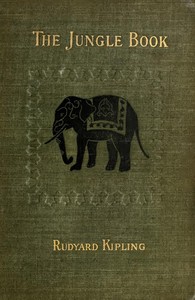
  4. 4.The Jungle Book

    Rudyard Kipling, 1894

    Also nature and wonder. A boy raised by wolves, a mongoose at war with cobras, a seal hunting for a beach with no men — India's animals, and the laws they keep.

    He set his teeth and said nothing, but went with the shouting monkeys to a terrace above the red sandstone reservoirs that were half full of rainwater. There was a ruined summerhouse of white marble in the center of the terrace, built for queens dead a hundred years ago. The domed roof had half fallen in and blocked up the underground passage from the palace by which the queens used to enter; but the walls were made of screens of marble tracery—beautiful, milk-white fretwork, set with agates and cornelians and jasper and lapis lazuli, and as the moon came up behind the hill it shone through the openwork, casting shadows on the ground like black-velvet embroidery.
  5. 5.Shadowings

    Lafcadio Hearn, 1900

    Also wonder and unease. A globe-trotting newspaperman in Meiji Japan collects ghost stories, insect songs, and notes on fear—curious, exact, and quietly strange.

    THE moon had not yet risen; but the vast of the night was all seething with stars, and bridged by a Milky Way of extraordinary brightness. There was no wind; but the sea, far as sight could reach, was running in ripples of fire,—a vision of infernal beauty. Only the ripplings were radiant (between them was blackness absolute);—and the luminosity was amazing. Most of the undulations were yellow like candle-flame; but there were crimson lampings also,—and azure, and orange, and emerald. And the sinuous flickering of all seemed, not a pulsing of many waters, but a laboring of many wills,—a fleeting conscious and monstrous,—a writhing and a swarming incalculable, as of dragon-life in some depth of Erebus.
  6. 6.A Midsummer Night's Dream

    William Shakespeare, 1600

    Also wonder and nature. Four lovers, a fairy king and queen, and a troupe of terrible actors collide in one wood outside Athens, all under the same love potion.

    I know a banke where the wilde time blowes,Where Oxslips and the nodding Violet growes,Quite ouer-cannoped with luscious woodbine,With sweet muske roses, and with Eglantine;There sleepes Tytania, sometime of the night,Lul’d in these flowers, with dances and delight:And there the snake throwes her enammel’d skinne,Weed wide enough to rap a Fairy in.
  7. 8.Master Flea

    E. T. A. Hoffmann, 1822

    Also wonder and war. A misanthropic bachelor, a flea with a doctorate in philosophy, and a magic lens that shows what people are thinking: Hoffmann's strangest comic fairy tale about love and microscopes.

Read pages from books like this, one at a time

BookFeed is a feed of real passages from real books. It learns what moves you and finds your next book.

Open BookFeed

Free, no sign-up.