
Master Flea
E. T. A. Hoffmann (1776–1822), 1822
★ 3.68 from 309 ratings on Goodreads
A misanthropic bachelor, a flea with a doctorate in philosophy, and a magic lens that shows what people are thinking: Hoffmann's strangest comic fairy tale about love and microscopes. The pace is digressive and comic, the voice lyrical and slightly gothic, with wonder shading into unease.
Feels like wonder and unease. About war.
Who it’s for
You may like it if you enjoy eccentric comic fairy tales, philosophical jokes and a touch of gothic unease. The 1822 prose can be ornate and digressive, and the story's oddness sometimes asks patience.
Why read it
Hoffmann's last finished prose work gives you a strange, humane comedy about love and other minds, with a flea, a lens and a misanthropic bachelor.
Pages from the book
The strange loneliness of the person who arranges other people's joy.
It was the kind and laudable practice of Mr. Tyss to surprise some needy family, where he knew there were children, with his whole cargo of Christmas boxes, just as he had purchased it, and dream himself for a few hours into the happy times of boyhood. Then, when the children were in the height of their joy, he would softly steal away and wander about the streets half the night, hardly knowing what to do with himself, from the deep emotions which straitened his breast, and feeling his own house like a vault, in which he was buried with all his pleasures. Her warmth runs through him, and something deathly chills it.
Dressed again in the fairy dress of tissue, she appeared as lovely as ever. Peregrine felt himself streamed through by the electric warmth of her body, and yet, amidst it all, a cold mysterious shudder thrilled through him like the breathing of death. For the first time he thought that he saw something singular and lifeless deeply seated in her eyes, while the tone of her voice—nay, even the rustling of her dress—betrayed a strange being, who was never to be trusted. What you would see if you could look through an eye into the brain.
Now, as usual, Peregrine saw behind the tunicle of the eyes the strange interweaving of nerves and veins, which pierced deep into the brain. But with these were twined bright silver threads, a hundred times thinner than the thinnest spider’s web, and it was these very threads that confused him, for they seemed to be endless, branching out into something indistinguishable even by the microscopic eye; perhaps they were thoughts of a sublimer kind, the others of a sort more easily comprehended. Then he observed flowers, strangely blended, which took the shape of men, then again men, who dissolved as it were into the earth, and peeped forth again as stones and metals. Amongst these all manner of beasts were in motion, who underwent innumerable changes, and spoke strange languages. E. T. A. Hoffmann.Hoffmann was a Berlin judge who also composed an opera, wrote music criticism and drew caricatures. Master Flea was the last prose work he finished, published the year he died.
Books that feel like this
Where to get it
Some of these links earn us a small commission, at no cost to you. It keeps BookFeed free.
Questions readers ask
- Is Master Flea for me?
- You may like it if you enjoy eccentric comic fairy tales, philosophical jokes and a touch of gothic unease. The 1822 prose can be ornate and digressive, and the story's oddness sometimes asks patience.
- What is Master Flea like?
- The pace is digressive and comic, the voice lyrical and slightly gothic, with wonder shading into unease. Feels like wonder and unease. About war.
- What should I read after Master Flea?
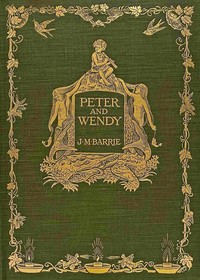
- If you liked Master Flea, try Peter Pan (J. M. Barrie), Kusamakura (Natsume Sōseki) and Shadowings (Lafcadio Hearn).
A taste of the feed
No one gets over the first time they are treated unfairly.
Not the pain of this but its unfairness was what dazed Peter. It made him quite helpless. He could only stare, horrified. Every child is affected thus the first time he is treated unfairly. All he thinks he has a right to when he comes to you to be yours is fairness. After you have been unfair to him he will love you again, but will never afterwards be quite the same boy. No one ever gets over the first unfairness; no one except Peter. He often met it, but he always forgot it. I suppose that was the real difference between him and all the rest.
Peter Pan · J. M. Barrie
The night sea does not look like water; it looks like a mind.
THE moon had not yet risen; but the vast of the night was all seething with stars, and bridged by a Milky Way of extraordinary brightness. There was no wind; but the sea, far as sight could reach, was running in ripples of fire,—a vision of infernal beauty. Only the ripplings were radiant (between them was blackness absolute);—and the luminosity was amazing. Most of the undulations were yellow like candle-flame; but there were crimson lampings also,—and azure, and orange, and emerald. And the sinuous flickering of all seemed, not a pulsing of many waters, but a laboring of many wills,—a fleeting conscious and monstrous,—a writhing and a swarming incalculable, as of dragon-life in some depth of Erebus.
Shadowings · Lafcadio Hearn
What a week of disappearing does to the person who loves you.
Poor Wakefield! little knowest thou thine own insignificance in this great world. No mortal eye but mine has traced thee. Go quietly to thy bed, foolish man, and on the morrow, if thou wilt be wise, get thee home to good Mrs. Wakefield and tell her the truth. Remove not thyself even for a little week from thy place in her chaste bosom. Were she for a single moment to deem thee dead or lost or lastingly divided from her, thou wouldst be woefully conscious of a change in thy true wife for ever after. It is perilous to make a chasm in human affections—not that they gape so long and wide, but so quickly close again.
Twice-told tales · Nathaniel Hawthorne
Read pages from books like this, one at a time
Keep reading in the feed