
My First Summer in the Sierra
John Muir (1838–1914), 1911
★ 4.05 from 7.8k ratings on Goodreads
A young Scot joins a sheep drive into the high Sierra in 1869 and writes daily, ecstatic journal entries about granite, light and water, as if seeing mountains for the first time. Muir's daily journal has a bright, eager voice, moving at a walk through granite, light and water, with joy and wonder on every page.
Feels like wonder, joy and awe. About nature, freedom and faith.
Who it’s for
You may like it if you enjoy nature writing that is lyrical, religious in tone and happy to linger over rocks, trees and weather. Be aware that the 1911 prose can feel old-fashioned and sermon-like, and the daily entries sometimes repeat similar scenes.
Why read it
It offers a close, unhurried look at one person's awakening to wild country, and a reminder that attention itself can be a form of joy.
Pages from the book
Pull on any one thing and the whole mountain moves.
No Sierra landscape that I have seen holds anything truly dead or dull, or any trace of what in manufactories is called rubbish or waste; everything is perfectly clean and pure and full of divine lessons. This quick, inevitable interest attaching to everything seems marvelous until the hand of God becomes visible; then it seems reasonable that what interests Him may well interest us. When we try to pick out anything by itself, we find it hitched to everything else in the universe. One fancies a heart like our own must be beating in every crystal and cell, and we feel like stopping to speak to the plants and animals as friendly fellow mountaineers. Drawing a landscape you know you can't truly pass on.
I would fain draw everything in sight—rock, tree, and leaf. But little can I do beyond mere outlines,—marks with meanings like words, readable only to myself,—yet I sharpen my pencils and work on as if others might possibly be benefited. Whether these picture-sheets are to vanish like fallen leaves or go to friends like letters, matters not much; for little can they tell to those who have not themselves seen similar wildness, and like a language have learned it. No pain here, no dull empty hours, no fear of the past, no fear of the future. These blessed mountains are so compactly filled with God’s beauty, no petty personal hope or experience has room to be. What it feels like when hurry quietly leaves you.
Another glorious Sierra day in which one seems to be dissolved and absorbed and sent pulsing onward we know not where. Life seems neither long nor short, and we take no more heed to save time or make haste than do the trees and stars. This is true freedom, a good practical sort of immortality. Yonder rises another white skyland. How sharply the yellow pine spires and the palm-like crowns of the sugar pines are outlined on its smooth white domes. And hark! the grand thunder billows booming, rolling from ridge to ridge, followed by the faithful shower. John Muir.In 1867 an industrial accident temporarily blinded Muir. When his sight returned he gave up factory work and set out on a long walk south, which led him eventually to California.
Books that feel like this
Where to get it
Some of these links earn us a small commission, at no cost to you. It keeps BookFeed free.
Questions readers ask
- Is My First Summer in the Sierra for me?
- You may like it if you enjoy nature writing that is lyrical, religious in tone and happy to linger over rocks, trees and weather. Be aware that the 1911 prose can feel old-fashioned and sermon-like, and the daily entries sometimes repeat similar scenes.
- What is My First Summer in the Sierra like?
- Muir's daily journal has a bright, eager voice, moving at a walk through granite, light and water, with joy and wonder on every page. Feels like wonder, joy and awe. About nature, freedom and faith.
- What should I read after My First Summer in the Sierra?
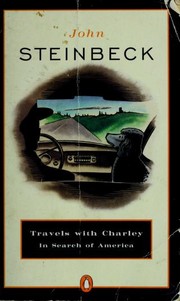
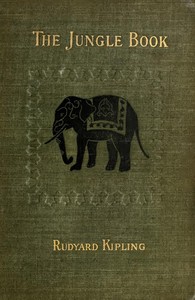
- If you liked My First Summer in the Sierra, try Travels with Charley (John Steinbeck), The Jungle Book (Rudyard Kipling) and Poetry (Henry van Dyke Jr.).
A taste of the feed
Every generation mistakes its childhood for a better world.
Even while I protest the assembly-line production of our food, our songs, our language, and eventually our souls, I know that it was a rare home that baked good bread in the old days. Mother’s cooking was with rare exceptions poor, that good unpasteurized milk touched only by flies and bits of manure crawled with bacteria, the healthy old-time life was riddled with aches, sudden death from unknown causes, and that sweet local speech I mourn was the child of illiteracy and ignorance. It is the nature of a man as he grows older, a small bridge in time, to protest against change, particularly change for the better.
Travels with Charley · John Steinbeck
What a palace looks like a hundred years after the queens have gone.
He set his teeth and said nothing, but went with the shouting monkeys to a terrace above the red sandstone reservoirs that were half full of rainwater. There was a ruined summerhouse of white marble in the center of the terrace, built for queens dead a hundred years ago. The domed roof had half fallen in and blocked up the underground passage from the palace by which the queens used to enter; but the walls were made of screens of marble tracery—beautiful, milk-white fretwork, set with agates and cornelians and jasper and lapis lazuli, and as the moon came up behind the hill it shone through the openwork, casting shadows on the ground like black-velvet embroidery.
The Jungle Book · Rudyard Kipling
A sailor's love for the sea has fear in it; landsmen never understand.
We men hat go down for a livin’ in ships to the sea— We love it a different way from you poets that ’bide on the land. We are fond of it, sure! But, you take it as comin’ from me, There’s a fear and a hate in our love that a landsman can’t understand. Oh, who could help likin’ the salty smell, and the blue Of the waves that are lazily breathin’ as if they dreamed in the sun? She’s a Sleepin’ Beauty, the sea—but you can’t tell what she’ll do; And the seamen never trust her—they know too well what she’s done!
Poetry · Henry van Dyke Jr.
Read pages from books like this, one at a time
Keep reading in the feed