
The Land of Little Rain
Mary Austin (1868–1934), 1903
★ 3.87 from 2.1k ratings on Goodreads
Field notes from the California desert — yuccas, buzzards, lone prospectors, Paiute basket makers — seen with a poet's eye and a resident's patience. Austin's desert writing moves with a poet's eye and a resident's patience, full of wonder, longing, and plainspoken attention.
Feels like wonder and longing. About nature, home and art.
Who it’s for
You may like it if you enjoy lyrical nature writing, desert landscapes, and close attention to plants, animals, and people. The prose is unhurried and descriptive, with little narrative drive, so it may not suit you if you want a story that moves.
Why read it
It offers a grounded, lyrical view of the California desert and the people who know it, along with patience, weather, and stars.
Pages from the book
What the night sky does to your sense of your own importance.
For all the toll the desert takes of a man it gives compensations, deep breaths, deep sleep, and the communion of the stars. It comes upon one with new force in the pauses of the night that the Chaldeans were a desert-bred people. It is hard to escape the sense of mastery as the stars move in the wide clear heavens to risings and settings unobscured. They look large and near and palpitant; as if they moved on some stately service not needful to declare. Wheeling to their stations in the sky, they make the poor world-fret of no account. Of no account you who lie out there watching, nor the lean coyote that stands off in the scrub from you and howls and howls. A white world, great horns, and a man no longer alone with the snow.
If the flock stirred in the night he stirred drowsily to keep close and let the storm go by. That was all until morning woke him shining on a white world. Then the very soul of him shook to see the wild sheep of God stand up about him, nodding their great horns beneath the cedar roof, looking out on the wonder of the snow. They had moved a little away from him with the coming of the light, but paid him no more heed. The light broadened and the white pavilions of the snow swam in the heavenly blueness of the sea from which they rose. The cloud drift scattered and broke billowing in the canons. What if the walls were wind and bloom?
Oppapago looks on Waban, and Waban on Coso and the Bitter Lake, and the campoodie looks on these three; and more, it sees the beginning of winds along the foot of Coso, the gathering of clouds behind the high ridges, the spring flush, the soft spread of wild almond bloom on the mesa. These first, you understand, are the Paiute’s walls, the other his furnishings. Not the wattled hut is his home, but the land, the winds, the hill front, the stream. These he cannot duplicate at any furbisher’s shop as you who live within doors, who, if your purse allows, may have the same home at Sitka and Samarcand. Mary Austin.Austin moved to the Owens Valley in 1888, learned its plants and Paiute basketmaking firsthand, and published The Land of Little Rain as her first book.
Books that feel like this
Where to get it
Some of these links earn us a small commission, at no cost to you. It keeps BookFeed free.
Questions readers ask
- Is The Land of Little Rain for me?
- You may like it if you enjoy lyrical nature writing, desert landscapes, and close attention to plants, animals, and people. The prose is unhurried and descriptive, with little narrative drive, so it may not suit you if you want a story that moves.
- What is The Land of Little Rain like?
- Austin's desert writing moves with a poet's eye and a resident's patience, full of wonder, longing, and plainspoken attention. Feels like wonder and longing. About nature, home and art.
- What should I read after The Land of Little Rain?
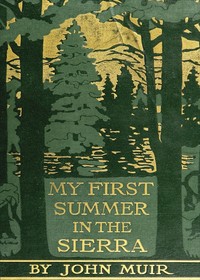
- If you liked The Land of Little Rain, try Roughing It (Mark Twain), My First Summer in the Sierra (John Muir) and Poetry (Henry van Dyke Jr.).
A taste of the feed
Pull on any one thing and the whole mountain moves.
No Sierra landscape that I have seen holds anything truly dead or dull, or any trace of what in manufactories is called rubbish or waste; everything is perfectly clean and pure and full of divine lessons. This quick, inevitable interest attaching to everything seems marvelous until the hand of God becomes visible; then it seems reasonable that what interests Him may well interest us. When we try to pick out anything by itself, we find it hitched to everything else in the universe. One fancies a heart like our own must be beating in every crystal and cell, and we feel like stopping to speak to the plants and animals as friendly fellow mountaineers.
My First Summer in the Sierra · John Muir
A sailor's love for the sea has fear in it; landsmen never understand.
We men hat go down for a livin’ in ships to the sea— We love it a different way from you poets that ’bide on the land. We are fond of it, sure! But, you take it as comin’ from me, There’s a fear and a hate in our love that a landsman can’t understand. Oh, who could help likin’ the salty smell, and the blue Of the waves that are lazily breathin’ as if they dreamed in the sun? She’s a Sleepin’ Beauty, the sea—but you can’t tell what she’ll do; And the seamen never trust her—they know too well what she’s done!
Poetry · Henry van Dyke Jr.
What a palace looks like a hundred years after the queens have gone.
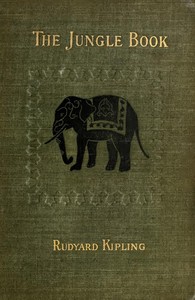
He set his teeth and said nothing, but went with the shouting monkeys to a terrace above the red sandstone reservoirs that were half full of rainwater. There was a ruined summerhouse of white marble in the center of the terrace, built for queens dead a hundred years ago. The domed roof had half fallen in and blocked up the underground passage from the palace by which the queens used to enter; but the walls were made of screens of marble tracery—beautiful, milk-white fretwork, set with agates and cornelians and jasper and lapis lazuli, and as the moon came up behind the hill it shone through the openwork, casting shadows on the ground like black-velvet embroidery.
The Jungle Book · Rudyard Kipling
Read pages from books like this, one at a time
Keep reading in the feed