BookFeed Ελληνικά

Books like Essays of Michel de Montaigne

If Essays of Michel de Montaigne stayed with you, these share its feel: curiosity, identity and humor. Each comes with a real page, so you can tell in a minute.

About Essays of Michel de Montaigne · Michel de Montaigne

  1. 1.Dialogues

    Plato, -347

    Also morality and curiosity. A deep dive into the questions that define civilization: what is justice, what is wisdom, and what happens to the soul after death.

    Book VII. And now I will describe in a figure the enlightenment or unenlightenment of our nature:—Imagine human beings living in an underground den which is open towards the light; they have been there from childhood, having their necks and legs chained, and can only see into the den. At a distance there is a fire, and between the fire and the prisoners a raised way, and a low wall is built along the way, like the screen over which marionette players show their puppets. Behind the wall appear moving figures, who hold in their hands various works of art, and among them images of men and animals, wood and stone, and some of the passersby are talking and others silent. “A strange parable,” he said, “and strange captives.”

  2. 2.The Counterfeiters

    André Gide, 1925

    Also identity and curiosity. A novel about a novelist writing a novel, and a group of young people trying on love, faith and false identities.

    Owing to an accidental discovery I happened to make this afternoon, I have become aware that I must cease to regard you as my father. This is an immense relief to me. Realizing as I do how little affection I feel for you, I have for a long time past been thinking myself an unnatural son; I prefer knowing I am not your son at all.
  3. 3.The Essays or Counsels, Civil and Moral

    Francis Bacon, 1597

    Also curiosity and morality. Short, dense essays on revenge, friendship, wealth, ambition and fear, written like a clever advisor's notes. Each page packs a lifetime of worldly observation into a few sharp sentences.

    For as for the first wrong, it doth but offend the law; but the revenge of that wrong, putteth the law out of office. Certainly, in taking revenge, a man is but even with his enemy; but in passing it over, he is superior; for it is a prince’s part to pardon. And Solomon, I am sure, saith, It is the glory of a man, to pass by an offence. That which is past is gone, and irrevocable; and wise men have enough to do, with things present and to come; therefore they do but trifle with themselves, that labor in past matters. There is no man doth a wrong, for the wrong’s sake; but thereby to purchase himself profit, or pleasure, or honor, or the like. Therefore why should I be angry with a man, for loving himself better than me?
  4. 4.Beyond Good and Evil

    Friedrich Nietzsche, 1886

    Also curiosity and morality. A sharp-tongued tour of the habits of mind we take for granted: why philosophers lie to themselves, what our morals hide, and what it takes to think without flattering yourself.

    Nobody will very readily regard a doctrine as true merely because it makes people happy or virtuous—excepting, perhaps, the amiable “Idealists,” who are enthusiastic about the good, true, and beautiful, and let all kinds of motley, coarse, and good-natured desirabilities swim about promiscuously in their pond. Happiness and virtue are no arguments. It is willingly forgotten, however, even on the part of thoughtful minds, that to make unhappy and to make bad are just as little counter-arguments. A thing could be TRUE, although it were in the highest degree injurious and dangerous; indeed, the fundamental constitution of existence might be such that one succumbed by a full knowledge of it—so that the strength of a mind might be measured by the amount of “truth” it could endure—or to speak more plainly, by the extent to which it REQUIRED truth attenuated, veiled, sweetened, damped, and falsified.
  5. 5.Middlemarch

    George Eliot, 1872

    Also morality and tenderness. A provincial town, a clever woman married to the wrong scholar, an ambitious doctor, and the slow, comic, devastating work of learning that other people are real.

    We are all of us born in moral stupidity, taking the world as an udder to feed our supreme selves: Dorothea had early begun to emerge from that stupidity, but yet it had been easier to her to imagine how she would devote herself to Mr. Casaubon, and become wise and strong in his strength and wisdom, than to conceive with that distinctness which is no longer reflection but feeling—an idea wrought back to the directness of sense, like the solidity of objects—that he had an equivalent centre of self, whence the lights and shadows must always fall with a certain difference.
  6. 6.Candide

    Voltaire, 1759

    Also humor and society. A sweet-natured young man is told this is the best of all possible worlds, then sent across it to test the claim. Short, fast, savagely funny, and still aimed at our comforting ideas.

    There was never anything so gallant, so spruce, so brilliant, and so well disposed as the two armies. Trumpets, fifes, hautboys, drums, and cannon made music such as Hell itself had never heard. The cannons first of all laid flat about six thousand men on each side; the muskets swept away from this best of worlds nine or ten thousand ruffians who infested its surface. The bayonet was also a sufficient reason for the death of several thousands. The whole might amount to thirty thousand souls. Candide, who trembled like a philosopher, hid himself as well as he could during this heroic butchery.
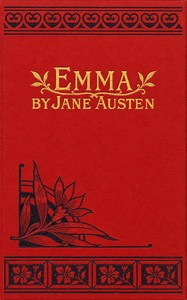
  7. 11.Emma

    Jane Austen, 1815

    Also humor and society. A clever, rich, bored young woman decides to arrange her neighbours' love lives, and gets nearly everything wrong. Austen's funniest, most merciless book about self-knowledge.

Read pages from books like this, one at a time

BookFeed is a feed of real passages from real books. It learns what moves you and finds your next book.

Open BookFeed

Free, no sign-up.