
The Problems of Philosophy
Bertrand Russell (1872–1970), 1912
★ 3.89 from 19.3k ratings on Goodreads
A short, clear tour of the questions underneath everything: whether the table is really there, why the sun should rise tomorrow, what we can know. Written for readers with no philosophy background. A short, plain-spoken tour of doubt and wonder, moving briskly through big questions with a calm, curious voice.
Feels like curiosity and wonder. About freedom, identity and solitude.
Who it’s for
You may like it if you want a clear, unhurried introduction to philosophical questions without prior background. Some examples and prose are from 1912, so a few references and sentences may feel formal or dated.
Why read it
It gives you a compact way to test what you actually know and to see ordinary certainty as a question worth examining.
Pages from the book
What it would be to look at the world without wanting anything.
Everything, in contemplation, that is personal or private, everything that depends upon habit, self-interest, or desire, distorts the object, and hence impairs the union which the intellect seeks. By thus making a barrier between subject and object, such personal and private things become a prison to the intellect. The free intellect will see as God might see, without a here and now, without hopes and fears, without the trammels of customary beliefs and traditional prejudices, calmly, dispassionately, in the sole and exclusive desire of knowledge—knowledge as impersonal, as purely contemplative, as it is possible for man to attain. The most confident creature on the farm, on its last morning.
A horse which has been often driven along a certain road resists the attempt to drive him in a different direction. Domestic animals expect food when they see the person who usually feeds them. We know that all these rather crude expectations of uniformity are liable to be misleading. The man who has fed the chicken every day throughout its life at last wrings its neck instead, showing that more refined views as to the uniformity of nature would have been useful to the chicken. How a small private world defends itself against a vast one.
The life of the instinctive man is shut up within the circle of his private interests: family and friends may be included, but the outer world is not regarded except as it may help or hinder what comes within the circle of instinctive wishes. In such a life there is something feverish and confined, in comparison with which the philosophic life is calm and free. The private world of instinctive interests is a small one, set in the midst of a great and powerful world which must, sooner or later, lay our private world in ruins. Unless we can so enlarge our interests as to include the whole outer world, we remain like a garrison in a beleagured fortress, knowing that the enemy prevents escape and that ultimate surrender is inevitable. Bertrand Russell.Russell won the 1950 Nobel Prize in Literature, and he was jailed in 1918 for a pacifist article, writing his Introduction to Mathematical Philosophy in Brixton prison.
Books that feel like this




Where to get it
Some of these links earn us a small commission, at no cost to you. It keeps BookFeed free.
Questions readers ask
- Is The Problems of Philosophy for me?
- You may like it if you want a clear, unhurried introduction to philosophical questions without prior background. Some examples and prose are from 1912, so a few references and sentences may feel formal or dated.
- What is The Problems of Philosophy like?
- A short, plain-spoken tour of doubt and wonder, moving briskly through big questions with a calm, curious voice. Feels like curiosity and wonder. About freedom, identity and solitude.
- What should I read after The Problems of Philosophy?
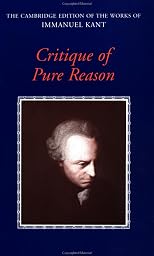
- If you liked The Problems of Philosophy, try Kritik der reinen Vernunft (Immanuel Kant), Beyond Good and Evil (Friedrich Nietzsche) and Contending Forces (Pauline E. Hopkins).
A taste of the feed
The irony of seeking justice while perpetuating deep systemic violence.
“Lynching was instituted to crush the manhood of the enfranchised black. Rape is the crime which appeals most strongly to the heart, of the home life. Merciful God! Irony of ironies! The men who created the mulatto race, who recruit its ranks year after year by the very means which they invoked lynch law to suppress, bewailing the sorrows of violated womanhood!
Contending Forces · Pauline E. Hopkins
Read pages from books like this, one at a time
Keep reading in the feed