BookFeed Ελληνικά

Books like Cosmos

If Cosmos stayed with you, these share its feel: awe, wonder and nature. Each comes with a real page, so you can tell in a minute.

About Cosmos · Carl Sagan

  1. 1.A Brief History of Time

    Stephen W. Hawking, 1988

    Also curiosity and awe. A physicist's guide to the biggest questions—time, black holes, the origin of the universe—written for readers who thought they couldn't do physics.

    Even if there is only one possible unified theory, it is just a set of rules and equations. What is it that breathes fire into the equations and makes a universe for them to describe? The usual approach of science of constructing a mathematical model cannot answer the questions of why there should be a universe for the model to describe. Why does the universe go to all the bother of existing?
    Excerpt from A Brief History of Time, Stephen W. Hawking, Bantam 1988. Quoted for discovery. Source Rights & removals
  2. 2.The Voyage of the Beagle

    Charles Darwin, 1839

    Also curiosity and nature. A young naturalist's five-year journey round the world, from jungle to glacier to coral atoll, written with curiosity and the dry humor of someone seeing everything for the first time.

    While sailing a little south of the Plata on one very dark night, the sea presented a wonderful and most beautiful spectacle. There was a fresh breeze, and every part of the surface, which during the day is seen as foam, now glowed with a pale light. The vessel drove before her bows two billows of liquid phosphorus, and in her wake she was followed by a milky train. As far as the eye reached, the crest of every wave was bright, and the sky above the horizon, from the reflected glare of these livid flames, was not so utterly obscure as over the vault of the heavens.
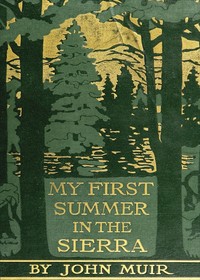
  3. 3.My First Summer in the Sierra

    John Muir, 1911

    Also wonder and nature. A young Scot joins a sheep drive into the high Sierra in 1869 and writes daily, ecstatic journal entries about granite, light and water, as if seeing mountains for the first time.

    No Sierra landscape that I have seen holds anything truly dead or dull, or any trace of what in manufactories is called rubbish or waste; everything is perfectly clean and pure and full of divine lessons. This quick, inevitable interest attaching to everything seems marvelous until the hand of God becomes visible; then it seems reasonable that what interests Him may well interest us. When we try to pick out anything by itself, we find it hitched to everything else in the universe. One fancies a heart like our own must be beating in every crystal and cell, and we feel like stopping to speak to the plants and animals as friendly fellow mountaineers.
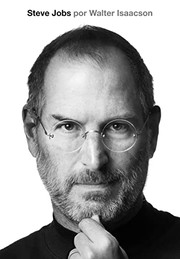
  4. 4.Steve Jobs

    Walter Isaacson, 2011

    Also curiosity and awe. The authorized life of Apple's cofounder, built from years of interviews with a man who demanded perfection and often got it.

    From: Steve JobsTo: Steve JobsSubject:Date: September 2, 2010, 11:08 p.m.I grow little of the food I eat, and of the little I do grow I did not breed or perfect the seeds.I do not make any of my own clothing.I speak a language I did not invent or refine.I did not discover the mathematics I use.I am protected by freedoms and laws I did not conceive of or legislate, and do not enforce or adjudicate.I am moved by music I did not create myself.When I needed medical attention, I was helpless to help myself survive.I did not invent the transistor, the microprocessor, object oriented programming, or most of the technology I work with.I love and admire my species, living and dead, and am totally dependent on them for my life and well being.Sent from my iPad
    Excerpt from Steve Jobs, Walter Isaacson 2011. Quoted for discovery. Source Rights & removals
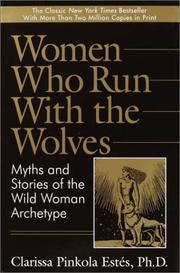
  5. 5.Women Who Run with the Wolves

    Clarissa Pinkola Estes, 1992

    Also identity and wonder. A Jungian analyst and storyteller reads old myths as maps of women’s instinctual life, arguing that wildness is not disorder but a buried inheritance.

    Although I did not call her by that name then, my love for Wild Woman began when I was a little child. I was an aesthete rather than an athlete, and my only wish was to be an ecstatic wanderer. Rather than chairs and tables, I preferred the ground, trees, and caves, for in those places I felt I could lean against the cheek of God.
    Excerpt from Women Who Run with the Wolves, Clarissa Pinkola Estes, Ballantine Books 1992. Quoted for discovery. Source Rights & removals
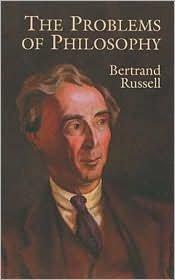
  6. 6.The Problems of Philosophy

    Bertrand Russell, 1912

    Also curiosity and wonder. A short, clear tour of the questions underneath everything: whether the table is really there, why the sun should rise tomorrow, what we can know. Written for readers with no philosophy background.

    Everything, in contemplation, that is personal or private, everything that depends upon habit, self-interest, or desire, distorts the object, and hence impairs the union which the intellect seeks. By thus making a barrier between subject and object, such personal and private things become a prison to the intellect. The free intellect will see as God might see, without a here and now, without hopes and fears, without the trammels of customary beliefs and traditional prejudices, calmly, dispassionately, in the sole and exclusive desire of knowledge—knowledge as impersonal, as purely contemplative, as it is possible for man to attain.
  7. 8.Into the Wild

    Jon Krakauer, 1996

    Also nature and awe. A young man gives away his money and walks into the Alaska bush; the book follows the dream and the questions it leaves.

  8. 11.Unbroken

    Laura Hillenbrand, 2010

    Also awe and wonder. A champion runner, a wartime bomber crash, and a fight to survive the Pacific—and the cruelty that follows.

Read pages from books like this, one at a time

BookFeed is a feed of real passages from real books. It learns what moves you and finds your next book.

Open BookFeed

Free, no sign-up.