
Cosmos
Carl Sagan, 1980
★ 4.40 from 164.6k ratings on Goodreads
A lyrical journey through the stars and deep time that asks what it means to be small in a universe of infinite complexity. Sagan's poetic, accessible voice moves between scientific explanation and philosophical reflection, with a pace that often opens into awe.
Feels like awe, wonder and curiosity. About nature, time and identity.
Who it’s for
You may like it if you enjoy science writing that mixes astronomy with history, philosophy, and a sense of childhood wonder. Some readers find the awe-heavy delivery uneven or dated, so expect a few stretches that feel more rhetorical than current.
Why read it
It offers a broad, humane view of cosmic time and humanity's place in it, useful when you want perspective rather than technical detail.
A page from the book
The universe does not require divinity to govern its immense complexity.
There is no God-Creator, but there is the Cosmos, which creates suns, planets and living beings. There is no omnipotent God, but there is the Universe, which governs the fates of all celestial bodies and their inhabitants. There are no sons of God, but there are mature and thus rational and perfect sons of the Cosmos. There are no personal gods, but there are elected leaders of planets, solar systems, stellar groups, milky ways, islands of ether and the whole Cosmos. There is no Christ, but there is a brilliant man and a greater teacher of mankind. What readers say
Readers describe awe, curiosity, and admiration for Sagan’s sweeping, accessible tour of science and the cosmos, often recalling childhood wonder. Some find the awe-heavy delivery uneven or dated, while others call it inspiring and hopeful.
Carl Sagan.Sagan's work bridged the gap between hard science and philosophy, often writing with a highly poetic and accessible voice, bridging the gap between astrophysics and human experience.
Books that feel like this


Where to get it
Some of these links earn us a small commission, at no cost to you. It keeps BookFeed free.
Questions readers ask
- Is Cosmos for me?
- You may like it if you enjoy science writing that mixes astronomy with history, philosophy, and a sense of childhood wonder. Some readers find the awe-heavy delivery uneven or dated, so expect a few stretches that feel more rhetorical than current.
- What is Cosmos like?
- Sagan's poetic, accessible voice moves between scientific explanation and philosophical reflection, with a pace that often opens into awe. Feels like awe, wonder and curiosity. About nature, time and identity.
- What should I read after Cosmos?
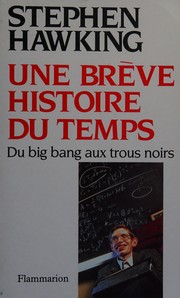
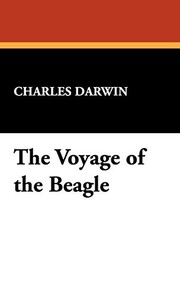
- If you liked Cosmos, try A Brief History of Time (Stephen W. Hawking), The Voyage of the Beagle (Charles Darwin) and My First Summer in the Sierra (John Muir).
A taste of the feed
The question a physicist can ask but equations cannot answer.
Even if there is only one possible unified theory, it is just a set of rules and equations. What is it that breathes fire into the equations and makes a universe for them to describe? The usual approach of science of constructing a mathematical model cannot answer the questions of why there should be a universe for the model to describe. Why does the universe go to all the bother of existing?
A Brief History of Time · Stephen W. Hawking
The night the ocean itself began to give off light.
While sailing a little south of the Plata on one very dark night, the sea presented a wonderful and most beautiful spectacle. There was a fresh breeze, and every part of the surface, which during the day is seen as foam, now glowed with a pale light. The vessel drove before her bows two billows of liquid phosphorus, and in her wake she was followed by a milky train. As far as the eye reached, the crest of every wave was bright, and the sky above the horizon, from the reflected glare of these livid flames, was not so utterly obscure as over the vault of the heavens.
The Voyage of the Beagle · Charles Darwin
Pull on any one thing and the whole mountain moves.
No Sierra landscape that I have seen holds anything truly dead or dull, or any trace of what in manufactories is called rubbish or waste; everything is perfectly clean and pure and full of divine lessons. This quick, inevitable interest attaching to everything seems marvelous until the hand of God becomes visible; then it seems reasonable that what interests Him may well interest us. When we try to pick out anything by itself, we find it hitched to everything else in the universe. One fancies a heart like our own must be beating in every crystal and cell, and we feel like stopping to speak to the plants and animals as friendly fellow mountaineers.
My First Summer in the Sierra · John Muir
Read pages from books like this, one at a time
Keep reading in the feed