
Unbroken
Laura Hillenbrand, 2010
★ 4.39 from 1m ratings on Goodreads
A champion runner, a wartime bomber crash, and a fight to survive the Pacific—and the cruelty that follows. Awe and dread run through a dramatic survival story, slowed by melancholy and the weight of wartime cruelty.
Feels like awe, dread and melancholy. About death, war and love.
Who it’s for
You may like it if you want a carefully reported survival story that faces wartime cruelty without flinching. Be warned that the POW sections are graphic and emotionally draining, and some readers find the later recovery material repetitive.
Why read it
It gives you a vivid, unsentimental look at endurance, dignity and forgiveness under extreme pressure, and at the cost of carrying survival forward.
A page from the book
What it feels like to decide the universe is looking out for you.
As he watched this beautiful, still world, Louie played with a thought that had come to him before. He had thought it as he had watched hunting seabirds, marveling at their ability to adjust their dives to compensate for the refraction of light in water. He had thought it as he had considered the pleasing geometry of the sharks, their gradation of color, their slide through the sea. He even recalled the thought coming to him in his youth, when he had lain on the roof of the cabin at the Cahuilla Indian Reservation, looking up from Zane Grey to watch night settling over the earth. Such beauty, he thought, was too perfect to have come about by mere chance. That day in the center of the Pacific was, to him, a gift crafted deliberately, compassionately, for him and Phil. What readers say
Many readers describe the book as harrowing and emotionally draining, with graphic POW suffering that left them tearful, angry, and anxious. They also call it powerful and inspiring for its survival, dignity, forgiveness, and recovery, though some found it repetitive and the redemption account unconvincing.
Laura Hillenbrand.Hillenbrand conducted dozens of interviews with Louis Zamperini and wrote much of the book while housebound with chronic fatigue syndrome.
Books that feel like this




More by Laura Hillenbrand

Seabiscuit
Laura Hillenbrand, 2001
A true Depression-era story about a discarded racehorse, a damaged jockey and the salesman who bet on both.
Where to get it
Some of these links earn us a small commission, at no cost to you. It keeps BookFeed free.
Questions readers ask
- Is Unbroken for me?
- You may like it if you want a carefully reported survival story that faces wartime cruelty without flinching. Be warned that the POW sections are graphic and emotionally draining, and some readers find the later recovery material repetitive.
- What is Unbroken like?
- Awe and dread run through a dramatic survival story, slowed by melancholy and the weight of wartime cruelty. Feels like awe, dread and melancholy. About death, war and love.
- What should I read after Unbroken?
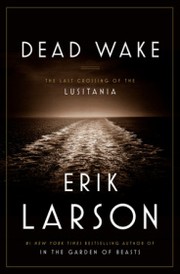
- If you liked Unbroken, try Into the Wild (Jon Krakauer), Angela's Ashes (Frank McCourt) and Dead Wake (Erik Larson).
A taste of the feed
What a teacher gives a boy whose shoes are already broken.
He says, you have to study and learn so that you can make up your own mind about history and everything else but you can’t make up an empty mind. Stock your mind, stock your mind. You might be poor, your shoes might be broken, but your mind is a palace.
Angela's Ashes · Frank McCourt
A ship can hide its lights but not its silhouette.
With all but a few lights extinguished and all shades pulled and curtains drawn, the great liner slid forward through the sea, at times in fog, at times under a lacework of stars. But even in darkness, in moonlight and mist, the ship stood out. At one o’clock in the morning, Friday, May 7, the officers of a New York–bound vessel spotted the Lusitania and recognized it immediately as it passed some two miles off. “You could see the shape of the four funnels,” said the captain, Thomas M. Taylor; “she was the only ship with four funnels.”
Dead Wake · Erik Larson
A revolution begins in minds, long before the first shot.
As to the history of the revolution, my ideas may be peculiar, perhaps singular. What do we mean by the Revolution? The war? That was no part of the revolution; it was only an effect and consequence of it. The revolution was in the minds of the people, and this was effected from 1760–1775, in the course of fifteen years, before a drop of blood was shed at Lexington.
John Adams · David McCullough
Read pages from books like this, one at a time
Keep reading in the feed