
Into the Wild
Jon Krakauer, 1996
Memoir & biography Travel & nature
A young man gives away his money and walks into the Alaska bush; the book follows the dream and the questions it leaves. Awe and dread run together as Krakauer traces a young man's walk into the Alaska bush, quiet and tense, with a strong pull of longing.
Feels like awe, dread and longing. About nature, freedom and war.
Who it’s for
You may like it if you are drawn to nature writing, youthful risk, and stories that sit with unanswered questions. If you want a tidy explanation for why someone would give everything away and head into the bush, the book's open-ended searching may leave you restless.
Why read it
Krakauer weighs a young man's bid for freedom against the hard facts of the wild, offering a tense, questioning read about risk and what it means to go alone.
A page from the book
The strange peace that arrives after you stop fearing the drop.
Early on a difficult climb, especially a difficult solo climb, you constantly feel the abyss pulling at your back. To resist takes a tremendous conscious effort; you don’t dare let your guard down for an instant. The siren song of the void puts you on edge; it makes your movements tentative, clumsy, herky-jerky. But as the climb goes on, you grow accustomed to the exposure, you get used to rubbing shoulders with doom, you come to believe in the reliability of your hands and feet and head. You learn to trust your self-control. By and by your attention becomes so intensely focused that you no longer notice the raw knuckles, the cramping thighs, the strain of maintaining nonstop concentration. A trancelike state settles over your efforts; the climb becomes a clear-eyed dream. Hours slide by like minutes. Jon Krakauer.Krakauer was twenty-three when he made a solo ascent of Alaska's Devils Thumb, a youthful risk he later measured against McCandless's.
Books that feel like this
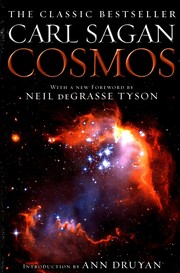
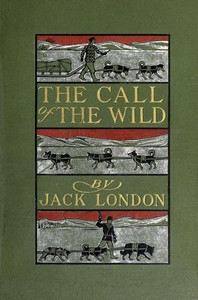
Where to get it
Some of these links earn us a small commission, at no cost to you. It keeps BookFeed free.
Questions readers ask
- Is Into the Wild for me?
- You may like it if you are drawn to nature writing, youthful risk, and stories that sit with unanswered questions. If you want a tidy explanation for why someone would give everything away and head into the bush, the book's open-ended searching may leave you restless.
- What is Into the Wild like?
- Awe and dread run together as Krakauer traces a young man's walk into the Alaska bush, quiet and tense, with a strong pull of longing. Feels like awe, dread and longing. About nature, freedom and war.
- What should I read after Into the Wild?
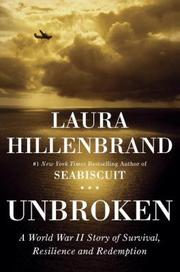
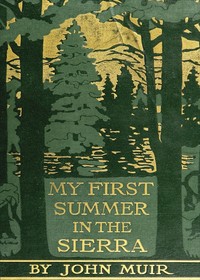
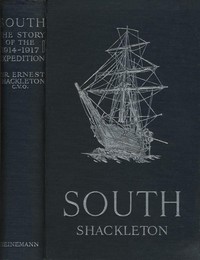
- If you liked Into the Wild, try Unbroken (Laura Hillenbrand), My First Summer in the Sierra (John Muir) and South (Ernest Shackleton).
A taste of the feed
Pull on any one thing and the whole mountain moves.
No Sierra landscape that I have seen holds anything truly dead or dull, or any trace of what in manufactories is called rubbish or waste; everything is perfectly clean and pure and full of divine lessons. This quick, inevitable interest attaching to everything seems marvelous until the hand of God becomes visible; then it seems reasonable that what interests Him may well interest us. When we try to pick out anything by itself, we find it hitched to everything else in the universe. One fancies a heart like our own must be beating in every crystal and cell, and we feel like stopping to speak to the plants and animals as friendly fellow mountaineers.
My First Summer in the Sierra · John Muir
The question a physicist can ask but equations cannot answer.
Even if there is only one possible unified theory, it is just a set of rules and equations. What is it that breathes fire into the equations and makes a universe for them to describe? The usual approach of science of constructing a mathematical model cannot answer the questions of why there should be a universe for the model to describe. Why does the universe go to all the bother of existing?
A Brief History of Time · Stephen W. Hawking
The universe does not require divinity to govern its immense complexity.
There is no God-Creator, but there is the Cosmos, which creates suns, planets and living beings. There is no omnipotent God, but there is the Universe, which governs the fates of all celestial bodies and their inhabitants. There are no sons of God, but there are mature and thus rational and perfect sons of the Cosmos. There are no personal gods, but there are elected leaders of planets, solar systems, stellar groups, milky ways, islands of ether and the whole Cosmos. There is no Christ, but there is a brilliant man and a greater teacher of mankind.
Cosmos · Carl Sagan
Read pages from books like this, one at a time
Keep reading in the feed