
Women Who Run with the Wolves
Clarissa Pinkola Estes, 1992
★ 4.10 from 104.3k ratings on Goodreads
A Jungian analyst and storyteller reads old myths as maps of women’s instinctual life, arguing that wildness is not disorder but a buried inheritance. The prose moves in a lyrical, storytelling voice, blending myth and memory with a hopeful, wondering tone that can feel slow and repetitive in stretches.
Feels like hope, wonder and awe. About identity, nature and love.
Who it’s for
You may like it if you enjoy Jungian ideas, old tales, and writing that treats intuition and creativity as worth taking seriously. Be warned that many readers find the argument repetitive and dogmatic, and its claims about a universal feminine instinct can feel essentialist.
Why read it
It offers a way to read familiar myths as maps of inner life, giving language to instincts and creative hungers that can be hard to name.
A page from the book
The places that felt holier than any room with a roof.
Although I did not call her by that name then, my love for Wild Woman began when I was a little child. I was an aesthete rather than an athlete, and my only wish was to be an ecstatic wanderer. Rather than chairs and tables, I preferred the ground, trees, and caves, for in those places I felt I could lean against the cheek of God. What readers say
Readers describe a powerful, healing book that validates intuition and creativity, though many also find it repetitive, overblown, dogmatic, and essentialist. Reactions split sharply between devotion and irritation.
Clarissa Pinkola Estes.Estés is a cantadora—a keeper of Latina oral tales—and a Jungian analyst; the book’s title grew from her study of wildlife biology, especially wolves.
Books that feel like this

Where to get it
Some of these links earn us a small commission, at no cost to you. It keeps BookFeed free.
Questions readers ask
- Is Women Who Run with the Wolves for me?
- You may like it if you enjoy Jungian ideas, old tales, and writing that treats intuition and creativity as worth taking seriously. Be warned that many readers find the argument repetitive and dogmatic, and its claims about a universal feminine instinct can feel essentialist.
- What is Women Who Run with the Wolves like?
- The prose moves in a lyrical, storytelling voice, blending myth and memory with a hopeful, wondering tone that can feel slow and repetitive in stretches. Feels like hope, wonder and awe. About identity, nature and love.
- What should I read after Women Who Run with the Wolves?
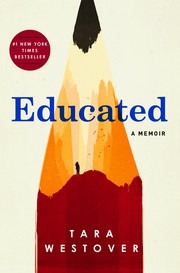
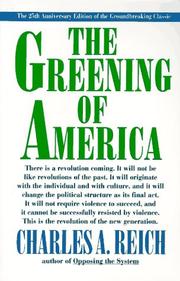
- If you liked Women Who Run with the Wolves, try Educated (Tara Westover), The Greening of America (Charles A. Reich) and Cosmos (Carl Sagan).
A taste of the feed
What an apology can build after it has arrived too late.
You were my child. I should have protected you. I lived a lifetime in the moment I read those lines, a life that was not the one I had actually lived. I became a different person, who remembered a different childhood. I didn’t understand the magic of those words then, and I don’t understand it now. I know only this: that when my mother told me she had not been the mother to me that she wished she’d been, she became that mother for the first time.
Educated · Tara Westover
The universe does not require divinity to govern its immense complexity.
There is no God-Creator, but there is the Cosmos, which creates suns, planets and living beings. There is no omnipotent God, but there is the Universe, which governs the fates of all celestial bodies and their inhabitants. There are no sons of God, but there are mature and thus rational and perfect sons of the Cosmos. There are no personal gods, but there are elected leaders of planets, solar systems, stellar groups, milky ways, islands of ether and the whole Cosmos. There is no Christ, but there is a brilliant man and a greater teacher of mankind.
Cosmos · Carl Sagan
The wilderness grief leaves you in, and the years it takes to walk out.
It took me years to take my place among the ten thousand things again. To be the woman my mother raised. To remember how she said honey and picture her particular gaze. I would suffer. I would suffer. I would want things to be different than they were. The wanting was a wilderness and I had to find my own way out of the woods. It took me four years, seven months, and three days to do it. I didn’t know where I was going until I got there.
Wild · Cheryl Strayed
Read pages from books like this, one at a time
Keep reading in the feed