
A Brief History of Time
Stephen W. Hawking, 1988
★ 4.21 from 496k ratings on Goodreads
A physicist's guide to the biggest questions—time, black holes, the origin of the universe—written for readers who thought they couldn't do physics. Hawking's voice is wry and patient, moving from everyday images to cosmic scale, with stretches that slow into dense explanation.
Feels like curiosity, awe and wonder. About time, freedom and ambition.
Who it’s for
You may enjoy it if you're curious about cosmology and want a famous scientist to walk you through big questions without equations. Be prepared for uneven explanations: some chapters are dense and many readers report feeling lost in the physics.
Why read it
It gives you a compact tour of time, black holes and the universe's beginnings, and leaves you with the strangeness of asking why anything exists at all.
A page from the book
The question a physicist can ask but equations cannot answer.
Even if there is only one possible unified theory, it is just a set of rules and equations. What is it that breathes fire into the equations and makes a universe for them to describe? The usual approach of science of constructing a mathematical model cannot answer the questions of why there should be a universe for the model to describe. Why does the universe go to all the bother of existing? What readers say
Readers are split: many find the book mind-expanding and informative, especially on cosmology, while many others struggle with dense, uneven explanations and feel lost. Some appreciate the humor and the respectful treatment of God and science; others find the philosophy overreaching.
Stephen W. Hawking.Diagnosed with ALS at 21 and given two years to live, Hawking lived to 76; he wrote A Brief History to help pay for his children's education.
Books that feel like this



Where to get it
Some of these links earn us a small commission, at no cost to you. It keeps BookFeed free.
Questions readers ask
- Is A Brief History of Time for me?
- You may enjoy it if you're curious about cosmology and want a famous scientist to walk you through big questions without equations. Be prepared for uneven explanations: some chapters are dense and many readers report feeling lost in the physics.
- What is A Brief History of Time like?
- Hawking's voice is wry and patient, moving from everyday images to cosmic scale, with stretches that slow into dense explanation. Feels like curiosity, awe and wonder. About time, freedom and ambition.
- What should I read after A Brief History of Time?
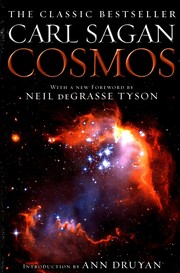
- If you liked A Brief History of Time, try Cosmos (Carl Sagan), Steve Jobs (Walter Isaacson) and The Immortal Life of Henrietta Lacks (Rebecca Skloot).
A taste of the feed
The universe does not require divinity to govern its immense complexity.
There is no God-Creator, but there is the Cosmos, which creates suns, planets and living beings. There is no omnipotent God, but there is the Universe, which governs the fates of all celestial bodies and their inhabitants. There are no sons of God, but there are mature and thus rational and perfect sons of the Cosmos. There are no personal gods, but there are elected leaders of planets, solar systems, stellar groups, milky ways, islands of ether and the whole Cosmos. There is no Christ, but there is a brilliant man and a greater teacher of mankind.
Cosmos · Carl Sagan
Hell is less a sentence handed down than a door locked from the inside.
Resurrection of the body is to be preceded by a judgment passed upon the works of charity, fulfilled or neglected. As a result of this judgement, the just are destined to eternal life. There is a destination to eternal damnation as well, which consists in the ultimate rejection of God, the ultimate break of the communion with the Father and the Son and the Holy Spirit. Here, it is not so much God who rejects man, but man who rejects God.
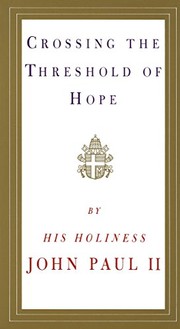
Crossing the Threshold of Hope · John Paul II
Pull on any one thing and the whole mountain moves.
No Sierra landscape that I have seen holds anything truly dead or dull, or any trace of what in manufactories is called rubbish or waste; everything is perfectly clean and pure and full of divine lessons. This quick, inevitable interest attaching to everything seems marvelous until the hand of God becomes visible; then it seems reasonable that what interests Him may well interest us. When we try to pick out anything by itself, we find it hitched to everything else in the universe. One fancies a heart like our own must be beating in every crystal and cell, and we feel like stopping to speak to the plants and animals as friendly fellow mountaineers.
My First Summer in the Sierra · John Muir
Read pages from books like this, one at a time
Keep reading in the feed