
A Doll's House
Henrik Ibsen (1828–1906), 1879
A wife with a secret loan, a husband who thinks he owns the sunshine, and a home where every kindness is a transaction. A polite household conversation slowly turns tense, its voice direct and conversational while the mood slides from cheer to unease.
Feels like unease, defiance and tenderness. About morality.
Who it’s for
You may like it if you enjoy close family dramas where ordinary conversation carries hidden pressure. It is a play, so the story unfolds mostly through dialogue and stage directions, and the 19th-century marriage customs may need some patience.
Why read it
It gives you a compact, charged look at how a marriage can be built on performance, and why one woman's small deception matters so much.
Pages from the book
A marriage described as a playroom, by the person who was the favourite doll.
NORA. No, only merry. And you have always been so kind to me. But our home has been nothing but a playroom. I have been your doll-wife, just as at home I was papa’s doll-child; and here the children have been my dolls. I thought it great fun when you played with me, just as they thought it great fun when I played with them. That is what our marriage has been, Torvald. The moment being reasonable stops meaning being obedient.
NORA. I don’t believe that any longer. I believe that before all else I am a reasonable human being, just as you are—or, at all events, that I must try and become one. I know quite well, Torvald, that most people would think you right, and that views of that kind are to be found in books; but I can no longer content myself with what most people say, or with what is found in books. I must think over things for myself and get to understand them. A woman argues that the law must be wrong because it cannot see her motives.
NORA. I don’t believe it. Is a daughter not to be allowed to spare her dying father anxiety and care? Is a wife not to be allowed to save her husband’s life? I don’t know much about law; but I am certain that there must be laws permitting such things as that. Have you no knowledge of such laws—you who are a lawyer? You must be a very poor lawyer, Mr. Krogstad. Henrik Ibsen.Ibsen wrote A Doll’s House during his long exile from Norway, in Rome and Munich, fifteen years after he left home.
Books that feel like this


Where to get it
Some of these links earn us a small commission, at no cost to you. It keeps BookFeed free.
Questions readers ask
- Is A Doll's House for me?
- You may like it if you enjoy close family dramas where ordinary conversation carries hidden pressure. It is a play, so the story unfolds mostly through dialogue and stage directions, and the 19th-century marriage customs may need some patience.
- What is A Doll's House like?
- A polite household conversation slowly turns tense, its voice direct and conversational while the mood slides from cheer to unease. Feels like unease, defiance and tenderness. About morality.
- What should I read after A Doll's House?
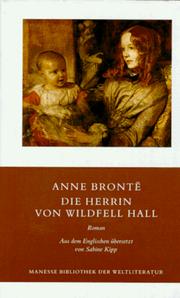
- If you liked A Doll's House, try The Tenant of Wildfell Hall (Anne Brontë), The Count of Monte Cristo (Alexandre Dumas) and The Merchant of Venice (William Shakespeare).
A taste of the feed
The horizon finally breaks, unveiling a vast and unblemished landscape of freedom.
At length our walk was ended. The increasing height and boldness of the hills had for some time intercepted the prospect; but, on gaining the summit of a steep acclivity, and looking downward, an opening lay before us—and the blue sea burst upon our sight!—deep violet blue—not deadly calm, but covered with glinting breakers—diminutive white specks twinkling on its bosom, and scarcely to be distinguished, by the keenest vision, from the little seamews that sported above, their white wings glittering in the sunshine: only one or two vessels were visible, and those were far away.
The Tenant of Wildfell Hall · Anne Brontë
A body gone silent, and one light still signalling from inside.
Sight and hearing were the only senses remaining, and they, like two solitary sparks, remained to animate the miserable body which seemed fit for nothing but the grave; it was only, however, by means of one of these senses that he could reveal the thoughts and feelings that still occupied his mind, and the look by which he gave expression to his inner life was like the distant gleam of a candle which a traveller sees by night across some desert place, and knows that a living being dwells beyond the silence and obscurity.
The Count of Monte Cristo · Alexandre Dumas
A marriage measured in how many rooms apart two people sleep.
All else was quiet round her. She had heard the horses prancing as they were being led away to their distant stables, the hurrying of servants’ feet as they had all gone within to rest: the house also was quite still. In two separate suites of apartments, just above the magnificent reception-rooms, lights were still burning, they were her rooms, and his, well divided from each other by the whole width of the house, as far apart as their own lives had become. Involuntarily she sighed—at that moment she could really not have told why.
The Scarlet Pimpernel · Baroness Orczy
Read pages from books like this, one at a time
Keep reading in the feed