
Roughing It
Mark Twain (1835–1910), 1872
★ 3.87 from 10.6k ratings on Goodreads
Twain goes west in 1861 to dodge the war and get rich: stagecoaches, con men, silver mines that pay nothing, and a coyote that outruns every dog. A rambling, dryly funny ride through stagecoach dust and mining schemes, with wonder and longing breaking through the tall tales.
Feels like wonder and longing. About war and memory.
Who it’s for
You may like it if you enjoy episodic travel, deadpan humor, and Western tall tales told by a sharp-eyed narrator. The 1872 prose can feel archaic, and some stretches linger on mining paperwork and speculative schemes.
Why read it
It offers a funny, unsentimental look at boom-time greed and luck, and the prairie passage alone shows how vivid Twain's reporting could be.
Pages from the book
Nothing moves a crowd like a speck that keeps coming.
Every neck is stretched further, and every eye strained wider. Away across the endless dead level of the prairie a black speck appears against the sky, and it is plain that it moves. Well, I should think so! In a second or two it becomes a horse and rider, rising and falling, rising and falling—sweeping toward us nearer and nearer—growing more and more distinct, more and more sharply defined—nearer and still nearer, and the flutter of the hoofs comes faintly to the ear—another instant a whoop and a hurrah from our upper deck, a wave of the rider’s hand, but no reply, and man and horse burst past our excited faces, and go winging away like a belated fragment of a storm! The case for ham and eggs as a philosophical position.
And it was comfort in those succeeding days to sit up and contemplate the majestic panorama of mountains and valleys spread out below us and eat ham and hard boiled eggs while our spiritual natures revelled alternately in rainbows, thunderstorms, and peerless sunsets. Nothing helps scenery like ham and eggs. Ham and eggs, and after these a pipe—an old, rank, delicious pipe—ham and eggs and scenery, a “down grade,” a flying coach, a fragrant pipe and a contented heart—these make happiness. It is what all the ages have struggled for. A lake so lonely it makes the word picturesque useless.
Mono Lake lies in a lifeless, treeless, hideous desert, eight thousand feet above the level of the sea, and is guarded by mountains two thousand feet higher, whose summits are always clothed in clouds. This solemn, silent, sailless sea—this lonely tenant of the loneliest spot on earth—is little graced with the picturesque. It is an unpretending expanse of grayish water, about a hundred miles in circumference, with two islands in its center, mere upheavals of rent and scorched and blistered lava, snowed over with gray banks and drifts of pumice-stone and ashes, the winding sheet of the dead volcano, whose vast crater the lake has seized upon and occupied. Mark Twain.Twain headed west in 1861 partly to avoid the Civil War, tagging along as aide to his brother Orion, who had just been appointed secretary of Nevada Territory.
Books that feel like this

More by Mark Twain
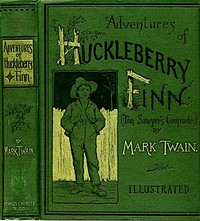
The Adventures of Huckleberry Finn
Mark Twain, 1884
A runaway boy and an enslaved man drift a raft down the Mississippi, and a child's plain talk quietly dismantles everything the adults around him believe.
Where to get it
Some of these links earn us a small commission, at no cost to you. It keeps BookFeed free.
Questions readers ask
- Is Roughing It for me?
- You may like it if you enjoy episodic travel, deadpan humor, and Western tall tales told by a sharp-eyed narrator. The 1872 prose can feel archaic, and some stretches linger on mining paperwork and speculative schemes.
- What is Roughing It like?
- A rambling, dryly funny ride through stagecoach dust and mining schemes, with wonder and longing breaking through the tall tales. Feels like wonder and longing. About war and memory.
- What should I read after Roughing It?
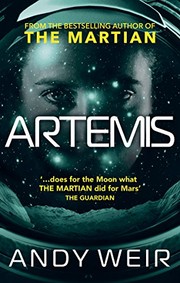
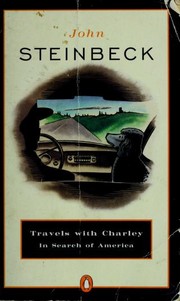
- If you liked Roughing It, try Artemis (Andy Weir), The Land of Little Rain (Mary Austin) and Travels with Charley (John Steinbeck).
A taste of the feed
The number you must not look at while your air runs out.
I switched to long, even hops. It felt like slow motion, but it was the best way to move with all that weight. My helmet’s heads-up display said the airlock was fifty-two meters away. I glanced at my arm readouts. My oxygen reserve plummeted while I watched. So I stopped watching.
Artemis · Andy Weir
Every generation mistakes its childhood for a better world.
Even while I protest the assembly-line production of our food, our songs, our language, and eventually our souls, I know that it was a rare home that baked good bread in the old days. Mother’s cooking was with rare exceptions poor, that good unpasteurized milk touched only by flies and bits of manure crawled with bacteria, the healthy old-time life was riddled with aches, sudden death from unknown causes, and that sweet local speech I mourn was the child of illiteracy and ignorance. It is the nature of a man as he grows older, a small bridge in time, to protest against change, particularly change for the better.
Travels with Charley · John Steinbeck
The strangest letter a magician receives is pinned to a five-year-old.
The man billed as Prospero the Enchanter receives a fair amount of correspondence via the theater office, but this is the first envelope addressed to him that contains a suicide note, and it is also the first to arrive carefully pinned to the coat of a five-year-old girl.
The Night Circus · Erin Morgenstern
Read pages from books like this, one at a time
Keep reading in the feed