
The Big Bow Mystery
Israel Zangwill (1864–1926), 1899
A satirical yet sharp debut in detective fiction that challenges assumptions about logic, genius, and the nature of truth. A whimsical and cerebral dive into the English mysteries. A curious, wry voice leads you through a locked-room puzzle, with satirical asides on Victorian society and logic.
Feels like curiosity and humor. About morality, identity and society.
Who it’s for
You may like it if you enjoy cerebral detective puzzles that poke fun at genius and deduction. The 1899 prose and leisurely satirical digressions can feel dated and demand patience.
Why read it
It offers a sharp, playful look at how truth gets constructed, wrapped in a mystery that keeps you questioning the obvious.
Pages from the book
To commit a crime that is invisible, one must engineer the very impossibility of discovery.
She cowered back, for an instant (I divined rather than saw the action) she shut off the dreaded sight with her hands. In that instant I had made my cut—precisely, scientifically—made so deep a cut and drew out the weapon so sharply that there was scarce a drop of blood on it; then there came from the throat a jet of blood which Mrs. Drabdump, conscious only of the horrid gash, saw but vaguely. I covered up the face quickly with a handkerchief to hide any convulsive distortion. But as the medical evidence (in this detail accurate) testified, death was instantaneous. I pocketed the razor and the empty sulfonal phial. With a woman like Mrs. Drabdump to watch me, I could do anything I pleased. I got her to draw my attention to the fact that both the windows were fastened. Can Nature be a plagiarist, or is the mundane simply hiding a grand design?
To the proverb, “You must not say Bo to a goose,” one added, “or else she will explain you the Mystery.” The name of the gentleman who asked whether the Bow Mystery was not ’arrowing shall not be divulged. There was more point in “Dagonet’s” remark that, if he had been one of the unhappy jurymen, he should have been driven to “suicide.” A professional paradox-monger pointed triumphantly to the somewhat similar situation in “the murder in the Rue Morgue,” and said that Nature had been plagiarizing again—like the monkey she was—and he recommended Poe’s publishers to apply for an injunction. More seriously, Poe’s solution was re-suggested by “Constant Reader” as an original idea. He thought that a small organ-grinder’s monkey might have got down the chimney with its master’s razor, and, after attempting to shave the occupant of the bed, have returned the way it came. How does memory distort the truth of the person you claim to know?
“Not five. I say nothing of lapses of memory, of inborn defects of observational power—though the suspiciously precise recollection of dates and events possessed by ordinary witnesses in important trials taking place years after the occurrences involved, is one of the most amazing things in the curiosities of modern jurisprudence. I defy you, sir, to tell me what you had for dinner last Monday, or what exactly you were saying and doing at five o’clock last Tuesday afternoon. Nobody whose life does not run in mechanical grooves can do anything of the sort; unless, of course, the facts have been very impressive. But this by the way. The great obstacle to veracious observation is the element of prepossession in all vision. Has it ever struck you, sir, that we never see anyone more than once, if that? Israel Zangwill.Zangwill was known for blending social observation with intellectual sparring, often using mystery plots to dissect contemporary Victorian societal trends. The novel reflects the burgeoning field of forensic and deductive reasoning.
Books that feel like this
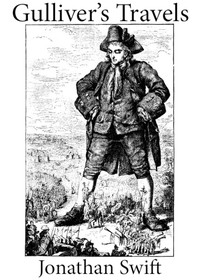
Gulliver's Travels into Several Remote Nations of the World
Jonathan Swift, 1726
Also humor and society.

Where to get it
Some of these links earn us a small commission, at no cost to you. It keeps BookFeed free.
Questions readers ask
- Is The Big Bow Mystery for me?
- You may like it if you enjoy cerebral detective puzzles that poke fun at genius and deduction. The 1899 prose and leisurely satirical digressions can feel dated and demand patience.
- What is The Big Bow Mystery like?
- A curious, wry voice leads you through a locked-room puzzle, with satirical asides on Victorian society and logic. Feels like curiosity and humor. About morality, identity and society.
- What should I read after The Big Bow Mystery?
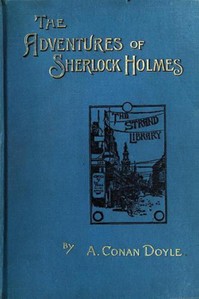
- If you liked The Big Bow Mystery, try The Old Man in the Corner (Baroness Orczy), The Adventures of Sherlock Holmes (Arthur Conan Doyle) and The Counterfeiters (André Gide).
A taste of the feed
What it costs to be the strangest person in the room.
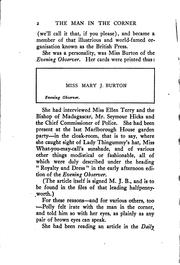
The man in the corner readjusted his collar and necktie, which, during the narrative of this interesting mystery, had worked its way up his long, crane-like neck under his large flappy ears. His costume of checked tweed of a peculiarly loud pattern had tickled the fancy of some of the waitresses, who were standing gazing at him and giggling in one corner. This evidently made him nervous. He gazed up very meekly at Polly, looking for all the world like a bald-headed adjutant dressed for a holiday.
The Old Man in the Corner · Baroness Orczy
The relief of discovering you owe nothing to the people who raised you.
Owing to an accidental discovery I happened to make this afternoon, I have become aware that I must cease to regard you as my father. This is an immense relief to me. Realizing as I do how little affection I feel for you, I have for a long time past been thinking myself an unnatural son; I prefer knowing I am not your son at all.
The Counterfeiters · André Gide
Five ways to start a war, none of them requiring a reason.
“Sometimes the quarrel between two princes is to decide which of them shall dispossess a third of his dominions, where neither of them pretend to any right. Sometimes one prince quarrels with another for fear the other should quarrel with him. Sometimes a war is entered upon, because the enemy is too strong; and sometimes, because he is too weak. Sometimes our neighbours want the things which we have, or have the things which we want, and we both fight, till they take ours, or give us theirs. It is a very justifiable cause of a war, to invade a country after the people have been wasted by famine, destroyed by pestilence, or embroiled by factions among themselves.
Gulliver's Travels into Several Remote Nations of the World · Jonathan Swift
Read pages from books like this, one at a time
Keep reading in the feed