BookFeed

Books like Peter Pan

If Peter Pan stayed with you, these share its feel: wonder, nostalgia and unease. Each comes with a real page, so you can tell in a minute.

About Peter Pan · J. M. Barrie

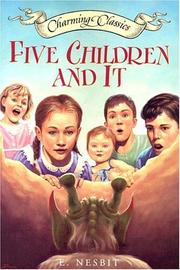
  1. 1.Five Children and It

    E. Nesbit, 1902

    Also wonder and nostalgia. Five siblings dig up a grumpy sand-fairy who grants one wish a day, and every wish goes gloriously wrong. Edwardian mischief with real teeth.

    Have you ever been up at five o’clock on a fine summer morning? It is very beautiful. The sunlight is pinky and yellowy, and all the grass and trees are covered with dew-diamonds. And all the shadows go the opposite way to the way they do in the evening, which is very interesting and makes you feel as though you were in a new other world.

  2. 2.Master Flea

    E. T. A. Hoffmann, 1822

    Also wonder and unease. A misanthropic bachelor, a flea with a doctorate in philosophy, and a magic lens that shows what people are thinking: Hoffmann's strangest comic fairy tale about love and microscopes.

    It was the kind and laudable practice of Mr. Tyss to surprise some needy family, where he knew there were children, with his whole cargo of Christmas boxes, just as he had purchased it, and dream himself for a few hours into the happy times of boyhood. Then, when the children were in the height of their joy, he would softly steal away and wander about the streets half the night, hardly knowing what to do with himself, from the deep emotions which straitened his breast, and feeling his own house like a vault, in which he was buried with all his pleasures.
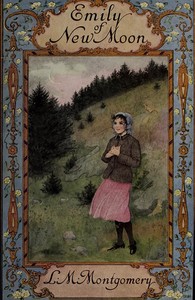
  3. 3.Emily of New Moon

    L. M. Montgomery, 1923

    Also wonder and nostalgia. An orphan with a stub of pencil and an unshakeable inner life is sent to live with stern relatives on Prince Edward Island, and starts writing them all down.

    Off to the right, on the crest of a steep little hill, covered with young birches and firs, was a house that puzzled and intrigued Emily. It was grey and weatherworn, but it didn’t look old. It had never been finished; the roof was shingled but the sides were not, and the windows were boarded over. Why had it never been finished? And it was meant to be such a pretty little house—a house you could love—a house where there would be nice chairs and cozy fires and bookcases and lovely, fat, purry cats and unexpected corners; then and there she named it the Disappointed House, and many an hour thereafter did she spend finishing that house, furnishing it as it should be furnished, and inventing the proper people and animals to live in it.
  4. 4.Poetry

    Henry van Dyke Jr., 1894

    Also wonder and nostalgia. A minister who loved birds, ships and the sea writes plain, musical poems about time, strangers and the guest-right of God — quieter and stranger than its era suggests.

    We men hat go down for a livin’ in ships to the sea—We love it a different way from you poets that ’bide on the land.We are fond of it, sure! But, you take it as comin’ from me,There’s a fear and a hate in our love that a landsman can’t understand.Oh, who could help likin’ the salty smell, and the blueOf the waves that are lazily breathin’ as if they dreamed in the sun?She’s a Sleepin’ Beauty, the sea—but you can’t tell what she’ll do;And the seamen never trust her—they know too well what she’s done!
  5. 5.Shadowings

    Lafcadio Hearn, 1900

    Also wonder and unease. A globe-trotting newspaperman in Meiji Japan collects ghost stories, insect songs, and notes on fear—curious, exact, and quietly strange.

    THE moon had not yet risen; but the vast of the night was all seething with stars, and bridged by a Milky Way of extraordinary brightness. There was no wind; but the sea, far as sight could reach, was running in ripples of fire,—a vision of infernal beauty. Only the ripplings were radiant (between them was blackness absolute);—and the luminosity was amazing. Most of the undulations were yellow like candle-flame; but there were crimson lampings also,—and azure, and orange, and emerald. And the sinuous flickering of all seemed, not a pulsing of many waters, but a laboring of many wills,—a fleeting conscious and monstrous,—a writhing and a swarming incalculable, as of dragon-life in some depth of Erebus.
  6. 6.The Turn of the Screw

    Henry James, 1898

    Also society and unease. A governess alone with two charming children begins to see figures no one else admits—and to wonder whether she is their protector or their danger.

    My second was a violent perception of the mistake of my first: the man who met my eyes was not the person I had precipitately supposed. There came to me thus a bewilderment of vision of which, after these years, there is no living view that I can hope to give. An unknown man in a lonely place is a permitted object of fear to a young woman privately bred; and the figure that faced me was—a few more seconds assured me—as little anyone else I knew as it was the image that had been in my mind. I had not seen it in Harley Street—I had not seen it anywhere. The place, moreover, in the strangest way in the world, had, on the instant, and by the very fact of its appearance, become a solitude.
  7. 8.The Tempest

    William Shakespeare, 1611

    Also wonder and unease. An exiled duke with a library of magic, a daughter who has met almost no one, and an island's furious native wait for a shipwreck to bring his enemies ashore.

  8. 11.Short Fiction

    Saki, 1904

    Also society and unease. Edwardian England seen from the side: a talking cat, a private childhood god, and a socialist who enjoys her money. Saki’s wit is a scalpel with a smile.

Read pages from books like this, one at a time

BookFeed is a feed of real passages from real books. It learns what moves you and finds your next book.

Open BookFeed

Free, no sign-up.