
Peter Pan
J. M. Barrie (1860–1937), 1911
A boy who refuses to grow up flies three children to an island of pirates, fairies and mermaids—and shows how much childhood costs. The story moves with a bright, lyrical wonder, then darkens into a gothic unease that lingers under the adventure.
Feels like wonder, nostalgia and unease. About love and society.
Who it’s for
You may like it if you enjoy old-fashioned adventure stories that mix playfulness with a strange, melancholy undertow. The Edwardian prose can feel arch and dated, and the gothic touches are more unsettling than a light children's tale suggests.
Why read it
It gives a vivid, unsentimental look at make-believe and the cost of leaving childhood behind, told with wit and a shadow.
Pages from the book
No one gets over the first time they are treated unfairly.
Not the pain of this but its unfairness was what dazed Peter. It made him quite helpless. He could only stare, horrified. Every child is affected thus the first time he is treated unfairly. All he thinks he has a right to when he comes to you to be yours is fairness. After you have been unfair to him he will love you again, but will never afterwards be quite the same boy. No one ever gets over the first unfairness; no one except Peter. He often met it, but he always forgot it. I suppose that was the real difference between him and all the rest. The most dangerous man on the island travels in a chariot pulled by his own crew.
In the midst of them, the blackest and largest in that dark setting, reclined James Hook, or as he wrote himself, Jas. Hook, of whom it is said he was the only man that the Sea-Cook feared. He lay at his ease in a rough chariot drawn and propelled by his men, and instead of a right hand he had the iron hook with which ever and anon he encouraged them to increase their pace. As dogs this terrible man treated and addressed them, and as dogs they obeyed him. In person he was cadaverous and blackavized, and his hair was dressed in long curls, which at a little distance looked like black candles, and gave a singularly threatening expression to his handsome countenance. The closest you get to the lagoon is behind your own eyelids.
If you shut your eyes and are a lucky one, you may see at times a shapeless pool of lovely pale colours suspended in the darkness; then if you squeeze your eyes tighter, the pool begins to take shape, and the colours become so vivid that with another squeeze they must go on fire. But just before they go on fire you see the lagoon. This is the nearest you ever get to it on the mainland, just one heavenly moment; if there could be two moments you might see the surf and hear the mermaids singing. J. M. Barrie.Barrie gave the copyright of Peter Pan to Great Ormond Street Hospital in 1929; the hospital has received royalties from the play ever since.
Books that feel like this

Where to get it
Some of these links earn us a small commission, at no cost to you. It keeps BookFeed free.
Questions readers ask
- Is Peter Pan for me?
- You may like it if you enjoy old-fashioned adventure stories that mix playfulness with a strange, melancholy undertow. The Edwardian prose can feel arch and dated, and the gothic touches are more unsettling than a light children's tale suggests.
- What is Peter Pan like?
- The story moves with a bright, lyrical wonder, then darkens into a gothic unease that lingers under the adventure. Feels like wonder, nostalgia and unease. About love and society.
- What should I read after Peter Pan?
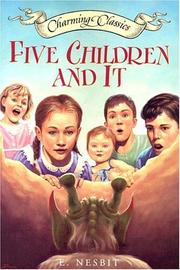
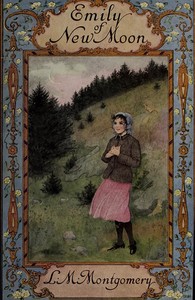
- If you liked Peter Pan, try Five Children and It (E. Nesbit), Master Flea (E. T. A. Hoffmann) and Emily of New Moon (L. M. Montgomery).
A taste of the feed
The world at dawn really does point its shadows the other way.
Have you ever been up at five o’clock on a fine summer morning? It is very beautiful. The sunlight is pinky and yellowy, and all the grass and trees are covered with dew-diamonds. And all the shadows go the opposite way to the way they do in the evening, which is very interesting and makes you feel as though you were in a new other world.
Five Children and It · E. Nesbit
The strange loneliness of the person who arranges other people's joy.
It was the kind and laudable practice of Mr. Tyss to surprise some needy family, where he knew there were children, with his whole cargo of Christmas boxes, just as he had purchased it, and dream himself for a few hours into the happy times of boyhood. Then, when the children were in the height of their joy, he would softly steal away and wander about the streets half the night, hardly knowing what to do with himself, from the deep emotions which straitened his breast, and feeling his own house like a vault, in which he was buried with all his pleasures.
Master Flea · E. T. A. Hoffmann
A sailor's love for the sea has fear in it; landsmen never understand.
We men hat go down for a livin’ in ships to the sea— We love it a different way from you poets that ’bide on the land. We are fond of it, sure! But, you take it as comin’ from me, There’s a fear and a hate in our love that a landsman can’t understand. Oh, who could help likin’ the salty smell, and the blue Of the waves that are lazily breathin’ as if they dreamed in the sun? She’s a Sleepin’ Beauty, the sea—but you can’t tell what she’ll do; And the seamen never trust her—they know too well what she’s done!
Poetry · Henry van Dyke Jr.
Read pages from books like this, one at a time
Keep reading in the feed