BookFeed Ελληνικά

Books like Little Women

If Little Women stayed with you, these share its feel: love, tenderness and joy. Each comes with a real page, so you can tell in a minute.

About Little Women · Louisa May Alcott

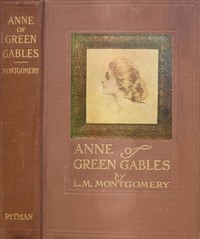
  1. 1.Anne of Green Gables

    L. M. Montgomery, 1908

    Also tenderness and family. A vibrant, deeply imaginative coming-of-age story woven through the lush landscape of rural Canada.

    Anne was curled up Turk-fashion on the hearthrug, gazing into that joyous glow where the sunshine of a hundred summers was being distilled from the maple cordwood. She had been reading, but her book had slipped to the floor, and now she was dreaming, with a smile on her parted lips. Glittering castles in Spain were shaping themselves out of the mists and rainbows of her lively fancy; adventures wonderful and enthralling were happening to her in cloudland—adventures that always turned out triumphantly and never involved her in scrapes like those of actual life.
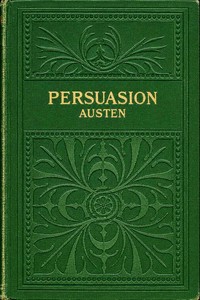
  2. 2.Persuasion

    Jane Austen, 1817

    Also love and melancholy. A woman of twenty-seven meets again the man she was talked out of marrying, and begins to wonder whether prudence was ever a virtue.

    They had no conversation together, no intercourse but what the commonest civility required. Once so much to each other! Now nothing! There had been a time, when of all the large party now filling the drawing-room at Uppercross, they would have found it most difficult to cease to speak to one another. With the exception, perhaps, of Admiral and Mrs. Croft, who seemed particularly attached and happy (Anne could allow no other exception even among the married couples), there could have been no two hearts so open, no tastes so similar, no feelings so in unison, no countenances so beloved. Now they were as strangers; nay, worse than strangers, for they could never become acquainted. It was a perpetual estrangement.
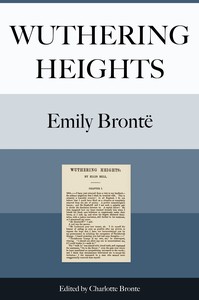
  3. 3.Wuthering Heights

    Emily Brontë, 1847

    Also love. A storm of a love story told by two unreliable narrators, in which childhood devotion curdles into revenge across two generations on the Yorkshire moors.

    “Nelly, help me to convince her of her madness. Tell her what Heathcliff is: an unreclaimed creature, without refinement, without cultivation; an arid wilderness of furze and whinstone. I’d as soon put that little canary into the park on a winter’s day, as recommend you to bestow your heart on him! It is deplorable ignorance of his character, child, and nothing else, which makes that dream enter your head. Pray, don’t imagine that he conceals depths of benevolence and affection beneath a stern exterior! He’s not a rough diamond—a pearl-containing oyster of a rustic: he’s a fierce, pitiless, wolfish man. I never say to him, ‘Let this or that enemy alone, because it would be ungenerous or cruel to harm them;’ I say, ‘Let them alone, because I should hate them to be wronged:’ and he’d crush you like a sparrow’s egg, Isabella, if he found you a troublesome charge.
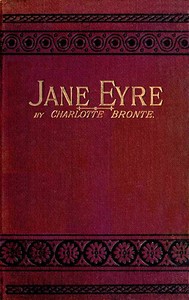
  4. 4.Jane Eyre

    Charlotte Brontë, 1847

    Also identity and love. An orphan with no money, no beauty and a ferocious sense of her own worth takes a job at a strange house. A first-person voice that still feels startlingly direct.

    No sooner did I see that his attention was riveted on them, and that I might gaze without being observed, than my eyes were drawn involuntarily to his face; I could not keep their lids under control: they would rise, and the irids would fix on him. I looked, and had an acute pleasure in looking,—a precious yet poignant pleasure; pure gold, with a steely point of agony: a pleasure like what the thirst-perishing man might feel who knows the well to which he has crept is poisoned, yet stoops and drinks divine draughts nevertheless.
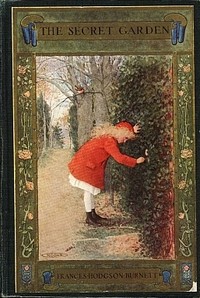
  5. 5.The Secret Garden

    Frances Hodgson Burnett, 1911

    A sour child, a locked garden and a boy who believes he is dying: a story about what attention can grow.

    The sun was shining inside the four walls and the high arch of blue sky over this particular piece of Misselthwaite seemed even more brilliant and soft than it was over the moor. The robin flew down from his treetop and hopped about or flew after her from one bush to another. He chirped a good deal and had a very busy air, as if he were showing her things. Everything was strange and silent and she seemed to be hundreds of miles away from anyone, but somehow she did not feel lonely at all. All that troubled her was her wish that she knew whether all the roses were dead, or if perhaps some of them had lived and might put out leaves and buds as the weather got warmer. She did not want it to be a quite dead garden.
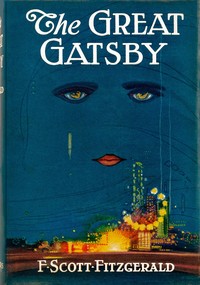
  6. 6.The Great Gatsby

    F. Scott Fitzgerald, 1925

    Also melancholy and love. A short, dazzling novel about a summer of parties on Long Island and the man who throws them for one reason. Every sentence is built to be reread, and the ending is hard to shake.

    There was music from my neighbour’s house through the summer nights. In his blue gardens men and girls came and went like moths among the whisperings and the champagne and the stars. At high tide in the afternoon I watched his guests diving from the tower of his raft, or taking the sun on the hot sand of his beach while his two motorboats slit the waters of the Sound, drawing aquaplanes over cataracts of foam. On weekends his Rolls-Royce became an omnibus, bearing parties to and from the city between nine in the morning and long past midnight, while his station wagon scampered like a brisk yellow bug to meet all trains. And on Mondays eight servants, including an extra gardener, toiled all day with mops and scrubbing-brushes and hammers and garden-shears, repairing the ravages of the night before.
  7. 8.Frankenstein

    Mary Shelley, 1818

    A young scientist makes life and then cannot face what he has made. Told in nested voices, it asks who owes what to whom, and why ambition so often ends in solitude.

  8. 9.Agnes Grey

    Anne Brontë, 1847

    Also melancholy and identity. A clergyman's daughter with no money takes a post as a governess and learns how little the world allows a woman who must earn her own bread.

  9. 10.Leaves of Grass

    Walt Whitman, 1855

    Also joy and identity. A big, boastful, tender American voice that talks directly to you across time, celebrating bodies, cities and ordinary people. Dip in anywhere and find yourself addressed.

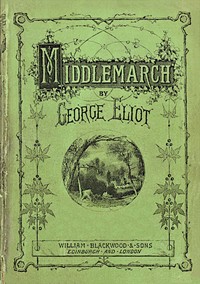
  10. 11.Middlemarch

    George Eliot, 1872

    Also tenderness and identity. A provincial town, a clever woman married to the wrong scholar, an ambitious doctor, and the slow, comic, devastating work of learning that other people are real.

  11. 12.Poetry

    James Joyce, 1907

    Also love and tenderness. The poems Joyce wrote before Ulysses: love lyrics built like songs, and later, darker pieces from Trieste and Paris, short enough to read standing up.

Read pages from books like this, one at a time

BookFeed is a feed of real passages from real books. It learns what moves you and finds your next book.

Open BookFeed

Free, no sign-up.