Crime and Punishment
Fyodor Dostoevsky, 1866
A broke student in St. Petersburg tests a theory that some people are above the law, and discovers the cost is not legal but psychological.
 BookFeed Ελληνικά
The novels gathered here put people under pressure and watch what breaks: a student with a theory and no money in Crime and Punishment, a king who turns love into a test in King Lear, four friends riding into a cardinal's reach in The Three Musketeers. What they share is a mood rather than a subject, the sense that a choice made in one bad week can bend a whole life, and you keep reading to see how the people inside them carry it.
A page that shows it
Why crowds can feel easier than empty roads.
He felt very miserable. If it had been possible to escape to some solitude, he would have thought himself lucky, even if he had to spend his whole life there. But although he had almost always been by himself of late, he had never been able to feel alone. Sometimes he walked out of the town on to the high road, once he had even reached a little wood, but the lonelier the place was, the more he seemed to be aware of an uneasy presence near him. It did not frighten him, but greatly annoyed him, so that he made haste to return to the town, to mingle with the crowd, to enter restaurants and taverns, to walk in busy thoroughfares. There he felt easier and even more solitary. Fyodor Dostoevsky, 1866
A broke student in St. Petersburg tests a theory that some people are above the law, and discovers the cost is not legal but psychological.
William Shakespeare, 1597
Two teenagers from feuding families fall in love over three days, and the adults around them keep choosing sides.
Victor Hugo, 1862
A convict, a relentless inspector and a city on the edge of revolt: a huge novel about mercy, poverty and the price of a second chance.
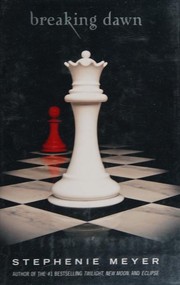
Stephenie Meyer, 2008
The fourth Twilight novel: Bella and Edward marry, and every supernatural faction in the Pacific Northwest has an opinion about it.
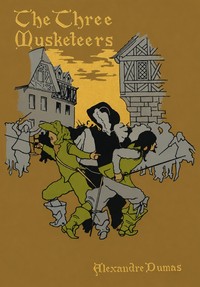
Alexandre Dumas, 1844
Four swaggering swordsmen, a cardinal who wants them dead, and a queen's secret: a serial adventure written at a gallop, with jokes and a very cold villain.
Fyodor Dostoevsky, 1880
A father is murdered and his sons—sensual, intellectual, spiritual—argue over guilt, God, and whether anyone can love another person.
Charles Dickens, 1859
London and Paris on the edge of revolution: a man released from eighteen years in prison, a woman who knits a register of enemies, and a crowd nothing will stop.
William Shakespeare, 1608
A king divides his kingdom by a love test, and everything he built comes apart in one night of weather and rage.
Homer, -750
A war stalled outside a city, a commander's wounded pride, and the best fighter in the army refusing to fight. Seven weeks of rage, grief and armour.
Ανδρέας Καρκαβίτσας, 1911
A comic, merciless anatomy of election fever in post-revolutionary Mesolongi, where the sons of heroes trade glory for votes and turn a portrait into a god.
Βιτσέντζος Κορνάρος, 1713
A Cretan romance in verse about love tested by family power, public honor, separation and courage.
Γκαμπριέλ Γκαρσία Μάρκες, 2024
A woman with a settled family life returns each August to an island, where desire unsettles what she thought she knew about herself.
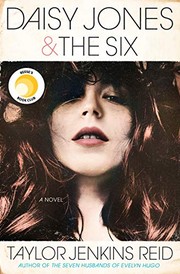
Taylor Jenkins Reid, 2019
A rock band's rise, told as an oral history by everyone who lived it—and the singer at the center no one can agree on.
Harold Bloom, 1998
Harold Bloom's case for Shakespeare as the inventor of the self-aware character: a lifetime of reading distilled into an argument about how fictional people learned to change.
Pablo Neruda, 1952
Neruda turns love into a private world of queens, storms and shared light—intimate poems that make ordinary life feel vast.
Μένιος Σακελλαρόπουλος, 2011
A Cretan tale of brotherhood, desire and the bonds that tighten when one person tries to break free.
Κωνσταντίνος Χρηστομάνος, 1911
In turn-of-the-century Athens, desire and grief blur into landscapes, music and the changing seasons.
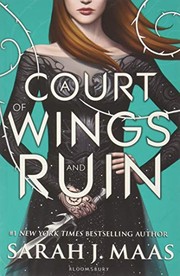
Sarah J. Maas, 2017
A fantasy romance of war, winged courts and dangerous bargains, where love is a weapon and every alliance has teeth.
Anna Todd, 2014
A story of intense, complicated romance where desire clashes violently with self-preservation. Explore the nature of love when it feels more like a fever.
Isabel Allende, 1982
A sweeping generational saga where political turbulence, passionate love, and the supernatural blur the lines of reality and memory.
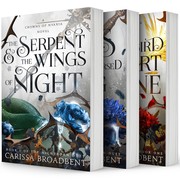
Carissa Broadbent, 2022
Raised by the vampire king who should have killed her, a human girl enters a lethal trial for power—and finds a rival who sees her too clearly.
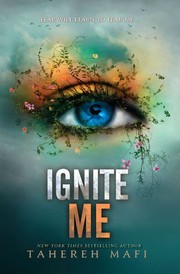
Tahereh Mafi, 2014
A girl with a lethal touch, a rebellion she never asked to lead, and the cold young commander who keeps calling her love.
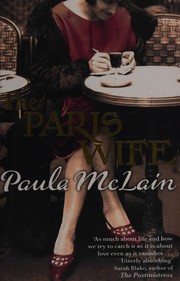
Paula McLain, 2011
A journey through the vibrant, often chaotic 1920s Paris, tracing the impossible life of an aspiring writer caught between an icon and a fragile dream.
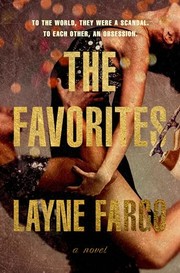
Layne Fargo, 2025
A fictional oral history of two ice dancers whose obsessive partnership becomes a legend—and a scandal—told by the people who watched them burn.
The wish to make someone so bright the sun becomes an insult.
Hood my unmann’d blood, bating in my cheeks,
With thy black mantle; till strange love, grown bold,
Think true love acted simple modesty.
Come, night; come, Romeo; come, thou day in night;
For thou wilt lie upon the wings of night
Whiter than new snow on a raven’s back.
Come, gentle night, come, loving, black-brow’d night,
Give me my Romeo; and, when he shall die,
Take him and cut him out in little stars,
And he will make the face of heaven so fine
That all the world will be in love with night
And pay no worship to the garish sun.Romeo and Juliet · William Shakespeare
The bravest lives are often the ones nobody applauds.
For many great deeds are performed in petty combats. There are instances of bravery ignored and obstinate, which defend themselves step by step in that fatal onslaught of necessities and turpitudes. Noble and mysterious triumphs which no eye beholds, which are requited with no renown, which are saluted with no trumpet blast. Life, misfortune, isolation, abandonment, poverty, are the fields of battle which have their heroes; obscure heroes, who are, sometimes, grander than the heroes who win renown.Les Misérables · Victor Hugo
What it feels like to see an ordinary room with the volume turned up.
The brilliant light overhead was still blinding-bright, and yet I could plainly see the glowing strands of the filaments inside the bulb. I could see each color of the rainbow in the white light, and, at the very edge of the spectrum, an eighth color I had no name for.Breaking Dawn · Stephenie Meyer
Read pages from books like this, one at a time
Keep reading in the feedRead pages from books like this, one at a time
BookFeed is a feed of real passages from real books. It learns what moves you and finds your next book.
Open BookFeedFree, no sign-up.