
Romeo and Juliet
William Shakespeare (1564–1616), 1597
Two teenagers from feuding families fall in love over three days, and the adults around them keep choosing sides. Lyrical, headlong and shadowed by grief, the play moves from banter to desire to public violence with startling speed.
Feels like passion, grief and longing. About love and freedom.
Who it’s for
You may like it if you enjoy intense lyric poetry, family conflict, and young love played out in public. The Elizabethan English and dense wordplay can make scenes demanding, so it helps to read slowly or see it performed.
Why read it
Its compressed three-day arc shows how quickly private feeling becomes public consequence, and the verse gives grief and desire a voice you can hear.
Pages from the book
The wish to make someone so bright the sun becomes an insult.
Hood my unmann’d blood, bating in my cheeks,With thy black mantle; till strange love, grown bold,Think true love acted simple modesty.Come, night; come, Romeo; come, thou day in night;For thou wilt lie upon the wings of nightWhiter than new snow on a raven’s back.Come, gentle night, come, loving, black-brow’d night,Give me my Romeo; and, when he shall die,Take him and cut him out in little stars,And he will make the face of heaven so fineThat all the world will be in love with nightAnd pay no worship to the garish sun. The moment someone else's beauty rearranges your whole history.
O, she doth teach the torches to burn bright!It seems she hangs upon the cheek of nightLike a rich jewel in an Ethiope’s ear;Beauty too rich for use, for earth too dear!So shows a snowy dove trooping with crows,As yonder lady o’er her fellows shows.The measure done, I’ll watch her place of stand,And, touching hers, make blessed my rude hand.Did my heart love till now? forswear it, sight!For I ne’er saw true beauty till this night. The small object a person would become to be near someone.
Two of the fairest stars in all the heaven,Having some business, do entreat her eyesTo twinkle in their spheres till they return.What if her eyes were there, they in her head?The brightness of her cheek would shame those stars,As daylight doth a lamp; her eyes in heavenWould through the airy region stream so brightThat birds would sing and think it were not night.See, how she leans her cheek upon her hand!O, that I were a glove upon that hand,That I might touch that cheek! William Shakespeare.Shakespeare did not invent the story: Arthur Brooke's 1562 poem 'Romeus and Juliet' supplied the plot, and Shakespeare compressed its months into about four days.
Books that feel like this

More by William Shakespeare
Hamlet
William Shakespeare, 1603
A prince in mourning delays, dissembles, and thinks too much, while a court watches every move. Read for the language, stay for the recognitions.
Macbeth
William Shakespeare, 1606
A soldier is greeted by three strangers who promise him a crown, and we watch, line by line, how quickly a decent man can argue himself into murder.
King Lear
William Shakespeare, 1608
A king divides his kingdom by a love test, and everything he built comes apart in one night of weather and rage.
Where to get it
Some of these links earn us a small commission, at no cost to you. It keeps BookFeed free.
Questions readers ask
- Is Romeo and Juliet for me?
- You may like it if you enjoy intense lyric poetry, family conflict, and young love played out in public. The Elizabethan English and dense wordplay can make scenes demanding, so it helps to read slowly or see it performed.
- What is Romeo and Juliet like?
- Lyrical, headlong and shadowed by grief, the play moves from banter to desire to public violence with startling speed. Feels like passion, grief and longing. About love and freedom.
- What should I read after Romeo and Juliet?
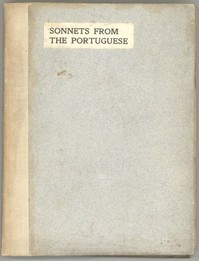
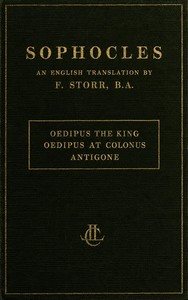
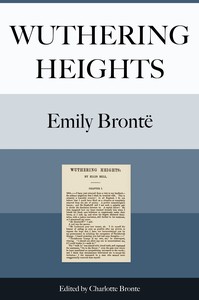
- If you liked Romeo and Juliet, try Sonnets from the Portuguese (Elizabeth Barrett Browning), Antigone (Sophocles) and Wuthering Heights (Emily Brontë).
A taste of the feed
What it costs to hand someone the ashes of your grief.
I lift my heavy heart up solemnly, As once Electra her sepulchral urn, And, looking in thine eyes, I overturn The ashes at thy feet. Behold and see What a great heap of grief lay hid in me, And how the red wild sparkles dimly burn Through the ashen greyness. If thy foot in scorn Could tread them out to darkness utterly, It might be well perhaps. But if instead Thou wait beside me for the wind to blow The grey dust up—those laurels on thine head, O my Beloved, will not shield thee so, That none of all the fires shall scorch and shred The hair beneath. Stand further off then! Go.
Sonnets from the Portuguese · Elizabeth Barrett Browning
The laws no king wrote and no king can repeal.
Yea, for these laws were not ordained of Zeus, And she who sits enthroned with gods below, Justice, enacted not these human laws. Nor did I deem that thou, a mortal man, Could’st by a breath annul and override The immutable unwritten laws of Heaven. They were not born today nor yesterday; They die not; and none knoweth whence they sprang. I was not like, who feared no mortal’s frown, To disobey these laws and so provoke The wrath of Heaven. I knew that I must die, E’en hadst thou not proclaimed it; and if death Is thereby hastened, I shall count it gain.
Antigone · Sophocles
A wind that carries every love story ever told.
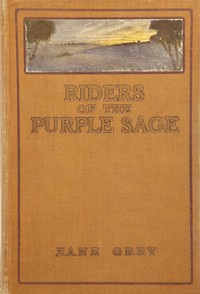
Always it brought softly to him strange, sweet tidings of far-off things. It blew from a place that was old and whispered of youth. It blew down the grooves of time. It brought a story of the passing hours. It breathed low of fighting men and praying women. It sang clearly the song of love. That ever was the burden of its tidings—youth in the shady woods, waders through the wet meadows, boy and girl at the hedgerow stile, bathers in the booming surf, sweet, idle hours on grassy, windy hills, long strolls down moonlit lanes—everywhere in far-off lands, fingers locked and bursting hearts and longing lips—from all the world tidings of unquenchable love.
Riders of the Purple Sage · Zane Grey
Read pages from books like this, one at a time
Keep reading in the feed