
The Count of Monte Cristo
Alexandre Dumas (1802–1870), 1844
A young sailor is betrayed on his wedding day and spends fourteen years in prison. Then he returns, rich and unrecognisable, to dismantle the lives of the men who put him there. A long, dramatic ride through betrayal and revenge, written in a formal 19th-century voice that lingers over scenes and moral turns.
Feels like defiance, hope and grief. About morality, freedom and power.
Who it’s for
You may like it if you enjoy intricate revenge plots, historical settings and characters who test the limits of justice. Be prepared for ornate 19th-century prose and a very long story that takes its time.
Why read it
It gives you a sweeping story about injustice, patience and the cost of getting even, with a hero whose transformation is as unsettling as it is satisfying.
Pages from the book
A body gone silent, and one light still signalling from inside.
Sight and hearing were the only senses remaining, and they, like two solitary sparks, remained to animate the miserable body which seemed fit for nothing but the grave; it was only, however, by means of one of these senses that he could reveal the thoughts and feelings that still occupied his mind, and the look by which he gave expression to his inner life was like the distant gleam of a candle which a traveller sees by night across some desert place, and knows that a living being dwells beyond the silence and obscurity. How long in the dark before a man counts himself among the dead?
A year after Louis XVIII.’s restoration, a visit was made by the inspector-general of prisons. Dantès in his cell heard the noise of preparation,—sounds that at the depth where he lay would have been inaudible to any but the ear of a prisoner, who could hear the splash of the drop of water that every hour fell from the roof of his dungeon. He guessed something uncommon was passing among the living; but he had so long ceased to have any intercourse with the world, that he looked upon himself as dead. The cruelty of a ball you can hear but cannot join.
The prisoner’s first feeling was of joy at again breathing the pure air—for air is freedom; but he soon sighed, for he passed before La Réserve, where he had that morning been so happy, and now through the open windows came the laughter and revelry of a ball. Dantès folded his hands, raised his eyes to heaven, and prayed fervently. Alexandre Dumas.Dumas based the plot on the archived case of Pierre Picaud, a Parisian shoemaker falsely denounced by jealous friends and imprisoned for seven years. He worked with the collaborator Auguste Maquet.
Books that feel like this

More by Alexandre Dumas
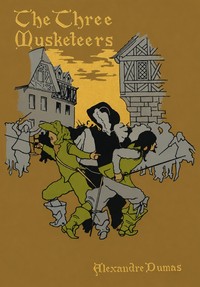
The Three Musketeers
Alexandre Dumas, 1844
Four swaggering swordsmen, a cardinal who wants them dead, and a queen's secret: a serial adventure written at a gallop, with jokes and a very cold villain.
Where to get it
Some of these links earn us a small commission, at no cost to you. It keeps BookFeed free.
Questions readers ask
- Is The Count of Monte Cristo for me?
- You may like it if you enjoy intricate revenge plots, historical settings and characters who test the limits of justice. Be prepared for ornate 19th-century prose and a very long story that takes its time.
- What is The Count of Monte Cristo like?
- A long, dramatic ride through betrayal and revenge, written in a formal 19th-century voice that lingers over scenes and moral turns. Feels like defiance, hope and grief. About morality, freedom and power.
- What should I read after The Count of Monte Cristo?
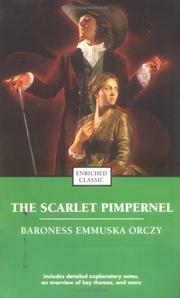
- If you liked The Count of Monte Cristo, try The Scarlet Pimpernel (Baroness Orczy), A Doll's House (Henrik Ibsen) and Paradise Lost (John Milton).
A taste of the feed
A marriage measured in how many rooms apart two people sleep.
All else was quiet round her. She had heard the horses prancing as they were being led away to their distant stables, the hurrying of servants’ feet as they had all gone within to rest: the house also was quite still. In two separate suites of apartments, just above the magnificent reception-rooms, lights were still burning, they were her rooms, and his, well divided from each other by the whole width of the house, as far apart as their own lives had become. Involuntarily she sighed—at that moment she could really not have told why.
The Scarlet Pimpernel · Baroness Orczy
A marriage described as a playroom, by the person who was the favourite doll.
NORA. No, only merry. And you have always been so kind to me. But our home has been nothing but a playroom. I have been your doll-wife, just as at home I was papa’s doll-child; and here the children have been my dolls. I thought it great fun when you played with me, just as they thought it great fun when I played with them. That is what our marriage has been, Torvald.
A Doll's House · Henrik Ibsen
The logic of a king who would rather rule a wasteland than bend the knee.
What matter where, if I be still the same, And what I should be, all but less than he Whom thunder hath made greater? Here at least We shall be free; the Almighty hath not built Here for his envy, will not drive us hence: Here we may reign secure, and in my choice To reign is worth ambition though in Hell: Better to reign in Hell, than serve in Heaven.
Paradise Lost · John Milton
Read pages from books like this, one at a time
Keep reading in the feed