
Hamlet
William Shakespeare (1564–1616), 1603
A prince in mourning delays, dissembles, and thinks too much, while a court watches every move. Read for the language, stay for the recognitions. Grief and dread press through a courtly, watchful drama, with lyrical soliloquies that slow the pace and sharpen every moral hesitation.
Feels like grief, dread and wonder. About madness, morality and power.
Who it’s for
You may like it if you enjoy language that rewards close attention and a story built on hesitation, surveillance, and family grief. The Elizabethan English is dense and allusion-heavy, so passages can be slow going without notes or a good annotated edition.
Why read it
Its language still startles, and its portrait of a mind circling a decision gives you a sharp, humane way to think about grief and action.
Pages from the book
The mind can make a prison out of the one door it cannot see through.
To be, or not to be: that is the question:Whether ’tis nobler in the mind to sufferThe slings and arrows of outrageous fortune,Or to take arms against a sea of troubles,And by opposing end them? To die: to sleep;No more; and by a sleep to say we endThe heart-ache and the thousand natural shocksThat flesh is heir to, ’tis a consummationDevoutly to be wish’d. To die, to sleep;To sleep: perchance to dream: ay, there’s the rub;For in that sleep of death what dreams may comeWhen we have shuffled off this mortal coil,Must give us pause: there’s the respectThat makes calamity of so long life; The world has become an unweeded garden. The heart still expects it not to be.
O, that this too too solid flesh would melt,Thaw and resolve itself into a dew!Or that the Everlasting had not fix’dHis canon ’gainst self-slaughter! O God! God!How weary, stale, flat and unprofitable,Seem to me all the uses of this world!Fie on’t! ah fie! ’tis an unweeded garden,That grows to seed; things rank and gross in naturePossess it merely. That it should come to this!But two months dead: nay, not so much, not two:So excellent a king; that was, to this,Hyperion to a satyr; so loving to my motherThat he might not beteem the winds of heavenVisit her face too roughly. Heaven and earth! The sky can be a roof of golden fire one year and a foul vapour the next.
I have of late—but wherefore I know not—lost all my mirth, forgone all custom of exercises; and indeed it goes so heavily with my disposition that this goodly frame, the earth, seems to me a sterile promontory, this most excellent canopy, the air, look you, this brave o’erhanging firmament, this majestical roof fretted with golden fire, why, it appears no other thing to me than a foul and pestilent congregation of vapours. What a piece of work is a man! how noble in reason! how infinite in faculty! in form and moving how express and admirable! in action how like an angel! in apprehension how like a god! the beauty of the world! the paragon of animals! William Shakespeare.Shakespeare acted in his own plays; a 1610 document lists him among the King’s Men as both principal actor and playwright.
Books that feel like this

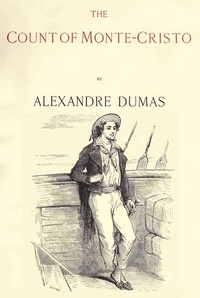

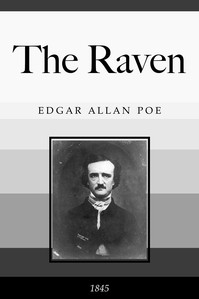
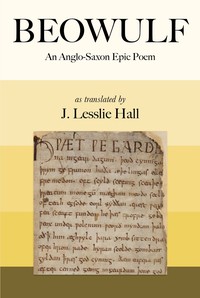
More by William Shakespeare
Romeo and Juliet
William Shakespeare, 1597
Two teenagers from feuding families fall in love over three days, and the adults around them keep choosing sides.
Macbeth
William Shakespeare, 1606
A soldier is greeted by three strangers who promise him a crown, and we watch, line by line, how quickly a decent man can argue himself into murder.
King Lear
William Shakespeare, 1608
A king divides his kingdom by a love test, and everything he built comes apart in one night of weather and rage.
Where to get it
Some of these links earn us a small commission, at no cost to you. It keeps BookFeed free.
Questions readers ask
- Is Hamlet for me?
- You may like it if you enjoy language that rewards close attention and a story built on hesitation, surveillance, and family grief. The Elizabethan English is dense and allusion-heavy, so passages can be slow going without notes or a good annotated edition.
- What is Hamlet like?
- Grief and dread press through a courtly, watchful drama, with lyrical soliloquies that slow the pace and sharpen every moral hesitation. Feels like grief, dread and wonder. About madness, morality and power.
- What should I read after Hamlet?
- If you liked Hamlet, try The Iliad (Homer), Divine Comedy, Longfellow's Translation, Hell (Dante Alighieri) and The Count of Monte Cristo (Alexandre Dumas).
A taste of the feed
He has no comfort to give her except the shape of what is coming.
So speaking, to the arms of his dear spouse He gave the boy; she on her fragrant breast Received him, weeping as she smiled. The chief Beheld, and, moved with tender pity, smoothed Her forehead gently with his hand and said:— “Sorrow not thus, beloved one, for me. No living man can send me to the shades Before my time; no man of woman born, Coward or brave, can shun his destiny. But go thou home, and tend thy labors there— The web, the distaff—and command thy maids To speed the work: The cares of war pertain To all men born in Troy, and most to me.”
The Iliad · Homer
A captain's speech to tired sailors about what humans are for.
Consider ye the seed from which ye sprang; Ye were not made to live like unto brutes, But for pursuit of virtue and of knowledge.’ So eager did I render my companions, With this brief exhortation, for the voyage, That then I hardly could have held them back. And having turned our stern unto the morning, We of the oars made wings for our mad flight, Evermore gaining on the larboard side.
Divine Comedy, Longfellow's Translation, Hell · Dante Alighieri
A body gone silent, and one light still signalling from inside.
Sight and hearing were the only senses remaining, and they, like two solitary sparks, remained to animate the miserable body which seemed fit for nothing but the grave; it was only, however, by means of one of these senses that he could reveal the thoughts and feelings that still occupied his mind, and the look by which he gave expression to his inner life was like the distant gleam of a candle which a traveller sees by night across some desert place, and knows that a living being dwells beyond the silence and obscurity.
The Count of Monte Cristo · Alexandre Dumas
Read pages from books like this, one at a time
Keep reading in the feed