The Count of Monte Cristo
Alexandre Dumas, 1844
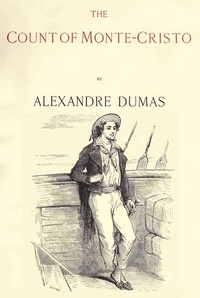
A young sailor is betrayed on his wedding day and spends fourteen years in prison. Then he returns, rich and unrecognisable, to dismantle the lives of the men who put him there.
 BookFeed Ελληνικά
1802–1870
Dumas writes like a man with a deadline and a taste for trouble: long, fast, talky books where friendship and revenge both cost something. Start with The Three Musketeers if you want jokes and swordfights; start with The Count of Monte Cristo if you want patience, planning and a man quietly taking the world apart.
Feels like defiance, power and morality.
Start with The Count of Monte Cristo.
Dumas based the plot on the archived case of Pierre Picaud, a Parisian shoemaker falsely denounced by jealous friends and imprisoned for seven years. He worked with the collaborator Auguste Maquet.
A body gone silent, and one light still signalling from inside.
Sight and hearing were the only senses remaining, and they, like two solitary sparks, remained to animate the miserable body which seemed fit for nothing but the grave; it was only, however, by means of one of these senses that he could reveal the thoughts and feelings that still occupied his mind, and the look by which he gave expression to his inner life was like the distant gleam of a candle which a traveller sees by night across some desert place, and knows that a living being dwells beyond the silence and obscurity. Alexandre Dumas, 1844
A young sailor is betrayed on his wedding day and spends fourteen years in prison. Then he returns, rich and unrecognisable, to dismantle the lives of the men who put him there.
Alexandre Dumas, 1844
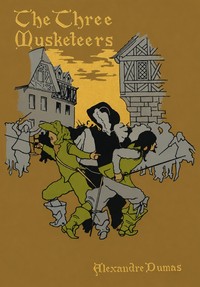
Four swaggering swordsmen, a cardinal who wants them dead, and a queen's secret: a serial adventure written at a gallop, with jokes and a very cold villain.
Read pages from books like this, one at a time
BookFeed is a feed of real passages from real books. It learns what moves you and finds your next book.
Open BookFeedFree, no sign-up.