Hamlet
William Shakespeare, 1603
A prince in mourning delays, dissembles, and thinks too much, while a court watches every move. Read for the language, stay for the recognitions.
 BookFeed Ελληνικά
1564–1616
Shakespeare's plays put pressure on a few people in a closed space — a court, a wood, an island — and let the language do the damage. Try «Macbeth» to watch a soldier talk himself toward murder, or «Twelfth Night» for a comedy where everyone loves the wrong person and the fool speaks plainest.
Feels like power, dread and love.
Start with Hamlet.
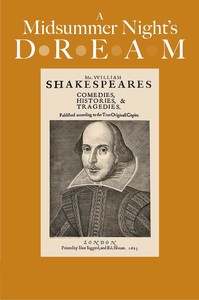
Shakespeare acted in his own plays; a 1610 document lists him among the King’s Men as both principal actor and playwright.
The mind can make a prison out of the one door it cannot see through.
To be, or not to be: that is the question:Whether ’tis nobler in the mind to sufferThe slings and arrows of outrageous fortune,Or to take arms against a sea of troubles,And by opposing end them? To die: to sleep;No more; and by a sleep to say we endThe heart-ache and the thousand natural shocksThat flesh is heir to, ’tis a consummationDevoutly to be wish’d. To die, to sleep;To sleep: perchance to dream: ay, there’s the rub;For in that sleep of death what dreams may comeWhen we have shuffled off this mortal coil,Must give us pause: there’s the respectThat makes calamity of so long life; William Shakespeare, 1603
A prince in mourning delays, dissembles, and thinks too much, while a court watches every move. Read for the language, stay for the recognitions.
William Shakespeare, 1597
Two teenagers from feuding families fall in love over three days, and the adults around them keep choosing sides.
William Shakespeare, 1606
A soldier is greeted by three strangers who promise him a crown, and we watch, line by line, how quickly a decent man can argue himself into murder.
William Shakespeare, 1608
A king divides his kingdom by a love test, and everything he built comes apart in one night of weather and rage.
William Shakespeare, 1602
Shipwreck, disguise and a household in mourning: a comedy where everyone loves the wrong person and the fool is the only one telling the truth.
William Shakespeare, 1623
A broke fortune-hunter marries the town's most notorious scold and sets about taming her — a comedy that doubles as a fight over who gets to speak.
William Shakespeare, 1604
A general, a senator's daughter, and an ensign who knows exactly which words will undo them: Shakespeare's tightest study of how love is talked out of existence.
William Shakespeare, 1611
An exiled duke with a library of magic, a daughter who has met almost no one, and an island's furious native wait for a shipwreck to bring his enemies ashore.
William Shakespeare, 1600
A Venetian moneylender demands a pound of flesh, and a clever heiress argues the case. Shakespeare's tightest comedy about money, prejudice and the price of a promise.
William Shakespeare, 1600
Four lovers, a fairy king and queen, and a troupe of terrible actors collide in one wood outside Athens, all under the same love potion.
William Shakespeare, 1599
Power, friendship, and the arguments clever men use to justify what they want: Shakespeare's Rome is a room full of people talking themselves into disaster.
Read pages from books like this, one at a time
BookFeed is a feed of real passages from real books. It learns what moves you and finds your next book.
Open BookFeedFree, no sign-up.