
Poetry
John Donne (1572–1631), 1633
The poet who argued with God, mapped the body, and made a flea a seduction speech—read him for wit that still draws blood. Donne's voice is restless and argumentative, moving from sensual wit to raw prayer, with lines that twist and surprise you.
Feels like longing, awe and wonder. About love, faith and death.
Who it’s for
You may like it if you enjoy poems that think aloud, relish puns and paradoxes, and don't mind being pulled between desire and devotion. The catch is the seventeenth-century wording and coiled syntax; some poems demand slow re-reading before the wit clicks.
Why read it
Read Donne for a voice that takes love, faith and mortality as arguments to be fought out in verse, and gives you images and turns of phrase that stay.
Pages from the book
What if surrender is the only route out of captivity?
Batter my heart, three-person’d God; for youAs yet but knock; breathe, shine, and seek to mend;That I may rise, and stand, o’erthrow me, and bendYour force, to break, blow, burn, and make me new.I, like an usurp’d town, to another due,Labour to admit you, but O, to no end.Reason, your viceroy in me, me should defend,But is captived, and proves weak or untrue.Yet dearly I love you, and would be loved fain,But am betroth’d unto your enemy;Divorce me, untie, or break that knot again,Take me to you, imprison me, for I,Except you enthrall me, never shall be free,Nor ever chaste, except you ravish me. What is left of a person after love has emptied them?
Study me then, you who shall lovers beAt the next world, that is, at the next spring;For I am a very dead thing,In whom Love wrought new alchemy.For his art did expressA quintessence even from nothingness,From dull privations, and lean emptiness;He ruin’d me, and I am re-begotOf absence, darkness, death—things which are not. The kind of love that stretches rather than snaps when parted.
Dull sublunary lovers’ love—Whose soul is sense—cannot admitOf absence, ’cause it doth removeThe thing which elemented it.But we by a love so far refined,That ourselves know not what it is,Inter-assured of the mind,Care less eyes, lips and hands to miss.Our two souls therefore, which are one,Though I must go, endure not yetA breach, but an expansion,Like gold to airy thinness beat. John Donne.He secretly married Anne More in 1601, was briefly imprisoned for it, and later became Dean of St Paul’s—the same man who wrote 'Batter my heart.'
Books that feel like this
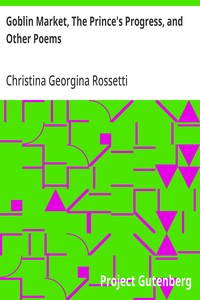
Goblin Market, The Prince's Progress, and Other Poems
Christina Rossetti, 1862
Also longing and love.



Where to get it
Some of these links earn us a small commission, at no cost to you. It keeps BookFeed free.
Questions readers ask
- Is Poetry for me?
- You may like it if you enjoy poems that think aloud, relish puns and paradoxes, and don't mind being pulled between desire and devotion. The catch is the seventeenth-century wording and coiled syntax; some poems demand slow re-reading before the wit clicks.
- What is Poetry like?
- Donne's voice is restless and argumentative, moving from sensual wit to raw prayer, with lines that twist and surprise you. Feels like longing, awe and wonder. About love, faith and death.
- What should I read after Poetry?
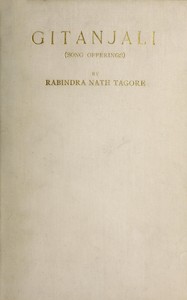
- If you liked Poetry, try Goblin Market, The Prince's Progress, and Other Poems (Christina Rossetti), Gitanjali (Rabindranath Tagore) and Sonnets from the Portuguese (Elizabeth Barrett Browning).
A taste of the feed
The heaviest thing you will ever have to carry is yourself.
God strengthen me to bear myself; That heaviest weight of all to bear, Inalienable weight of care. All others are outside myself, I lock my door and bar them out The turmoil, tedium, gad-about. I lock my door upon myself, And bar them out; but who shall wall Self from myself, most loathed of all? If I could once lay down myself, And start self-purged upon the race That all must run! Death runs apace.
Goblin Market, The Prince's Progress, and Other Poems · Christina Rossetti
A wish for a last song that holds every kind of joy.
Let all the strains of joy mingle in my last song—the joy that makes the earth flow over in the riotous excess of the grass, the joy that sets the twin brothers, life and death, dancing over the wide world, the joy that sweeps in with the tempest, shaking and waking all life with laughter, the joy that sits still with its tears on the open red lotus of pain, and the joy that throws everything it has upon the dust, and knows not a word.
Gitanjali · Rabindranath Tagore
What it costs to hand someone the ashes of your grief.
I lift my heavy heart up solemnly, As once Electra her sepulchral urn, And, looking in thine eyes, I overturn The ashes at thy feet. Behold and see What a great heap of grief lay hid in me, And how the red wild sparkles dimly burn Through the ashen greyness. If thy foot in scorn Could tread them out to darkness utterly, It might be well perhaps. But if instead Thou wait beside me for the wind to blow The grey dust up—those laurels on thine head, O my Beloved, will not shield thee so, That none of all the fires shall scorch and shred The hair beneath. Stand further off then! Go.
Sonnets from the Portuguese · Elizabeth Barrett Browning
Read pages from books like this, one at a time
Keep reading in the feed