
Notes from the Underground
Fyodor Dostoyevsky (1821–1881), 1864
A Petersburg clerk explains, at length and against his own interests, why he could never be a decent man: the original portrait of the over-thinking self. A restless, argumentative voice pulls you into a clerk's self-justifying monologue, by turns sharp, awkward and strangely exhilarating.
Feels like unease and wonder. About freedom.
Who it’s for
You may like it if you enjoy philosophical fiction that argues with itself and a narrator who exposes his own contradictions. Be ready for a long, dense nineteenth-century monologue; the first part is more essay than story, and the voice can feel claustrophobic.
Why read it
It gives you a close look at a mind trapped in its own reasoning, and at the modern habit of thinking past the point of action.
Pages from the book
Consciousness as a diagnosis: too much of it and you can't live.
I want now to tell you, gentlemen, whether you care to hear it or not, why I could not even become an insect. I tell you solemnly, that I have many times tried to become an insect. But I was not equal even to that. I swear, gentlemen, that to be too conscious is an illness—a real thorough-going illness. For man’s everyday needs, it would have been quite enough to have the ordinary human consciousness, that is, half or a quarter of the amount which falls to the lot of a cultivated man of our unhappy nineteenth century, especially one who has the fatal ill-luck to inhabit Petersburg, the most theoretical and intentional town on the whole terrestrial globe. (There are intentional and unintentional towns.) It would have been quite enough, for instance, to have the consciousness by which all so-called direct persons and men of action live. The satisfaction of refusing to agree with a stone wall.
Merciful Heavens! but what do I care for the laws of nature and arithmetic, when, for some reason I dislike those laws and the fact that twice two makes four? Of course I cannot break through the wall by battering my head against it if I really have not the strength to knock it down, but I am not going to be reconciled to it simply because it is a stone wall and I have not the strength. He moans all night, knowing it helps no one, and finds pleasure in it.
His moans become nasty, disgustingly malignant, and go on for whole days and nights. And of course he knows himself that he is doing himself no sort of good with his moans; he knows better than anyone that he is only lacerating and harassing himself and others for nothing; he knows that even the audience before whom he is making his efforts, and his whole family, listen to him with loathing, do not put a ha’porth of faith in him, and inwardly understand that he might moan differently, more simply, without trills and flourishes, and that he is only amusing himself like that from ill-humour, from malignancy. Well, in all these recognitions and disgraces it is that there lies a voluptuous pleasure. As though he would say: “I am worrying you, I am lacerating your hearts, I am keeping everyone in the house awake. Fyodor Dostoyevsky.Dostoevsky wrote it in 1864, the year his wife Maria and then his brother Mikhail died; he was gambling and in debt, and the magazine that serialised it folded soon after.
Books that feel like this



Where to get it
Some of these links earn us a small commission, at no cost to you. It keeps BookFeed free.
Questions readers ask
- Is Notes from the Underground for me?
- You may like it if you enjoy philosophical fiction that argues with itself and a narrator who exposes his own contradictions. Be ready for a long, dense nineteenth-century monologue; the first part is more essay than story, and the voice can feel claustrophobic.
- What is Notes from the Underground like?
- A restless, argumentative voice pulls you into a clerk's self-justifying monologue, by turns sharp, awkward and strangely exhilarating. Feels like unease and wonder. About freedom.
- What should I read after Notes from the Underground?
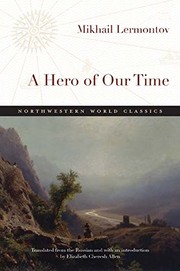
- If you liked Notes from the Underground, try Notes from Underground (Fyodor Dostoevsky), A Hero of Our Time (Mikhail Lermontov) and The Works of Edgar Allan Poe (Edgar Allan Poe).
A taste of the feed
The injury that lasts longer than a blow: being looked through.
I was standing by the billiard-table and in my ignorance blocking up the way, and he wanted to pass; he took me by the shoulders and without a word—without a warning or explanation—moved me from where I was standing to another spot and passed by as though he had not noticed me. I could have forgiven blows, but I could not forgive his having moved me without noticing me.
Notes from Underground · Fyodor Dostoevsky
The logic of revenge, laid out with terrifying patience.
The thousand injuries of Fortunato I had borne as I best could; but when he ventured upon insult, I vowed revenge. You, who so well know the nature of my soul, will not suppose, however, that I gave utterance to a threat. At length I would be avenged; this was a point definitively settled—but the very definitiveness with which it was resolved, precluded the idea of risk. I must not only punish, but punish with impunity. A wrong is unredressed when retribution overtakes its redresser. It is equally unredressed when the avenger fails to make himself felt as such to him who has done the wrong.
The Works of Edgar Allan Poe · Edgar Allan Poe
What it would be to look at the world without wanting anything.
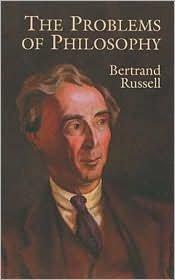
Everything, in contemplation, that is personal or private, everything that depends upon habit, self-interest, or desire, distorts the object, and hence impairs the union which the intellect seeks. By thus making a barrier between subject and object, such personal and private things become a prison to the intellect. The free intellect will see as God might see, without a here and now, without hopes and fears, without the trammels of customary beliefs and traditional prejudices, calmly, dispassionately, in the sole and exclusive desire of knowledge—knowledge as impersonal, as purely contemplative, as it is possible for man to attain.
The Problems of Philosophy · Bertrand Russell
Read pages from books like this, one at a time
Keep reading in the feed