
Ghost Stories
E. F. Benson (1867–1940), 1912
English ghosts by a bishop's son who wrote them with a civilised smile: haunted bedrooms, village rites, and a dead man fretting through his own séance. A civilised, witty voice leads you through haunted bedrooms and village rites, with dread gathering under the manners and a strange wonder at the edges.
Feels like dread, unease and wonder.
Who it’s for
You may like it if you enjoy ghost stories with good manners and a slow build of unease, and a narrator who can smile while frightening you. The Edwardian prose can feel old-fashioned, and the scares are often implied rather than shown outright.
Why read it
Benson writes ghost stories with a civilised smile, so the dread arrives through manners, humour and small wrong details. It is a good reminder that restraint can make a haunting linger.
Pages from the book
Some people hold a wounded bird the way a hungry person holds a plate.
It was clear that the kindest thing to do would be to put the bird out of its pain, but when I suggested that, she took a step back from me, and covered it with her other hand. Her eyes gleamed, her mouth smiled, and I saw the tip of her tongue swiftly pass over her lips as if licking them. A moving light finds two figures, then a woman's voice rises over the river.
Suddenly across the gloom shot a tiny spear of light, and momentarily as we watched, it grew larger and longer, till a tall beam, as from some window cut in the rock opposite, was shed on the bank below us. It moved slowly, imperceptibly to the left till it struck full between the two black figures standing there, and shone with a curious bluish gleam on the flat stone in front of them. Then the roar of the river was suddenly overscored by a dreadful screaming voice, the voice of a woman, and from her side her arms shot up and out as if in invocation of some power. A familiar sound at the window, and every reason to leave the blind down.
All this was rather shaky business, so before going to bed he steadied himself, as his unspoken phrase ran, with a final drink. Outside the thunder had ceased, but the rain beat hissing on to the grass. Then another sound mingled with it, the mewing of a cat, not the long drawn screeches and cries that are usual, but the plaintive calls of the beast that wants to be admitted into its own home. The blind was down, but after a while he could not resist peeping out. There on the windowsill was seated the large grey cat. Though it was raining heavily its fur seemed dry, for it was standing stiffly away from its body. But when it saw him it spat at him, scratching angrily at the glass, and vanished. E. F. Benson.Benson was a son of the Archbishop of Canterbury and later mayor of Rye; between ghost stories he wrote the waspish Mapp and Lucia comedies.
Books that feel like this
Where to get it
Some of these links earn us a small commission, at no cost to you. It keeps BookFeed free.
Questions readers ask
- Is Ghost Stories for me?
- You may like it if you enjoy ghost stories with good manners and a slow build of unease, and a narrator who can smile while frightening you. The Edwardian prose can feel old-fashioned, and the scares are often implied rather than shown outright.
- What is Ghost Stories like?
- A civilised, witty voice leads you through haunted bedrooms and village rites, with dread gathering under the manners and a strange wonder at the edges. Feels like dread, unease and wonder.
- What should I read after Ghost Stories?
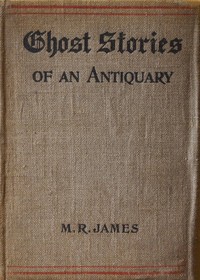
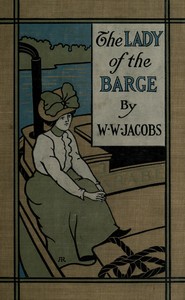
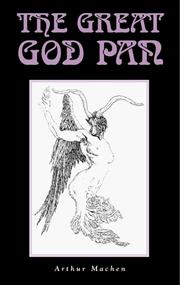
- If you liked Ghost Stories, try Ghost Stories of an Antiquary (M. R. James), The Lady of the Barge (W. W. Jacobs) and The Great God Pan (Arthur Machen).
A taste of the feed
A house after a death keeps the shape of the people who left it.
Long before anybody else was astir he arose and stole softly downstairs. The sunlight was stealing in at every crevice, and flashing in long streaks across the darkened rooms. The dining-room into which he looked struck chill and cheerless in the dark yellow light which came through the lowered blinds. He remembered that it had the same appearance when his father lay dead in the house; now, as then, everything seemed ghastly and unreal; the very chairs standing as their occupants had left them the night before seemed to be indulging in some dark communication of ideas.
The Lady of the Barge · W. W. Jacobs
The moment a familiar path becomes somewhere you have never been.
Clarke tried to conceive the thing again, as he sat by the fire, and again his mind shuddered and shrank back, appalled before the sight of such awful, unspeakable elements enthroned as it were, and triumphant in human flesh. Before him stretched the long dim vista of the green causeway in the forest, as his friend had described it; he saw the swaying leaves and the quivering shadows on the grass, he saw the sunlight and the flowers, and far away, far in the long distance, the two figures moved toward him. One was Rachel, but the other?
The Great God Pan · Arthur Machen
You walk toward your own double across a quicksand.
One night his dream was so vivid that when he awoke he could not believe that it had only been a dream. He shut his eyes again and again, but each time the vision, if it was a vision, or the reality, if it was a reality, would rise before him. The moon was shining full and yellow over the quicksand as he approached it; he could see the expanse of light shaken and disturbed and full of black shadows as the liquid sand quivered and trembled and wrinkled and eddied as was its wont between its pauses of marble calm. As he drew close to it another figure came towards it from the opposite side with equal footsteps.
Dracula's Guest · Bram Stoker
Read pages from books like this, one at a time
Keep reading in the feed