
Analects
Confucius (-552–-479)
A collection of small, sharp conversations on how to live with other people, mostly remembered because they refuse to be simple rules. Short exchanges that turn moral questions over in plain, witty strokes, with a calm pace and room for wonder.
Feels like wonder and curiosity. About morality, power and friendship.
Who it’s for
You may like it if you enjoy aphoristic philosophy and watching character emerge through brief conversations. The translation's archaic names and phrasing can make some passages slow going, and the book offers no continuous argument to carry you along.
Why read it
It gives you a compact, human way to think about conduct and company, and the aphoristic form leaves space for your own reflection.
Pages from the book
The ambition that sounds like a holiday, and the teacher who prefers it.
Last of all, the Master asked Tsǎng Hsî, “Tien, what are your wishes?” Tien, pausing as he was playing on his lute, while it was yet twanging, laid the instrument aside, and rose. “My wishes,” he said, “are different from the cherished purposes of these three gentlemen.” “What harm is there in that?” said the Master; “do you also, as well as they, speak out your wishes.” Tien then said, “In this, the last month of spring, with the dress of the season all complete, along with five or six young men who have assumed the cap, and six or seven boys, I would wash in the Î, enjoy the breeze among the rain altars, and return home singing.” The Master heaved a sigh and said, “I give my approval to Tien.” The thing you chase that keeps moving just ahead of you.
Yen Yüan, in admiration of the Master’s doctrines, sighed and said, “I looked up to them, and they seemed to become more high; I tried to penetrate them, and they seemed to become more firm; I looked at them before me, and suddenly they seemed to be behind. A thousand chariots, and not one virtue remembered.
The duke Ching of Ch’î had a thousand teams, each of four horses, but on the day of his death, the people did not praise him for a single virtue. Po-î and Shû-ch’î died of hunger at the foot of the Shau-yang mountain, and the people, down to the present time, praise them. Confucius.Confucius spent years as an itinerant adviser to rulers who mostly ignored him; the Analects was assembled by disciples after his death.
Books that feel like this




Where to get it
Some of these links earn us a small commission, at no cost to you. It keeps BookFeed free.
Questions readers ask
- Is Analects for me?
- You may like it if you enjoy aphoristic philosophy and watching character emerge through brief conversations. The translation's archaic names and phrasing can make some passages slow going, and the book offers no continuous argument to carry you along.
- What is Analects like?
- Short exchanges that turn moral questions over in plain, witty strokes, with a calm pace and room for wonder. Feels like wonder and curiosity. About morality, power and friendship.
- What should I read after Analects?
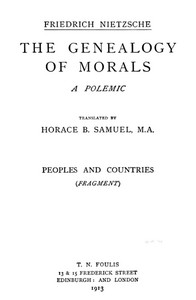
- If you liked Analects, try The Essays or Counsels, Civil and Moral (Francis Bacon), The Prince (Niccolò Machiavelli) and The Genealogy of Morals (Friedrich Nietzsche).
A taste of the feed
The thing you can't live without was once optional.
One of history’s few iron laws is that luxuries tend to become necessities and to spawn new obligations. Once people get used to a certain luxury, they take it for granted. Then they begin to count on it. Finally, they reach a point where they can’t live without it.
Sapiens · Yuval Noah Harari
Read pages from books like this, one at a time
Keep reading in the feed