BookFeed Ελληνικά

Books like Analects

If Analects stayed with you, these share its feel: morality, wonder and power. Each comes with a real page, so you can tell in a minute.

About Analects · Confucius

  1. 1.The Essays or Counsels, Civil and Moral

    Francis Bacon, 1597

    Also curiosity and morality. Short, dense essays on revenge, friendship, wealth, ambition and fear, written like a clever advisor's notes. Each page packs a lifetime of worldly observation into a few sharp sentences.

    For as for the first wrong, it doth but offend the law; but the revenge of that wrong, putteth the law out of office. Certainly, in taking revenge, a man is but even with his enemy; but in passing it over, he is superior; for it is a prince’s part to pardon. And Solomon, I am sure, saith, It is the glory of a man, to pass by an offence. That which is past is gone, and irrevocable; and wise men have enough to do, with things present and to come; therefore they do but trifle with themselves, that labor in past matters. There is no man doth a wrong, for the wrong’s sake; but thereby to purchase himself profit, or pleasure, or honor, or the like. Therefore why should I be angry with a man, for loving himself better than me?
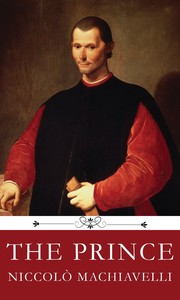
  2. 2.The Prince

    Niccolò Machiavelli, 1532

    Also power and curiosity. A short, cool manual on how power is won and kept, written by a man who watched it up close. Its blunt realism still unsettles, and it still explains how leaders behave.

    A prince, therefore, being compelled knowingly to adopt the beast, ought to choose the fox and the lion; because the lion cannot defend himself against snares and the fox cannot defend himself against wolves. Therefore, it is necessary to be a fox to discover the snares and a lion to terrify the wolves. Those who rely simply on the lion do not understand what they are about. Therefore a wise lord cannot, nor ought he to, keep faith when such observance may be turned against him, and when the reasons that caused him to pledge it exist no longer. If men were entirely good this precept would not hold, but because they are bad, and will not keep faith with you, you too are not bound to observe it with them. Nor will there ever be wanting to a prince legitimate reasons to excuse this non-observance.
  3. 3.The Genealogy of Morals

    Friedrich Nietzsche, 1887

    Also morality and power. Nietzsche's fiercest book asks where our ideas of good, guilt and duty actually came from, and finds debt, blood and self-torture underneath them.

    It is not surprising that the lambs should bear a grudge against the great birds of prey, but that is no reason for blaming the great birds of prey for taking the little lambs. And when the lambs say among themselves, “These birds of prey are evil, and he who is as far removed from being a bird of prey, who is rather its opposite, a lamb—is he not good?” then there is nothing to cavil at in the setting up of this ideal, though it may also be that the birds of prey will regard it a little sneeringly, and perchance say to themselves, “We bear no grudge against them, these good lambs, we even like them: nothing is tastier than a tender lamb.”
  4. 4.Sapiens

    Yuval Noah Harari, 2011

    Also curiosity and power. A historian retells the whole human story as one argument: that we conquered the world by learning to believe in things that aren't there.

    One of history’s few iron laws is that luxuries tend to become necessities and to spawn new obligations. Once people get used to a certain luxury, they take it for granted. Then they begin to count on it. Finally, they reach a point where they can’t live without it.
    Excerpt from Sapiens, Yuval Noah Harari 2011. Quoted for discovery. Source Rights & removals
  5. 5.The Adventures of Sherlock Holmes

    Arthur Conan Doyle, 1892

    Also curiosity and morality. A detective who solves impossible crimes by noticing what everyone else looked past. Fifty-six stories of rooms, ruses and small, devastating deductions.

    When the commissionaire had gone, Holmes took up the stone and held it against the light. “It’s a bonny thing,” said he. “Just see how it glints and sparkles. Of course it is a nucleus and focus of crime. Every good stone is. They are the devil’s pet baits. In the larger and older jewels every facet may stand for a bloody deed. This stone is not yet twenty years old. It was found in the banks of the Amoy River in southern China and is remarkable in having every characteristic of the carbuncle, save that it is blue in shade instead of ruby red. In spite of its youth, it has already a sinister history. There have been two murders, a vitriol-throwing, a suicide, and several robberies brought about for the sake of this forty-grain weight of crystallised charcoal.
  6. 6.A Hero of Our Time

    Mikhail Lermontov, 1840

    Also morality and curiosity. A bored young officer drifts through the Caucasus, charming and wrecking the people he meets, in a novel that invented the modern antihero.

    The blind boy did not pick it up. Yanko took his seat in the boat; the wind was blowing from the shore; they hoisted the little sail and sped rapidly away. For a long time the white sail gleamed in the moonlight amid the dark waves. Still the blind boy remained seated upon the shore, and then I heard something which sounded like sobbing. The blind boy was, in fact, weeping, and for a long, long time his tears flowed... I grew heavy-hearted. For what reason should fate have thrown me into the peaceful circle of honourable smugglers? Like a stone cast into a smooth well, I had disturbed their quietude, and I barely escaped going to the bottom like a stone.
  7. 7.Dialogues

    Plato, -347

    Also morality and curiosity. A deep dive into the questions that define civilization: what is justice, what is wisdom, and what happens to the soul after death.

  8. 8.The Art of War

    Sun Tzu, -500

    Also curiosity and wonder. A 2,500-year-old manual for conflict, written for generals and read by anyone who has to hold a position, win an argument, or know when to walk away.

  9. 9.The Book of Tea

    Kakuzo Okakura, 1906

    Also wonder. A Japanese art critic explains why tea—its room, its flowers, its humility—is a philosophy for living, written to correct the West's picture of Asia.

  10. 10.Aesop's Fables

    Aesop, -600

    Also morality and power. Eight-line stories that did the work of sermons, proverbs and parenting for two and a half thousand years, and still land in a single read.

Read pages from books like this, one at a time

BookFeed is a feed of real passages from real books. It learns what moves you and finds your next book.

Open BookFeed

Free, no sign-up.